First US-Iran MOU talks postponed as Iranian regime blames Israeli strikes against Hezbollah
Supreme Leader Khamenei says President Trump was 'desperate' for MOU





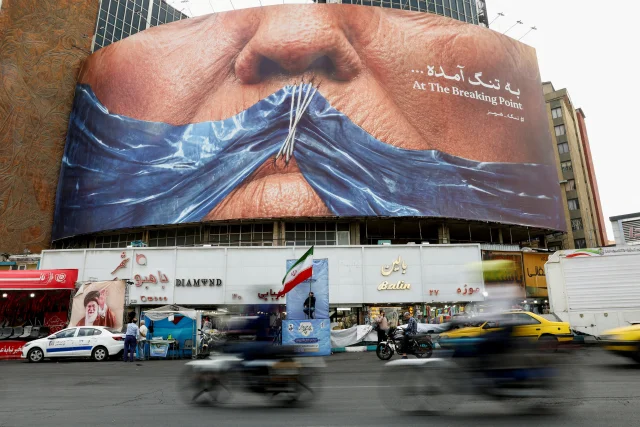
The first round of talks under the Memorandum of Understanding (MOU) between the United States and the Islamic Republic planned for this weekend was called off, with Tehran accusing Israel of violating the ceasefire by striking Hezbollah in response to its attacks on Israeli troops.
The Iranian regime had warned that any Israeli military action in Lebanon would be seen as a violation of the agreement with the U.S. Now, it is demanding U.S. assurances that the fighting in Lebanon will end before holding talks, a diplomat told CNN.
The talks are now “temporarily postponed following the Israeli strikes in Lebanon” while mediators “are currently working to resolve the issue,” he added.
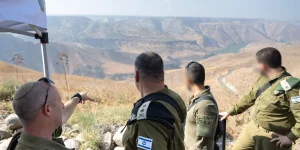
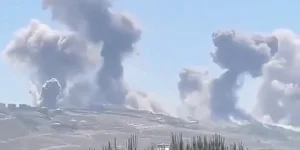
Israel intensified strikes against Hezbollah on Thursday evening after the terror group had killed at least five soldiers and wounded dozens more in several attacks over the preceding days.
The Swiss Foreign Ministry confirmed on Friday, “The discussions planned between the United States, Iran, Qatar, and Pakistan have been postponed. Switzerland remains willing to facilitate these discussions. The corresponding preparatory work is continuing at Bürgenstock.”
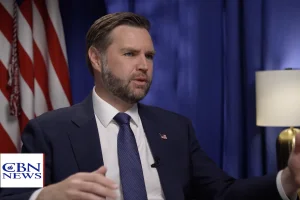
The White House said U.S. Vice President JD Vance postponed his planned trip to Switzerland due to “logistics.” On Thursday, Vance said the talks had not yet been finalized, noting that Iranian officials might face technical challenges traveling outside the country.
“The U.S. delegation has been prepared to depart at the first available opportunity. But the logistics of these negotiations have never been simple or predictable,” the White House said.
“As of now, the Vice President is not departing tonight. We look forward to beginning technical talks as soon as possible.”
However, a U.S. official told Axios that Iran's allegations that Israel had violated the agreement could be the reason for the postponement.
#Switzerland welcomes the signing of the MoU between the #UnitedStates & #Iran yesterday by both countries. The signing is an important step toward de-escalation in the region.
— Swiss MFA (@SwissMFA) June 18, 2026
Currently, the plan remains for the US & Iran, along with the mediators #Pakistan & #Qatar, to meet… pic.twitter.com/yrv86IhceQ
“The Iranian negotiating delegation has suspended its departure for the first round of negotiations in Switzerland due to the continued Israeli strikes in southern Lebanon,” an informed source told Al Mayadeen, the Lebanese news outlet with ties to Hezbollah.
“Tehran informed the American side and the mediators that the Lebanese issue is of central importance to it regarding the continuation or suspension of the negotiations. Tehran warned that the continuation of Israeli operations and strikes, 10 kilometers inside Lebanese territory, constitutes a clear violation of the memorandum of understanding,” the source added.
U.S. President Donald Trump had reiterated on Thursday that the U.S. expects “a complete Ceasefire on all fronts, including Lebanon, Hezbollah, and Israel.”
“The United States is committed to PEACE, and we encourage everyone in the Middle East Region to maintain their commitment to allowing our negotiations to beautifully unfold. The Markets are loving what is happening with Oil Prices way down, and Stocks way up,” he wrote on Truth Social.
Here’s your reminder of how Hezbollah is “upholding the ceasefire” in the last couple of days:
— Ambassador Yechiel (Michael) Leiter (@yechielleiter) June 18, 2026
💥 June 17th:
10:15 - 1 IED
10:57 - 2 Explosive UAVs
12:35 - 9 Rockets
12:37 - 2 Rockets
12:51 - 1 Missile
12:56 - 2 Rockets
13:04 - 6 Rockets
16:53 - 2 Rockets
17:31 - 3…
Israeli Ambassador to the U.S. Yechiel Leiter highlighted the almost hourly pace of Hezbollah attacks against Israel, writing on 𝕏: “Israel remains committed to the ceasefire agreement… if Hezbollah does not violate the agreement, it will be kept.”
Earlier, Iranian Supreme Leader Mojtaba Khamenei had vowed that his regime would not submit to the “excessive demands” of the United States in the talks.
Khamenei, who has still not been seen since being elevated to the top leadership position after being wounded in the strike that killed his predecessor and father, laid out his approach to the talks in a rare series of tweets on 𝕏.
He claimed that he hadn’t originally approved the MOU, only changing his opinion “out of the commitment that the esteemed president [Masoud Pezeshkian] – as the head of the Supreme National Security Council – gave to me on his own behalf and on behalf of the other members regarding the safeguarding of the rights of the Iranian nation and the Resistance Front, and his explicit acceptance of that responsibility.”
Khamenei appeared to mock Trump, saying that “it was the American president who, out of desperation, used all kinds of leverage to bring this about.”
Iranian Foreign Ministry spokesman Esmaeil Baghaei reiterated on Thursday that Iran's highly-enriched uranium would not be sent outside the country, and that the regime, per the MOU, has the option of diluting it instead.
Trump’s Middle East envoy, Steve Witkoff, told American lawmakers on Thursday that UN nuclear watchdog IAEA would be invited back into Iran soon, according to two people familiar with the conversation who spoke to The Associated Press.
According to the report, a side letter was set up between the regime and the International Atomic Energy Agency to extend an invitation for its inspectors to return as part of the peace process.
You might also like to read this: