Israeli planners warn of energy risks as ties with Turkey deteriorate




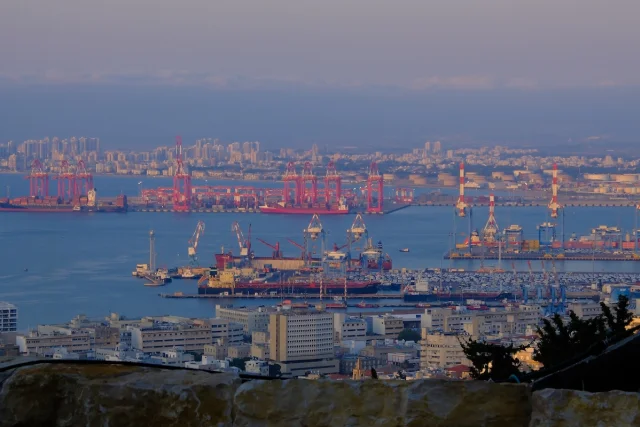
Israeli planners are increasingly warning that worsening relations with Turkey could expose the country to a broader energy supply shock, as regional tensions raise concerns over the security of oil imports and global shipping routes.
The concern extends beyond Turkey alone. Israel relies heavily on imported crude oil and refined petroleum products, while continued instability around the Strait of Hormuz, uncertainty over Russian fuel exports and Turkey's control of a key oil transit hub have highlighted potential vulnerabilities in Israel's energy supply chain.
Currently, Israel imports most of its crude oil from Azerbaijan and Kazakhstan. Russia is also a major supplier of refined products to Israel, and recent reports of domestic shortages of gasoline, diesel, kerosene and other refined products in Russia have raised concerns that Moscow could begin restricting exports.
Gabon, Brazil and the United States also supply limited amounts of crude oil and refined products to Israel, with the United States serving as the only supplier of JP-8 military jet fuel for the Israeli Air Force. That is one of several refined petroleum products Israel would have difficulty replacing if its current source of supply were disrupted.
The largest supplier of crude oil to Israel is the Central Asian republic of Azerbaijan, which is landlocked and exports its oil through the Baku-Tbilisi-Ceyhan (BTC) pipeline.
The pipeline terminates at the Turkish Mediterranean port of Ceyhan, which also serves as the endpoint for pipelines carrying oil from northern Iraq and has extensive storage capacity.
As a result, Turkey theoretically has the ability to interrupt oil shipments destined for Israel. Such a move, however, would carry significant diplomatic and economic consequences for President Recep Tayyip Erdoğan's government, as Azerbaijan would likely object, along with other countries that depend on the Ceyhan terminal for energy exports.
The concerns come as global energy markets continue to feel the effects of disruptions in the Strait of Hormuz and the lingering possibility that the strategic waterway could again face restrictions or that Iran, with Oman's cooperation, could seek to impose transit tolls.
Despite recent military exchanges between Iran and the United States, oil and liquefied natural gas export terminals in Saudi Arabia, the United Arab Emirates, Kuwait, Bahrain and Qatar remained active this week.
Energy industry professionals reported a strong sense of urgency to load and transport as much oil and natural gas as possible while the Strait of Hormuz remains open. Several tankers also loaded cargoes in recent days at Iran's Kharg Island.
Meanwhile, the United States has issued waivers on sanctions affecting Iranian oil sales through Aug. 1, prompting buyers in India, China and elsewhere to increase purchases.
While Israel continues to monitor potential disruptions to oil imports, officials are also focused on expanding export routes for the country's growing natural gas industry.
The website of Israel’s Ministry of Energy and Infrastructure indicates that Israeli gas is currently exported to Egypt and Jordan from the Tamar and Leviathan fields through three pipelines. One is located in northern Israel, connecting to the Arab Gas Pipeline in Jordan.
Another connects directly to Jordanian industrial facilities on the eastern side of the Dead Sea, and the last is the EMG pipeline connecting to the Egyptian transmission system.
According to Israel's Ministry of Energy and Infrastructure, additional export projects could increase the country's natural gas export capacity to between 25 and 30 billion cubic meters per year by the end of the decade, although the ministry noted that actual export volumes will depend on available reserves and government policy.
The ministry also plans to ease some domestic supply requirements for future natural gas discoveries by reducing both the obligation to connect every new gas field to Israel's domestic market and the amount of gas each field must supply locally.
Officials are simultaneously pursuing several new export routes, including the proposed EastMed pipeline to Cyprus and Greece, direct pipelines to liquefaction facilities in Egypt and the potential use of floating liquefied natural gas (FLNG) platforms.
“In June 2022, an MOU was signed that allows for the export of Israeli gas to the European Union through Egypt, in line with current European policy to diversify its gas supply,” the website indicated.
You might also like to read this: