Iran nuclear threat higher than before 2025 US-Israeli strikes – IAEA report
Fate of nuclear material is unknown, Iran no longer allows inspections of critical sites





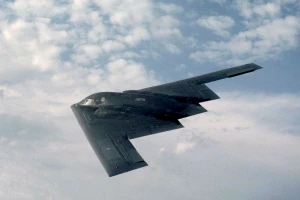
The risk that Iran is covertly pursuing nuclear weapons is higher today than it was before Operation Rising Lion last year, when the United States and Israel launched military strikes against the Islamic Republic, Bloomberg News reported.
According to a classified document from the International Atomic Energy Agency (IAEA) obtained by Bloomberg, Iran is more likely to pursue nuclear weapons covertly than it was before the military strikes.
The IAEA has warned of new proliferation risks due to the unclear whereabouts of Iran’s large stockpile of highly enriched uranium.
Before the June 2025 Israeli airstrikes that sparked the 12-day Israel-Iran war, the material was subject to weekly inspections by the International Atomic Energy Agency (IAEA) to ensure it was not being diverted for military purposes. Those inspections are no longer taking place.
The IAEA report suggests the U.S.-Israeli military operations against Iran have created a new dilemma.
In February, the IAEA estimated that Iran possessed around 440 kilograms (about 970 pounds) of uranium enriched to 60%. While below the purity level needed for nuclear weapons, experts say it is sufficient to rapidly process into weapons-grade uranium within a few weeks.
The IAEA can no longer “draw any conclusion regarding this nuclear material,” the report stated. “This gives rise to a proliferation concern as this nuclear material, which the agency was not able to verify, includes a large amount of high-enriched uranium.”
Two senior diplomats familiar with the report, who spoke on condition of anonymity, told Bloomberg that the longer the nuclear material remains outside the IAEA’s control, the greater the risk that it will be diverted to non-peaceful uses.
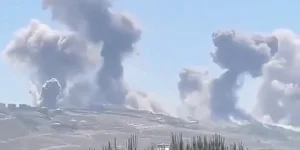
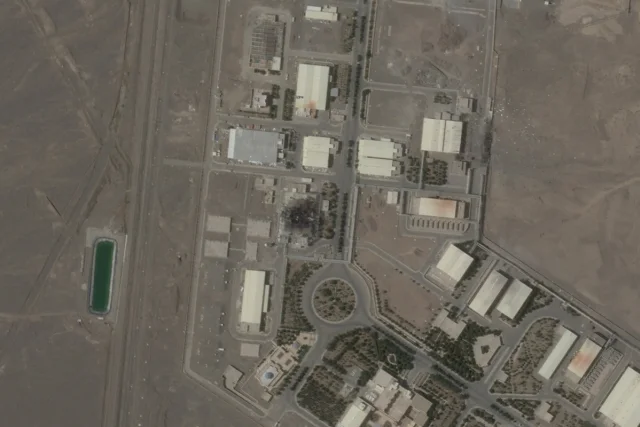
Most of the uranium was believed to be stored at an underground site at Isfahan. An unknown quantity was also stored in facilities at Natanz and Fordow, all of which were struck by the United States during Operation Midnight Hammer in June 2025.
In the aftermath of those strikes, reports stated that nuclear material from the Fordow site was transported in the days right before the strike, as satellite imagery showed over a dozen cargo-type trucks approaching the site, and then carrying away an unidentified cargo to another site about half a mile away.
Iranian media claimed the nuclear material was evacuated before the strikes. Without inspections, it is unclear what happened to the nuclear material.
Iran imposed new restrictions on inspections following the 12-day war, and IAEA inspectors have since not been able to return to the damaged sites in Fordow, Isfahan, or Natanz.
Alongside the stockpile of highly-enriched uranium, around 8,600 kilograms (18,960 pounds) of lower-enriched material was also stored at those sites.
The White House continues to report that Iran’s nuclear program has been destroyed, but is also trying to negotiate access to its uranium stockpile. U.S. President Donald Trump has said the highly-enriched material would be removed from Iran or rendered inert under IAEA supervision.
However, the Trump administration has not included the IAEA in recent talks, which could cause problems.
“We are not a party to this negotiation. We participated until the last round, which ended in February,” IAEA Dir.-Gen. Rafael Grossi told Al Jazeera on Tuesday. “Something that is not verifiable will lead to a bad agreement.”
The launch of military operations in February came just after the IAEA released a confidential report, stating it was unable to verify whether Iran had suspended “all enrichment-related activities.” However, the watchdog organization said it had observed “regular vehicular activity” around the entrance to the Esfahan [Isfahan] Nuclear Technology Center (ENTC), where some of Iran’s enriched uranium was believed to be stored.
The June 2025 strikes also came a day after the IAEA Board of Governors condemned Iran for obstructing the work of inspectors. According to the agency’s latest warning, the strikes intended to curb Iran’s nuclear program may have created a more dangerous situation: a large stockpile of nuclear material, including highly enriched uranium, is no longer subject to verification by international inspectors.
You might also like to read this: