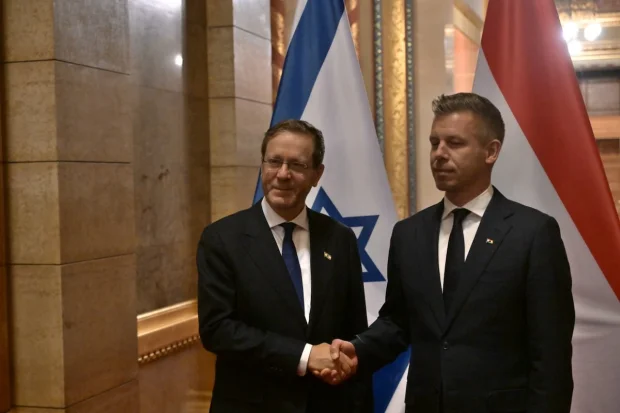









Hostilities continue between Iran, US, as ceasefire negotiations appear frozen
CENTCOM and IRGC trade blows in Persian Gulf over US blockade enforcement
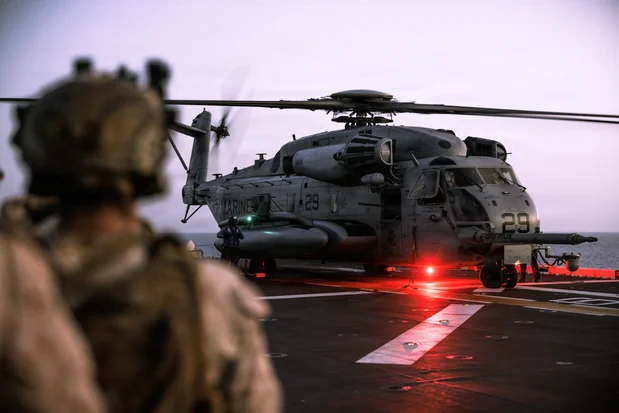
Hostilities between the Islamic Republic of Iran and United States forces in the Persian Gulf continued as the two sides exchanged fire overnight.
The Islamic Revolutionary Guard Corps (IRGC) attacked the U.S. Fifth Fleet headquarters, located in Bahrain, as well as an airbase and helicopters in an unspecified Gulf country, Iranian media reported early on Wednesday morning. According to the report, the attacks came in response to U.S. airstrikes on Qeshm Island earlier.
U.S. Central Command (CENTCOM) said the Iranian attacks were “successfully defeated” while claiming the strikes on Qeshm Island were conducted in “self-defense.”
“U.S. forces successfully defeated multiple Iranian ballistic missiles and drones, and conducted self-defense strikes on Qeshm Island in response to attempted attacks by Iran across the Middle East, June 2,” CENTCOM added.
“Iran launched several ballistic missiles toward regional neighbors; however, all failed to hit their intended targets. Two Iranian missiles fired at Kuwait fell short or broke apart en route, and three missiles launched at Bahrain were immediately intercepted by U.S. and Bahrain air defense forces.”
“No U.S. personnel were harmed. CENTCOM forces remain vigilant and ready to defend against unwarranted Iranian aggression during the ongoing ceasefire,” the statement said.
Kuwait under attack of ballistic missiles by the Islamic Republic of Iran as the IRGC and US clash in Hormuz pic.twitter.com/L1Mm3GVLIU
— Emily Schrader - אמילי שריידר امیلی شریدر (@emilykschrader) June 2, 2026
Shortly before the strikes on the island in the Strait of Hormuz, U.S. forces struck an oil tanker attempting to sail to Iran’s Kharg Island oil facility.
“U.S. forces disabled an unladen oil tanker that was attempting to sail toward an Iranian port on the Arabian Gulf, June 2,” CENTCOM said in a statement. “U.S. Central Command (CENTCOM) enforced blockade measures against Botswana-flagged M/T Lexie as it transited international waters toward Kharg Island. The ship’s crew ignored repeated warnings, failing to comply with directions from U.S. forces multiple times over a 24-hour period.”
JUST IN 🔴
— Open Source Intel (@Osint613) June 2, 2026
CENTCOM says U.S. forces disabled the Botswana-flagged tanker M/T Lexie after it ignored repeated warnings while heading toward Iran’s Kharg Island.
A Hellfire missile struck the vessel’s engine room, preventing it from reaching port.
Since the blockade began on… pic.twitter.com/QrCPu9EY6a
Later on Wednesday morning, Kuwait announced a temporary suspension of commercial flights after Iranian drones struck the airport, injuring a number of people and causing damage.
Defense Ministry spokesperson Brig. Gen. Saud Abdulaziz Al-Otaibi said that “a number of hostile drones” had targeted Kuwait International Airport’s passenger building, severely damaging the building and injuring “a number of individuals.”
Meanwhile, U.S. President Donald Trump claimed that reports that dialogue between the U.S. and Iran was suspended are “false and erroneous.”
“Fake News Reports that the Islamic Republic of Iran, and the U.S.A., stopped speaking a few days ago are false and erroneous,” U.S. President Donald Trump posted on his Truth Social account. “The conversations between us have been going on continuously, including four days ago, three days ago, two days ago, one day ago, and today. Where they lead, one never knows, but as I told Iran, ‘It’s time, one way or another, for you to make a Deal. You’ve been doing this for 47 years, and it cannot be allowed to go on any longer!’”
News reports on the cessation of dialogue between Iran and the U.S. came after the regime-affiliated Fars News agency said that Iran had severed contact over the Israeli operations against Hezbollah forces in Lebanon.
On Tuesday, U.S. Secretary of State Marco Rubio testified before Congress for the first time regarding the Iran conflict, telling lawmakers that the Trump administration has not offered Iran sanctions relief in exchange just for opening the Strait of Hormuz.
Rubio said that sanctions relief would only be offered if Iran agrees to U.S. conditions regarding its nuclear program.
As part of ongoing sanctions enforcement targeting Iran, the U.S. Treasury Department announced new measures on Tuesday evening against Iranian cryptocurrency exchanges.
Among the entities designated are Nobitex, Iran’s largest digital assets firm, as well as its chairman and co-founder, Amir Hossein Rad.
The Treasury action is part of broader efforts to disrupt sanctions evasion and financial networks linked to Iran’s digital asset sector.
Popular article:
interview Easter message of resurrection hope amid war at Jerusalem's Garden Tomb

biblical commentary Let my people go: a Passover message for today
4 IDF soldiers killed, 2 wounded in fighting in southern Lebanon, as Israel eliminates dozens of Hezbollah terrorists
Receive latest news & updates
A message from All Israel News
Help us educate Christians on a daily basis about what is happening in Israel & the Middle East and why it matters.
For as little as $10, you can support ALL ISRAEL NEWS, a non-profit media organization that is supported by readers like you.
Latest articles:
Founding trustee of Oxford’s Islamic studies department believed Muslims should ‘continue the work of Hitler’
'Peaceful dialogue is not a crime:' Petition urges Lebanon to abolish its Israel Boycott Law
Israeli defense companies expand global reach with new deals in Cyprus, Germany and Canada

Netflix’s ‘The Diplomat’ appears to pay tribute to slain Israeli hostage Hersh Goldberg-Polin
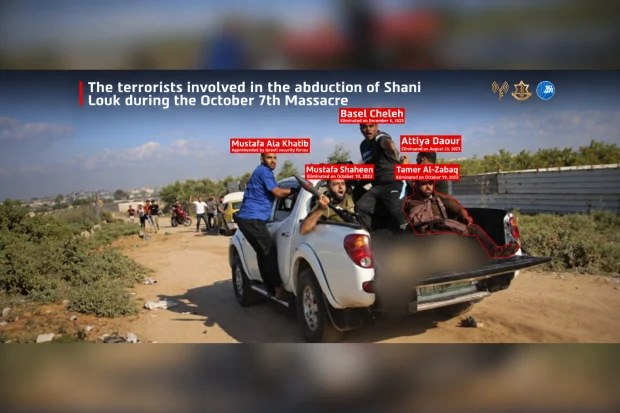
IDF kills Hamas terrorists involved in abduction of German-Israeli Shani Louk on Oct 7