The Amidah and the Lord’s Prayer: God’s plan for Israel and the nations




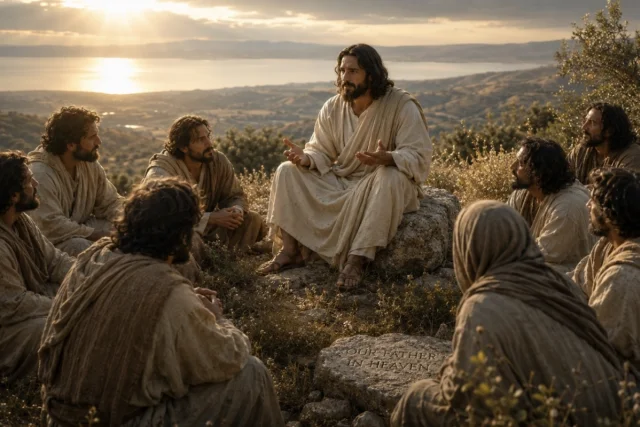
At first glance, the Jewish Amidah and the Christian Lord’s Prayer seem to belong to different worlds. One is a lengthy, structured liturgy recited three times daily by observant Jews; the other is a brief, masterfully simple prayer given by Yeshua to his disciples. Yet when we place these two prayers side by side, a remarkable convergence emerges. Both pray for the coming of God’s kingdom. Both petition for daily bread, forgiveness, and deliverance from evil. And both – perhaps unexpectedly – are woven through with a single, sweeping biblical theme: God’s unbreakable covenant with Israel and his plan to bring salvation to the Gentiles through the restoration of his people.
The Amidah’s Central Hope: The Ingathering of the Exiles
The Amidah’s tenth blessing, known as Birkat Kibbutz Galuyot (“the Blessing of the Gathering of the Exiles”), is a direct petition for the return of the Jewish people to their ancestral land: “Sound a great shofar for our freedom … and assemble us together quickly from the four corners of the earth to our land. Blessed are You, Adonai, who gathers the dispersed of Your people, Israel.” This is aliyah – the physical, national, and spiritual “ascent” of the Jewish people back to Zion.
For the Jewish sages, this ingathering was not merely a demographic event but a messianic prerequisite. The Talmud teaches that the son of David will not come until the land is settled by his people. The Amidah places this blessing at the heart of its petitions, immediately after prayers for healing and prosperity but before prayers for justice. The order is intentional: before a just society can be established in the land, God must first bring his children home.
But the Amidah does not ignore the Gentiles. The fourteenth blessing prays for the rebuilding of Jerusalem, which the prophets said would cause the nations to stream to Zion (Isaiah 2:2-3). The second blessing praises God as the one “who gives life to the dead” – a resurrection hope that, in the New Testament, is extended to all who believe in the Messiah. The Amidah, while particularistic in its focus on Israel, is framed by a universal vision: the God of Abraham is the God of all creation, and the redemption of Israel will ultimately bless “all the families of the earth” (Genesis 12:3).
The Lord’s Prayer as a Prayer for Israel’s Restoration
When Jesus taught his disciples to pray, he was a Jew praying in a Jewish context. The Lord’s Prayer is steeped in the language of Jewish eschatology. Its opening – “hallowed be your name” – echoes the Kaddish, a Jewish prayer for the sanctification of God’s name. But how is God’s name hallowed? According to the Hebrew prophets, it is hallowed when God acts faithfully to fulfill his covenants. The return of the Jewish people to their land after nearly two millennia of exile is a public demonstration that God keeps his word. Every Jew who makes aliyah is a walking testimony that the God of Israel is true.
The central petition of the Lord’s Prayer is “your kingdom come, your will be done on earth as it is in heaven.” In the prophetic literature, the coming of God’s kingdom is inseparably linked to the ingathering of the exiles. Jeremiah declares that when God brings his people back from the land of the north, “they shall be my people, and I will be their God” (Jeremiah 32:38). Ezekiel sees the dry bones coming to life as a vision of national restoration: “I will take you from among the nations and gather you out of all countries and bring you back into your own land” (Ezekiel 36:24). To pray “your kingdom come” is therefore to pray for the very thing the Amidah asks in its tenth blessing: the return of the dispersed of Israel to Zion.
What about the Gentiles? Jesus’ prayer includes no explicit mention of non-Jews, yet the New Testament makes clear that the kingdom includes them. Paul, a Jewish apostle, reveals a mystery: “A partial hardening has come upon Israel until the full number of the Gentiles has come in, and in this way all Israel will be saved” (Romans 11:25-26). The salvation of the Gentiles is not a replacement of Israel but a trigger for Israel’s final redemption. As Gentiles stream into the kingdom, Jewish jealousy is awakened, leading to their national return to God. Thus the Lord’s Prayer – prayed by both Jewish and Gentile believers – becomes a vehicle for the very dynamic Paul describes: “Thy kingdom come” means “Thy people come home.”
Daily Bread, Forgiveness, and the Greater Exodus
The petition “give us this day our daily bread” recalls the manna in the wilderness – the original aliyah from Egypt. But Jeremiah prophesied that the return from the north would eclipse the exodus: “The days are coming … when they shall no longer say, ‘As the Lord lives who brought the people of Israel out of Egypt,’ but ‘As the Lord lives who brought the people of Israel out of the land of the north’” (Jeremiah 16:14-15). When we pray for daily bread, we are asking God to provide for the modern exodus – for the flights, the housing, the jobs, the protection needed to bring millions of Jews home. And remarkably, Gentiles have been part of that provision. Christian organizations have funded and facilitated aliyah for decades, fulfilling Isaiah’s prophecy: “They will carry your sons in their arms and carry your daughters on their shoulders” (Isaiah 49:22).
The petition for forgiveness takes on a painful urgency when we consider Christian history. The church has persecuted the Jewish people for centuries, often in the name of Christ. To pray “forgive us our trespasses” without acknowledging this history is hollow. But when Christians genuinely repent, a door opens for partnership. The same Gentiles who once sought to expel Jews now assist them in returning to their homeland. This is a sign of the kingdom: former enemies becoming servants of God’s covenant purposes.
Deliverance from Evil and the Final Consummation
Finally, “lead us not into temptation but deliver us from the evil one.” The return of the Jewish people is fiercely opposed by the powers of darkness. Antisemitism, terrorism, and international hostility against Israel are real. To pray this petition is to ask for supernatural protection over the Jewish people still scattered across the nations, and over those who have already come home. It is also to pray for Gentile believers – that we not fall into the ancient temptation of arrogance, supersessionism, or indifference toward God’s original people.
The Lord’s Prayer ends with a doxology: “For yours is the kingdom, the power, and the glory, forever.” The Amidah concludes each blessing with “Blessed are You, Adonai.” Both prayers anchor human hope in divine sovereignty. And both point to the same climax of history: the full restoration of Israel, the full salvation of the nations, and the reign of God over a redeemed creation.
Conclusion: Two Prayers, One Song
The Jewish Amidah and the Christian Lord’s Prayer are not competitors. They are two movements in the same symphony. The Amidah prays in detail for the ingathering of the exiles, the rebuilding of Jerusalem, and the coming of the Messiah. The Lord’s Prayer prays in summary for the coming of the kingdom – which, according to the prophets, cannot come without Israel’s return. Together, they call upon the same God, affirm the same covenant promises, and await the same glorious future.
When a Jew prays the Amidah’s tenth blessing, they are asking God to gather his people from the four winds. When a Christian prays “thy kingdom come,” they are asking for the same. May we learn to pray both prayers with understanding, with repentance, and with hope – for the day when Israel is fully home, the nations are fully saved, and the Lord is fully known from Zion to the ends of the earth.
You might also like to read this: