Hezbollah trying to ‘hunt’ IDF commanders in southern Lebanon with FPV drones – report
Terror group is steadily improving its capabilities as IDF struggles to defend against drones




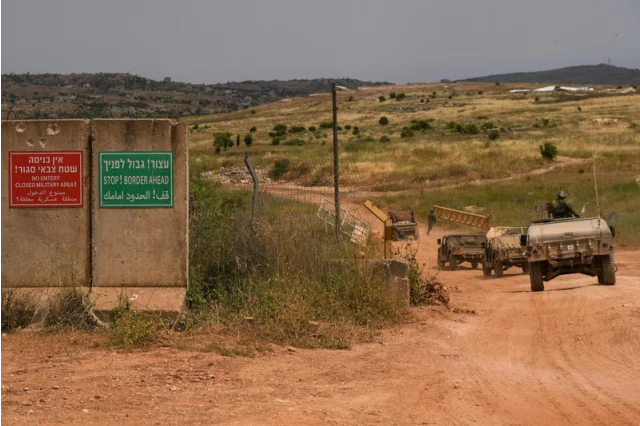
After killing seven Israeli soldiers with drones amid the ostensible ceasefire, Hezbollah has now begun targeting IDF commanders, according to the latest report by the Meir Amit Intelligence and Terrorism Information Center.
The situation on Israel’s northern border has been highly tense, as apparently successful diplomatic efforts under the mediation of the U.S. have brought about another extension of the ceasefire by 45 days.
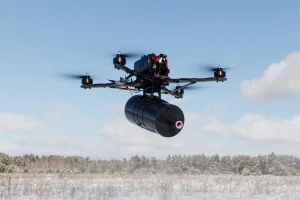
However, the fighting has long resumed on the ground, as Hezbollah has increasingly relied on first-person-view (FPV) drones to harass Israeli troops on their side of the Yellow Line in southern Lebanon, so far killing eleven soldiers, including seven with FPV drones.
The IDF has scrambled to find a response to the cheap, hard-to-detect drones but hasn’t found an effective method to combat them.
Now, the new report suggests that the terror group has become so proficient in using the drones that it can use intelligence about the movements of senior Israeli officers to strike them.
Last Wednesday, the commander of the 401st Brigade, Colonel Meir Biderman, was seriously wounded after being hit by a drone in southern Lebanon, with another reserve lieutenant colonel from the 162nd Division being moderately wounded. Another drone strike has also hit a vehicle attributed to the commander of the 300th Brigade.
In addition, Hezbollah has struck at least one Iron Dome battery in an effort to target sensitive points like commanders, control systems, and missile defense systems.
In recent days, the terror group has combined drone attacks with rocket and mortar launches, and also employed more drone swarms in an effort to overwhelm air defenses. The swarms branch out in different directions during their approach, attempting to overload air-defense systems and increase the chances of striking their targets.
Other technological improvements enabled Hezbollah to begin launching night attacks using explosive drones, while it continues developing capabilities in the fields of electronic warfare and air defense, the Meir Amit Center said.
Hezbollah continues its daily attacks on Israel blatantly violating the ceasefire and targeting Israeli civilians.
— Israel Foreign Ministry (@IsraelMFA) May 26, 2026
Yesterday, a civilian home in Metula was directly hit by Hezbollah fire.
Since the ceasefire began, Hezbollah has killed 11 Israelis. pic.twitter.com/6FyNguzKGw
According to the Alma Research Center in northern Israel, Hezbollah carried out a total of 161 attack waves in the week of May 17–24.
The large majority (121) of the attacks targeted IDF troops in southern Lebanon, while the rest targeted sites within Israeli territory, including a civilian home in Metula on Monday. Most of the attacks (105) used explosive drones, while the rest were carried out with rockets, mortars, or other projectiles.
IDF Spokesman Brig.-Gen. Effie Defrin on Monday responded to reports that IDF soldiers have begun using improvised solutions to protect themselves in the field, including fishing nets and the nets taken from soccer goals.
מטבע הדברים ולמען בטחון הכוחות שלנו, רוב הפעולות שאנחנו מבצעים בנושא הן מסווגות. אני מוצא לנכון לפרסם לכם תמונה אחת מיני רבות, מתהליך ההתמגנות המואץ במוצבי החזית בגבול לבנון של הרשתות, המוצבות בפריסה נרחבת. pic.twitter.com/GKt4Et1lnk
— דובר צה״ל אפי דפרין - Effie Defrin (@IDFSpokesperson) May 25, 2026
Defrin said the IDF is “tirelessly engaged” in finding solutions to the drone threat.
“It is important for us to state – there is no shortage of equipment. The IDF is not acting to solicit donations from civilian entities for the combat forces. We continue to equip and procure nets and optimal defense solutions for the protection of the forces operating in the North, through a rigorous examination process, trials for every equipment manufacturer, and strict adherence to quality and safety standards,” Defrin said.
“There may be isolated cases of private initiatives on the matter. I emphasize - this is not being done due to any shortage of equipment. Any net that does not meet the requirements may pose a risk to the combat forces, and therefore, strict adherence to quality and safety standards is enforced,” he added.
In a post on 𝕏, he also published a picture showing an FPV drone that was caught by a protection net, commenting, “I find it appropriate to publish for you one image among many, from the accelerated fortification process at the front positions of the networks, which are deployed in an extensive layout along the Lebanon border.”
Israeli media have reported that the military has begun issuing several anti-drone tools to help counter the threat, including special “Smart Shooter” rounds and the automatic “Dagger” rifle sight, which only fires a bullet when the barrel is aimed right at the target.
You might also like to read this: