Europe preparing postwar plans to clear Strait of Hormuz without US assistance
China calls on Iran to guarantee freedom of navigation in the vital waterway



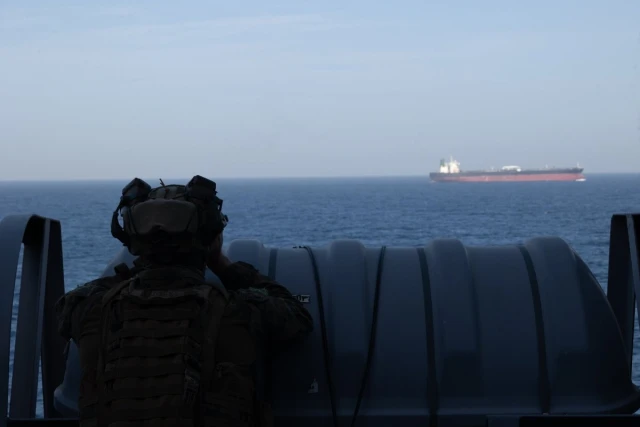
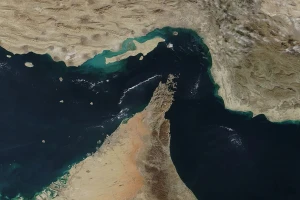
France and the United Kingdom are hosting a diplomatic meeting of European allies in Paris, France, today, to tackle the shipping problem in the Strait of Hormuz after the end of the U.S.-Iran conflict.
The meeting will reportedly discuss the possibility of a multinational force to ensure the security and free flow of trade through the strait at the end of the conflict.
In a post on social media on Tuesday, French President Emmanuel Macron announced that France and the UK would host a conference of “non-belligerent countries ready to contribute, alongside us, to a multilateral and purely defensive mission aimed at restoring freedom of navigation in the strait when security conditions allow.”
German Chancellor Friedrich Merz, British Prime Minister Keir Starmer and Italian Prime Minister Giorgia Meloni are expected to attend the meeting in person, while representatives from up to 30 other countries will participate remotely.
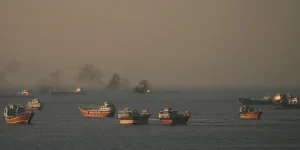
Iran imposed restrictions on shipping through the Strait of Hormuz during U.S. and Israeli military operations, which led to an increase in global energy prices. At the start of the two-week ceasefire on April 7, the U.S. military launched a blockade on all ships traversing the strait to and from Iranian ports.
According to reports in U.S. and European media, the proposal being considered by European states has three main goals: clearing the large backlog of vessels stranded in the Persian Gulf, conducting a mine-clearing effort, and providing naval escorts to restore confidence in traversing the waterway.
France is reportedly excluding the United States from the effort in an attempt to make it more acceptable to Iran, which targeted vessels during the conflict.
However, according to a Politico Europe report, Merz wants to "discuss the participation of U.S. Armed Forces" in the initiative, believing there are "good arguments in favor of it.”
A French official told the outlet that France “won’t enter into a coalition with the U.S. and I don’t think Germany will either.”
Washington is dismissive of the European effort, with White House Spokesperson Olivia Wales saying, “The United States Navy has more than enough resources and assets to secure the strait itself and does not need help from any other country.”
Several reports also stated that China had been invited to participate in the meeting.
China called on Iran to reopen the Strait of Hormuz during a phone call on Wednesday between Chinese Foreign Minister Wang Yi and his Iranian counterpart Abbas Araghchi, emphasizing that while Iran’s sovereignty and security in the waterway should be respected, freedom of navigation must be preserved.
U.S. Treasury Secretary Scott Bessent said that the U.S. blockade on the strait will likely affect China, which has significant trade with Iran and was the largest purchaser of Iranian oil before the start of the war.
“We believe with this blockade in the straits there will be a pause of Chinese buying,” Bessent said on Wednesday. “Two Chinese banks received letters from the U.S. Treasury – I’m not going to identify the banks – but we told them that if we can prove that there is Iranian money flowing through your accounts, then we are willing to put on secondary sanctions.”
There have been multiple reports suggesting that China may have provided Iran with weapons-related assistance and intelligence support both before and during the war.
White House Press Secretary Karoline Leavitt said that U.S. President Donald Trump received a personal assurance from Chinese President Xi Jinping that China is not supplying Iran with weapons.
However, open source intelligence accounts on social media continue claiming that Chinese cargo aircraft have been landing in Iran during the war, and since the ceasefire.
TEHRAN / BEIJING: Reports indicate that China has initiated a high-frequency aerial resupply mission to Iran, defying recent warnings from the White House regarding secondary sanctions.
— Clash Observer (@clashobserver) April 11, 2026
Satellite tracking and flight data confirm that Iranian cargo aircraft are currently… pic.twitter.com/UykZFD0Ip5
Meanwhile, CBS News reported that China is considering selling to Iran advanced X-band radar, which has improved ability to detect and track drones and missiles.
You might also like to read this: