Report: 45% of Muslims under 40 in Germany hold Islamist-leaning views




Almost half (45.1%) of Muslims in Germany under the age of 40 hold Islamist-leaning views, according to a report by the government-backed Radicalization Monitoring System and Transfer Platform (MOTRA), raising concerns among officials about the scope of extremist ideology in the country.
The study, conducted under the auspices of Germany’s Federal Criminal Police Office (BKA), found that 33.6% of young Muslims exhibit what researchers describe as “latent Islamist views,” while 11.5% are considered fully radicalized and openly embrace Islamist ideology.
Christoph de Vries, a parliamentary state secretary and member of the Christian Democratic Union (CDU), warned that the Oct. 7, 2023, Hamas massacre in Israel has acted as “a driver for Islamism as a whole.” Speaking to the German weekly Die Zeit, de Vries said his party is “very concerned” about the trend.
There are currently around 5.5 million Muslims living in Germany, constituting some 6.6% of the total population. The Muslim population is growing faster than the general German population due to large-scale immigration, a younger population, and higher fertility rates.
The Parliamentary State Secretary noted that “13- and 14-year-old boys and girls become radicalized on social media to the point where they want to commit serious attacks.” He therefore suggested that one potential solution could be to impose a social media ban on young people in Germany.
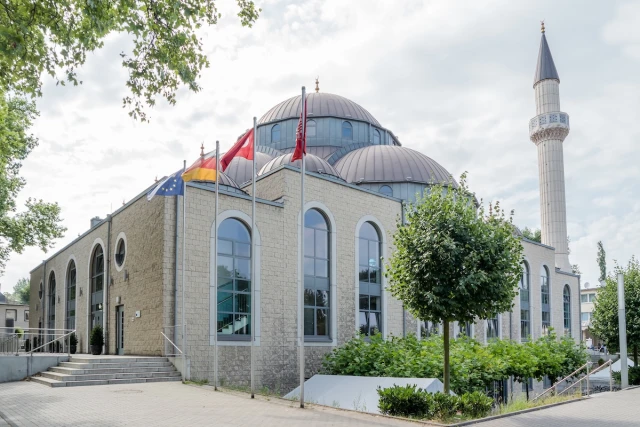
However, much of the radicalization also takes place in mosques across Germany and Europe. De Vries therefore assessed that authorities need to look more carefully at what is being taught in mosques with a specific focus on foreign-sponsored mosques.
For instance, around 1,000 mosques in Germany are reportedly affiliated with the Turkish-Islamic Union for Religious Affairs (DITIB), which is funded and overseen by Turkey’s Directorate of Religious Affairs (Diyanet). As a result, these institutions are sometimes described as “the long arm of Turkish President Recep Tayyip Erdoğan.”
“In Turkey, and thus indirectly also through DITIB in Germany, we see a mixture with currents of the Muslim Brotherhood and the partly antisemitic Milli Görüş, another Islamist movement. We also notice how antisemitic the leaders of the religious authority Diyanet in Turkey are. The mood stirred up there is also reflected in Germany,” De Vries assessed. He noted the strong connection between growing Islamism and growing antisemitism in Germany.
“In many parts of the city, they (Jews) can no longer go out with Jewish symbols such as the kippah,” he said.
“For those who remain here, the fight against antisemitism must always play a role, whether in integration courses or in the naturalization process,” he explained. “Anyone who lives in Germany must recognize Israel’s right to exist."
Germany has emerged as one of Israel’s strongest supporters in the European Union and has articulated a responsibility to protect and support Jewish life in Israel and in the Diaspora due to the Holocaust.
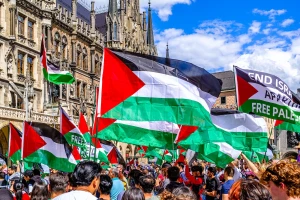
Germany signaled in 2024 that it would deny citizenship to individuals who advocate the destruction of the Jewish state. At the same time, authorities moved to outlaw the slogan “From the river to the sea,” which has been widely used at anti-Israel rallies worldwide. The Federal Ministry stated that such phrases “coincide with an explicit call for violent actions against the State of Israel.” Critics argue that the slogan implies the establishment of a Palestinian state between the Jordan River and the Mediterranean Sea at Israel’s expense, though some supporters dispute that interpretation.
You might also like to read this: