What did Jesus have to do on the 'other side' of the Sea of Galilee?






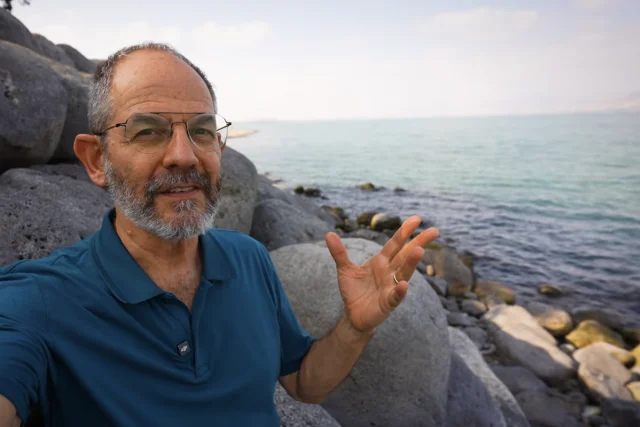
In the three Synoptic Gospels – Matthew, Mark and Luke – a similar account is repeated of a voyage to the other side of the Sea of Galilee and an encounter with a man possessed by many demons who tormented him. That man was not a Jew, which raises a question: Why did Jesus go there and why heal that person?
Despite minor differences between the three accounts, it is clear that they all describe the same event.
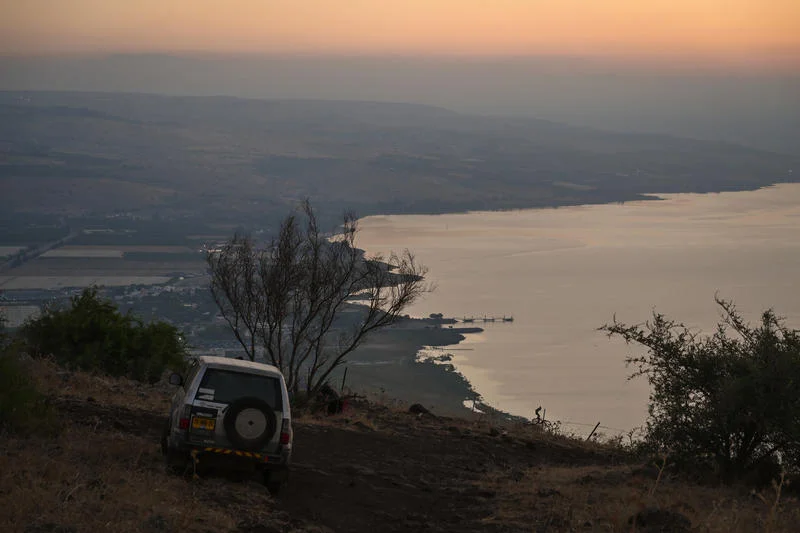
In all three narratives, the setting is the region on the opposite side of the Sea of Galilee – the slopes of what we know today as the Golan Heights. The area is referred to by different names in the various Gospels, as well as among different manuscript traditions of the same Gospel: the country of the Gadarenes, the Gerasenes, or the Gergesenes. These, however, are simply different names for the same general region.
In Matthew's Gospel, there are two demon-possessed men, while Mark and Luke mention only one, but this is virtually the only significant difference. The possessed man lived among the tombs, was wild, and could not be restrained with chains. The demons that possessed him recognized that Jesus was the Son of God and begged Him to send them into a herd of swine. The herd then rushed down the steep hillside and drowned in the Sea of Galilee. This description fits well with the geography of the eastern slopes descending sharply into the Sea of Galilee, where wild boars still inhabit the area today.
The question, however, is this: Why did Jesus sail to a region inhabited primarily by Gentiles, and why perform this particular miracle?
After all, elsewhere He told a Canaanite woman:
"I was not sent except to the lost sheep of the house of Israel" (Matthew 15:24-NKJV).
It is important to note that in all three Synoptic Gospels, the account of the demon-possessed man immediately follows another story that also appears in all three Gospels, in which Jesus falls asleep in the boat during the crossing of the lake. A violent storm threatens to sink the small vessel, and the disciples wake Him for help. Jesus rises, rebukes the wind, and the storm becomes calm. Immediately afterward, they arrive on the other side of the lake and encounter the demon-possessed man.
Several scholars have observed that both stories allude to earlier narratives in the Old Testament – the story of Jonah the prophet. Jesus sleeping during the storm recalls Jonah, who also slept in a boat during a violent storm. However, there is a significant difference between the two stories.
In Jonah's account, it is God who calms the sea, whereas in the Gospels it is Jesus Himself who rebukes the wind and stills the storm. The allusion to Jonah highlights Jesus' divinity and His authority over the forces of nature. Jonah slept and was awakened to pray, but he was not the one who calmed the sea. Jesus is like Jonah – but prominently greater – because He is God.
Yet, there is another allusion to the Exodus narrative: the drowning of the swine reminds us of the Egyptian army drowning in the sea. The name "Legion" by which the demon identifies himself immediately evokes the image of an army – the Egyptian army. Just as in the beginning of the story, when Jesus demonstrated authority over nature by calming the sea, here He demonstrates divine authority by bringing destruction upon an entire "army" in the waters.
Many scholars have also noted that the Gospel of Mark, in particular, portrays Jesus' ministry as a kind of Second Exodus. This is especially evident in its numerous parallels with the book of Isaiah, whose prophecies concerning the last days frequently employ imagery drawn from the Exodus. Through actions that mirror a new Exodus, Jesus declares that the prophetic promises concerning the end times are beginning to be fulfilled.
A striking example appears when reading Isaiah 65:3-4:
"A people who provoke Me to anger continually to My face; Who sacrifice in gardens, And burn incense on altars of brick; Who sit among the graves, And spend the night in the tombs; Who eat swine's flesh, And the broth of abominable things is in their vessels" (Isaiah 65:3-4 - NKJV).
It isn’t hard to notice the connection with our story. God's judgment falls upon those who dwell among the tombs and eat swine's flesh. The demon-possessed man lives among the tombs, while the unclean spirits enter the herd of swine, which ultimately perishes in the sea.
But there is another aspect of the narrative that explains even more clearly why Jesus crossed to the other side.
The expression "the other side" is not coincidental. Every time Jesus sails to the eastern shore of the Sea of Galilee, the Gospels describe it as "the other side." Why?
During the Second Temple period, a dualistic theological outlook developed within Judaism, reflected particularly in the Dead Sea Scrolls. This worldview distinguished between the sons of light, destined for redemption, and the sons of darkness, who stood under judgment.
The New Testament also reflects this language. For example:
"For the sons of this world are more shrewd in their generation than the sons of light" (Luke 16:8-NKJV).
Jesus, who represents the Light, came to overcome the darkness:
"And the light shines in the darkness, and the darkness did not comprehend it" (John 1:5-NKJV).
The concept of "the other side" later developed in Jewish mystical tradition and Kabbalah under the Aramaic expression Sitra Achra ("the Other Side"). The Other Side came to represent the realm of darkness, where the powers opposed to God reign – the domain of sin and God's enemies.
Why, then, was the Other Side associated with the land east of the Sea of Galilee?
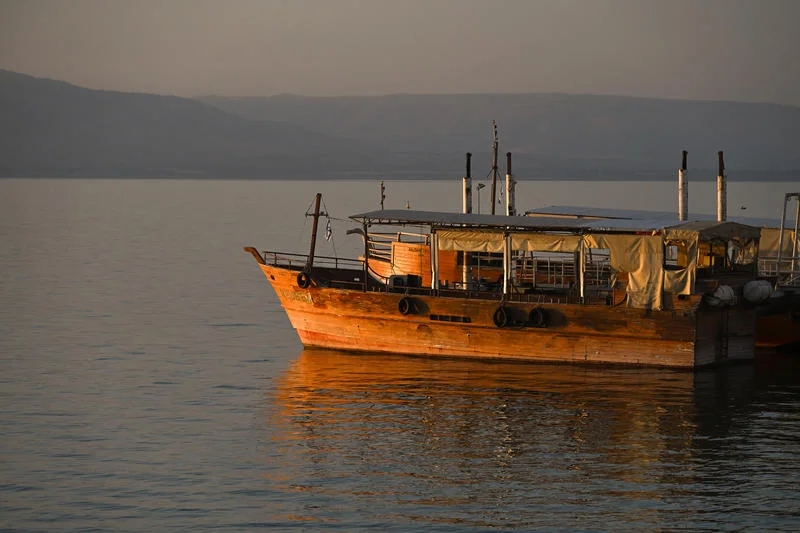
The mountains east of the lake belonged to what is now called the Golan Heights, but in the Old Testament this region was known as Bashan. Derek Gilbert, a Bible scholar, notes that the name Bashan means "place of the serpent."
Already in the Pentateuch we see Bashan associated with beings known as the Rephaim. When Israel conquered Bashan, they fought Og, king of Bashan, who is described as the last of the Rephaim.
"For only Og king of Bashan was left of the remnant of the Rephaim" (Deuteronomy 3:11-NASB).
Who were the Rephaim?
According to the Old Testament, they were an ancient race of giants. Elsewhere they are also associated with the spirits of the dead:
"Sheol below is excited about you, to meet you when you come; It stirs the spirits of the dead (Rephaim) for you, all the leaders of the earth; It raises all the kings of the nations from their thrones" (Isaiah 14:9-NASB).
In Genesis 6:4, we read of another group – the Nephilim, described as the offspring resulting from the union between "sons of God" and the daughters of men.
Later, in the account of the spies, we read:
"We also saw the Nephilim there (the sons of Anak are part of the Nephilim); and we were like grasshoppers in our own sight, and so we were in their sight"(Numbers 13:33-NASB).
Moses says that the Rephaim were also giants:
"Like the Anakim, they too are regarded as Rephaim" (Deuteronomy 2:11-NASB).
Therefore, one may conclude that there is an identity or connection between the Nephilim, the Anakim, and the Rephaim. Without delving too deeply into a subject that the Bible itself chooses not to explore in detail, we learn that the hybrid offspring associated with the sin that brought about the Flood—and which resulted from crossing the boundary between humanity and God – ultimately led to the lineage of the Rephaim who lived in the region of Bashan, the land of the serpent.
In the Book of Joshua, we learn that the Israelites were commanded to destroy the giants who lived in the land. In his book “The Unseen Realm,” Michael Heiser claims that the primary purpose of God sending the Israelites to conquer Canaan was, first and foremost, to destroy the hybrid offspring of the giants and the Nephilim.
If we accept these assumptions, we can understand why Jesus, who brings the Kingdom of God and whose ministry begins in Galilee, shows God's victory over the "Other Side" – the Sitra Achra – by freeing the demon-possessed man and drowning the demons, who are the rulers of the Other Side, in the sea.
Psalm 22, the one psalm that is mostly identified with Jesus’ crucifixion, we read a direct reference to the Bashan: “Many bulls have surrounded Me; Strong bulls of Bashan have encircled Me” (Psalms 22:12-NKJV).
Sailing to the “Other Side” to confront the Bulls of Bashan was prophesied in Psalms 22 and fulfilled in the Gospel.
Support our independent, on-the-ground reporting from Israel. Become a $5/month Ally.

You might also like to read this: