








Two beginnings, two births
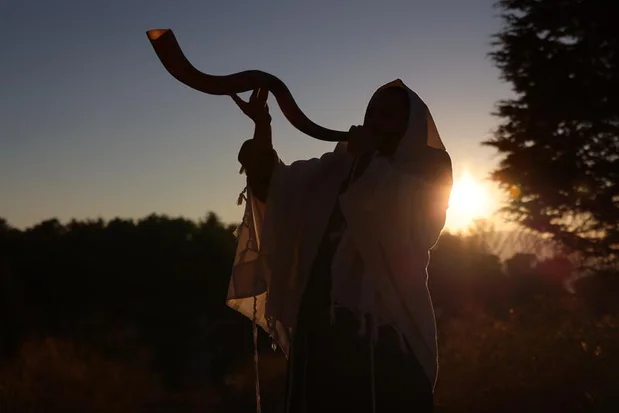
Josephus Flavius, the Jewish historian who lived some two thousand years ago, in the time of Jesus, wrote that Moses made Nisan the first month for the festivals, while the older order of the months remained in use for buying and selling and other ordinary affairs. Josephus’ testimony is historically significant: it shows that celebrating the God-appointed Feast of Trumpets at the beginning of the seventh month as the turning of the year – Rosh Hashanah – was already an established Jewish practice long before the destruction of the Second Temple.
The Bible itself provides evidence of two different ways of reckoning the year. This offers a meaningful parallel to the believer’s two births – the first according to the flesh, and the second according to the Spirit. When a person is born again, a new reckoning of time begins: life is now measured from a second beginning.
A season begins in autumn
The celebration of Rosh Hashanah as new year in the Jewish calendar has biblical roots: several passages point to an autumn turning of the year. The Feast of Ingathering falls “at the year’s end” (Exodus 23:16; 34:22), and the Jubilee year is also proclaimed in the seventh month, Tishri (Leviticus 25:9–10). At the beginning of that same month, God commands a holy assembly and a memorial of trumpet blasts (Leviticus 23:24). The expression itself even appears in the Hebrew Bible: in giving the date of his great vision, Ezekiel uses the words בְּרֹאשׁ הַשָּׁנָה – b’Rosh Hashanah, “at the head of the year” (Ezekiel 40:1).
Tishri marks a year-boundary, and it echoes the very first beginning: creation itself. Before God spoke, the world was formless and void. God brought order out of chaos, light out of darkness, life out of lifelessness. He formed man from the dust: that is the first birth – physical, creaturely, magnificent and limited. Every one of us enters the world this way: called into existence by a power not our own, placed in a cosmos that is already running, already turning, already marked by the heavenly bodies that God set in the sky "for signs and for appointed times" (Genesis 1:14).
Those luminaries have a purpose. The Hebrew mo'adim is the same word that names the appointed feasts of the Lord – mo'ade Adonai (Leviticus 23:2). The sun and the moon were built into creation to signal God's sacred calendar: the new moon heralding the festivals, the seasons framing the cycle of sowing and harvest, the years counting toward sabbatical rest and Jubilee. They announce; they do not govern. Their meaning comes from the word of God, not from any pattern a human interpreter might project onto them.
And yet the natural person – born once, born only of flesh – is drawn to do exactly that. The same heavenly bodies that God appointed as heralds of His feasts, the unregenerate heart turns into instruments of divination: horoscopes, star charts, monthly prognostications. This is not harmless curiosity. Scripture treats it as a kind of spiritual slavery – the creature worshipping the creation instead of the Creator, looking to the stars for what only God can give. "There shall not be found among you anyone who practices divination or interprets omens" (Deuteronomy 18:10-12). Isaiah mocks Babylon's astrologers: they could not save themselves, let alone the empire (Isaiah 47:13-14). The prohibition is not arbitrary. Astrology is the counterfeit of the mo'adim – it takes the same sky and asks the wrong question. Instead of "What times has God appointed for His people, and what do they mean?" it asks, "What does the future hold for me?" The first question leads to obedience; the second to bondage.
This is the predicament of the person who knows only the first birth. The physical creation is good, but it is not enough. The human being who came from tohu vavohu still carries a chaos within – guilt, compulsion, spiritual blindness, the instinct to reach for counterfeit certainties instead of the living God. That is why the Bible speaks of a second birth, and why God marks a second beginning of the year.
The year begins in spring
The second beginning of the year falls in Nisan, in spring. On the eve of the Exodus, God tells Moses: "This month shall be for you the beginning of months; it shall be the first month of the year for you" (Exodus 12:2). Nisan becomes first not by nature but by redemption – because God breaks the chains of slavery and brings into existence a people that did not exist before. This is not restoration of something old. It is something radically new: a nation born in a single night, through water and blood – the water of the Red Sea and the blood of the Passover lamb.
But for the new creation to be possible, God Himself had to come down to Earth.
He had come down once before, at Mount Sinai. The Feast of Trumpets may point back to that extraordinary encounter. Scripture calls the feast a “memorial of trumpet blasts,” yet it does not explicitly tell us what the trumpet blast is meant to recall. Sinai, however, offers a striking biblical parallel:
"And it came to pass on the third day, in the morning, that there were thunderings and lightnings, and a thick cloud on the mountain; and the sound of the trumpet was very loud… Now Mount Sinai was completely in smoke, because the Lord descended upon it in fire" (Exodus 19:16, 18).
God came down to earth, into the world He had made, to enter into covenant with His people. The trumpet recalls that moment. But Sinai was a foretaste. The decisive descent – the one that makes the second birth possible – came when God entered the world not in fire and smoke but in flesh. He came to fulfill the Law given at Sinai, to reveal His redemptive power through self-sacrificial love, and to perfect forever those who are being sanctified.
In Jewish tradition, the Torah reading on the last Sabbath before Rosh Hashanah is accompanied by a passage from the Prophets taken from Isaiah 61. It was from the same chapter that Jesus read in the synagogue of Nazareth:
"The Spirit of the Lord is upon Me, because He has anointed Me to preach good news to the poor; He has sent Me to heal the brokenhearted, to proclaim liberty to the captives and recovery of sight to the blind, to set at liberty those who are oppressed; to proclaim the acceptable year of the Lord" (Luke 4:18-19, citing Isaiah 61:1-2).
Then He sat down and said: "Today this Scripture is fulfilled in your hearing."
The language unmistakably echoes the Jubilee – liberty, release, restoration, and a year of divine favor. God has come down, and now the second birth is open: "Unless one is born again, he cannot see the kingdom of God. That which is born of the flesh is flesh, and that which is born of the Spirit is spirit" (John 3:3, 6). The person who was born once – from dust, into a beautiful but broken world – can now be born a second time: "If anyone is in Messiah, he is a new creation; old things have passed away; behold, all things have become new" (2 Corinthians 5:17).
This is the Nisan pattern: God bringing into existence what was not there before. Not repair but re-creation. Not management of the old life but the gift of a new one. The one who is born of the Spirit no longer needs to read the stars for guidance – he has the word of the living God and the Spirit who leads into all truth.
New heavens and a new earth
And the Spirit of God points further still. Beyond the individual new birth lies the promise of a cosmic new creation – "new heavens and a new earth" (Isaiah 65:17; Revelation 21:1) – when the trumpet will sound once more (1 Thessalonians 4:16) and creation itself will be set free from its bondage to decay (Romans 8:21). The Jubilee that restores every lost inheritance finds its final fulfillment not in a single sabbatical cycle but in the age to come, when the chaos that still groans through the world will be undone for good.
When the people gathered on the first of Tishri in the days of Nehemiah and heard the Torah read aloud, they wept. Their leaders told them: "Do not sorrow, for the joy of the Lord is your strength" (Nehemiah 8:10). The luminaries still mark God's appointed times. The shofar still sounds. And the One who proclaimed the acceptable year of the Lord in Nazareth still offers what no star chart can give – a second birth, and through it, entrance into the new creation.
Shanah Tovah.

Support our independent, on-the-ground reporting from Israel. Become a $5/month Ally.
Popular article:
interview Easter message of resurrection hope amid war at Jerusalem's Garden Tomb

biblical commentary Let my people go: a Passover message for today

4 IDF soldiers killed, 2 wounded in fighting in southern Lebanon, as Israel eliminates dozens of Hezbollah terrorists

Receive latest news & updates
A message from All Israel News
Help us educate Christians on a daily basis about what is happening in Israel & the Middle East and why it matters.
For as little as $10, you can support ALL ISRAEL NEWS, a non-profit media organization that is supported by readers like you.
Latest articles:
North American Jewish organizations to recruit 100 professionals to combat antisemitism

‘No need’ for pre-election Iran strike, IDF chief says as gov’t, opposition trade blame for potential escalation – report

terror attack 2 Israelis critically wounded, 2 terrorists killed in Hebron shooting; IDF says larger attack was prevented
analysis A people dwelling securely? Israel’s strategic standing, 3 years after Oct 7

Hamas on wheels: What I found in Dearborn reveals a troubling history and a battle over Israel