








A disguised Shimon Peres sneaked into King Hussein's palace, paving a path to peace with Jordan
Secret meeting led to Israel’s 2nd peace treaty with an Arab Muslim nation
On the tenth anniversary of the death of former Israeli President and Prime Minister Shimon Peres, the Peres Center archive has revealed excerpts from a dramatic 1993 meeting between Peres and Jordan’s King Hussein.
In the fall of 1993, King Hussein sent a message to the Israeli government expressing his willingness to hold a discreet meeting with then-Foreign Minister Shimon Peres.
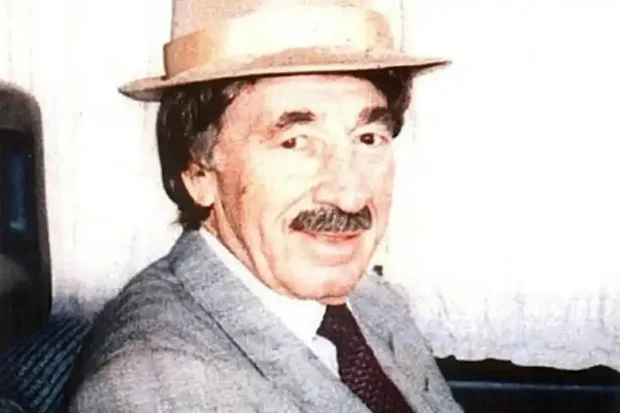
Several days later, a middle-aged man with a full head of dark hair and a prominent mustache entered the royal palace in the capital city of Amman.
The mustache and hair were fake, intended to hide Peres’ identity, while the two leaders discussed the path to a historic peace agreement between the countries, which were technically still at war.
The documents released by the Peres Center say the king “was assured that the visit would be conducted in secrecy and that the necessary measures would be taken to prevent the foreign minister from being identified.”
King Hussein considered Peres a creative thinker, capable of leading a peace process on the Israeli side. The two nations had already held secret exchanges over the years, aimed at preventing a return to conflict.
On the day of the meeting, Peres, along with his chief of staff and the deputy head of the Mossad, crossed the Allenby Bridge on foot, not in a government car. On the Jordanian side, two cars were waiting to pick them up, including one driven by King Hussein’s chief of staff.
During the meeting, Peres presented a vision of regional cooperation, including economic partnerships and infrastructure projects such as roads and seaports that could benefit both countries.
King Hussein appeared impressed by Peres’ vision of mutually beneficial development.
“We have many dreams and hopes for the future,” King Hussein told Peres. “I share the commitment that there will be change and that the younger generations will have the opportunity to live with a sense of security, which is peace.”
He also expressed confidence that they could reach an agreement, based on mutual respect.
“My assurance that the partnership between us remains intact in no way expresses complacency; on the contrary, it is a dynamic partnership, open to creative proposals, which, from my experience, I know characterize your approach,” Hussein told Peres.
However, King Hussein expressed concern that the window of opportunity for reaching an agreement could soon close.
“Maybe I have a year or two left; I will put everything at stake,” Hussein told Peres. “History is like a galloping horse; either you will overtake it or get off and the horse will continue to gallop without you. We don't have much time and our ‘life expectancy’ to make peace is limited. Our generation must make difficult decisions before we disappear – and all for the sake of our children.”
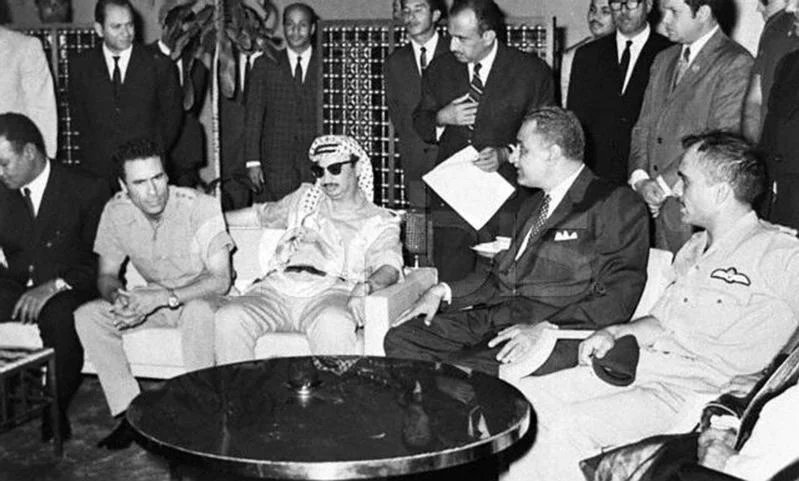
The Jordanian king had reason to be concerned: his grandfather, King Abdullah I, had been assassinated in 1951, and he himself had already survived several assassination attempts.
"We must secure the future of the children, so we must not lose momentum - there is a contradiction between the small amount of time available to us and the greatness of the opportunity before us,” he told Peres. “When the gaps narrow, the fears will fade, hopes will grow for all the children of Abraham, and the time has come for that to happen.”
In response, Peres assured Hussein that the Israeli public was ready for peace.
“There is currently tremendous support in public opinion for the peace agreement. The souls of the young people have been crushed by wars, poverty and the lack of freedom.”
At the end of the meeting, King Hussein gave the foreign minister a large photograph of himself with a warm dedication at the bottom.
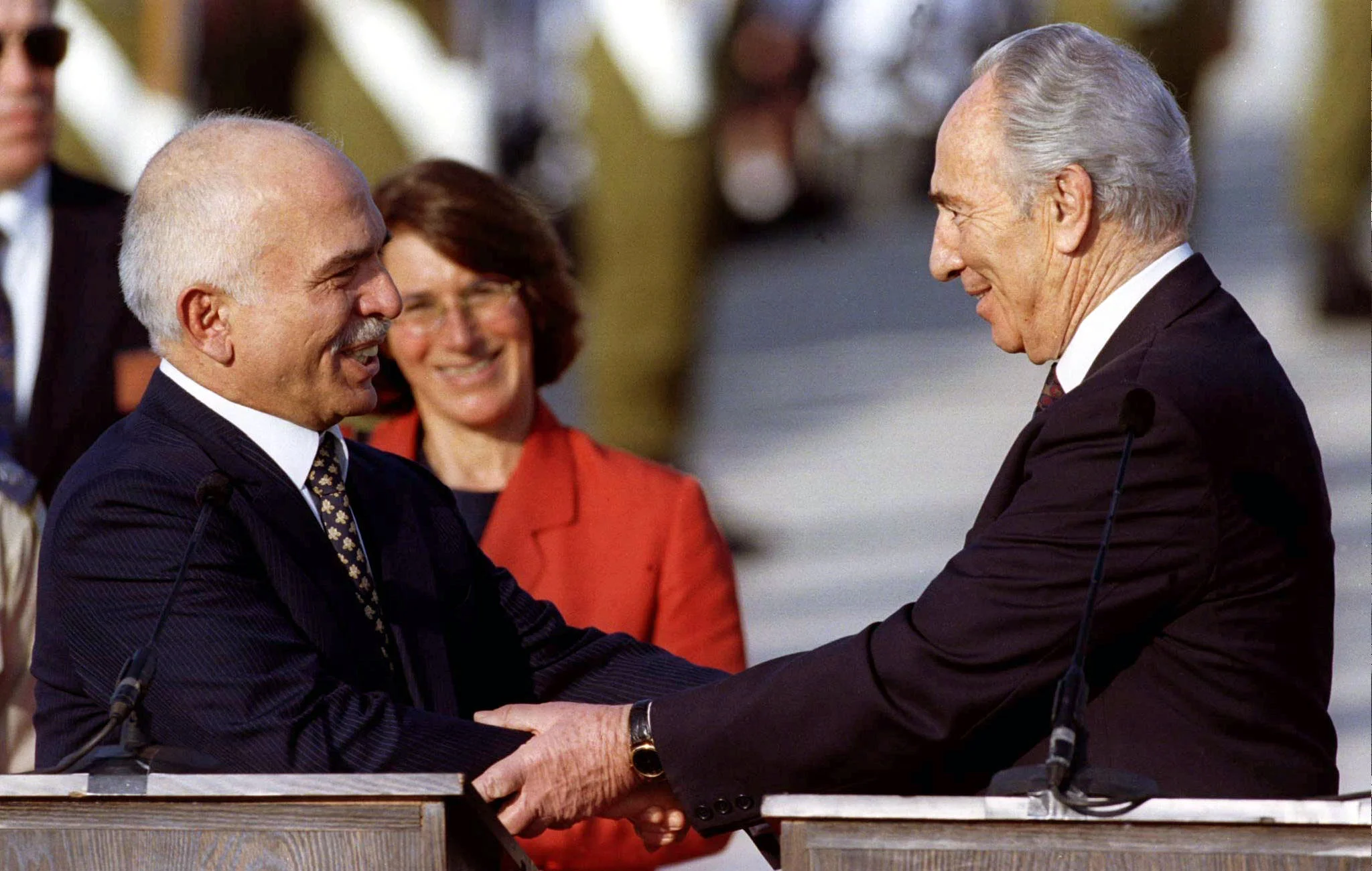
King Hussein also agreed to have his picture taken with Foreign Minister Peres, which was done using a Polaroid camera operated by Hussein’s chief of staff.
The two leaders signed an informal document of understanding, which was then presented to Israeli Prime Minister Yitzhak Rabin for review.
In October 1994, less than one year after Peres and Hussein's secret meeting, a formal peace agreement between Israel and Jordan was signed in Wadi Arava, located near the border south of the Dead Sea.
It was Israel’s second peace treaty with an Arab, Muslim country, a feat that would not be repeated until the signing of the Abraham Accords in 2020. For the first time since the 1948 Independence War, Israel and Jordan shared a border that could be legally crossed by their respective citizens.
Upon the release of the documents, Hemi Peres, son of the former president and chairman of the Peres Center for Peace and Innovation, said, “It is difficult not to be moved when reading the documents from that historic meeting. The secret meeting expressed Peres' worldview - a visionary who believes in our ability to change reality.”

Support our independent, on-the-ground reporting from Israel. Become a $5/month Ally.
Popular article:
interview Easter message of resurrection hope amid war at Jerusalem's Garden Tomb

biblical commentary Let my people go: a Passover message for today
4 IDF soldiers killed, 2 wounded in fighting in southern Lebanon, as Israel eliminates dozens of Hezbollah terrorists

Receive latest news & updates
A message from All Israel News
Help us educate Christians on a daily basis about what is happening in Israel & the Middle East and why it matters.
For as little as $10, you can support ALL ISRAEL NEWS, a non-profit media organization that is supported by readers like you.
Latest articles:
North American Jewish organizations to recruit 100 professionals to combat antisemitism
‘No need’ for pre-election Iran strike, IDF chief says as gov’t, opposition trade blame for potential escalation – report
terror attack 2 Israelis critically wounded, 2 terrorists killed in Hebron shooting; IDF says larger attack was prevented
analysis A people dwelling securely? Israel’s strategic standing, 3 years after Oct 7
Hamas on wheels: What I found in Dearborn reveals a troubling history and a battle over Israel