Chinese tech ties with Jordan raise security concerns for Israel





Chinese investments in Jordan’s digital infrastructure could create long-term intelligence and cybersecurity risks for Israel, particularly near the strategically important Jordan Valley, according to Morocco-based Middle East security expert Amine Ayoub.
Ayoub, a scholar affiliated with the Middle East Forum, said Jordan’s growing relationship with China does not signal a break with the West, but could create new security vulnerabilities along Israel’s eastern border.
Jordan and Israel established full diplomatic relations under their 1994 peace treaty and Jordan remains one of Washington’s closest Arab allies. At the same time, Jordan has been expanding its economic and technological ties with China.
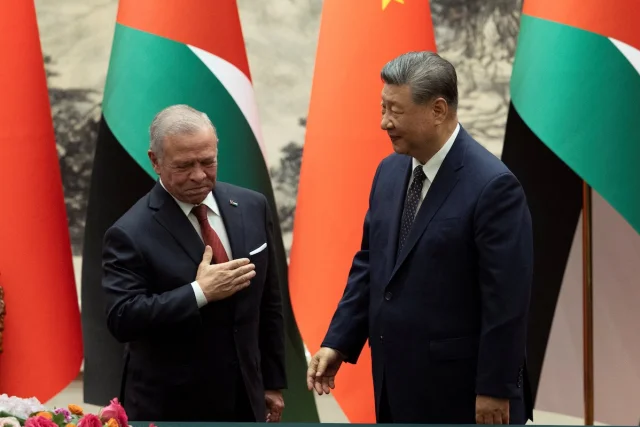
Jordanian King Abdullah II recently visited China, where he met with Chinese President Xi Jinping in Beijing. The visit produced bilateral agreements covering trade, foreign affairs, artificial intelligence and the digital economy, and continued the China-Jordan Strategic Partnership established in 2015.
“Amman's engagement in Beijing does not indicate a geopolitical rupture nor a realignment away from Western partnerships. It represents an intentional policy of measured diversification and strategic hedging,” Ayoub assessed.
“China became Jordan's largest trading partner in 2025, with trade volume reaching $6.7 billion to $6.72 billion,” Ayoub said, adding that Jordan’s economic relationship with China exists alongside its reliance on the United States and “quiet security coordination with Israel.”
Ayoub said Jordan is seeking Chinese investment and technology to strengthen its economy, including through projects involving energy infrastructure and digital platforms.
“Expanding commercial and technological partnerships with China provides Jordan with investment, equipment and technological expertise,” he explained.
Despite continued Israeli-Jordanian security cooperation, Ayoub said the growing Chinese presence in Jordan warrants attention.
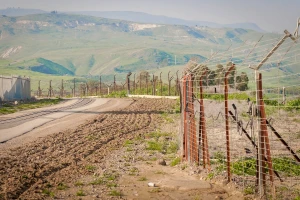
“The primary security pillar along Israel's eastern frontier remains intact,” he said, noting that cooperation between the Israel Defense Forces, Shin Bet and Jordan's General Intelligence Directorate “continues to function as an indispensable strategic buffer” along the 480-kilometer border.
Israel has nevertheless expressed concern that jihadists could attempt to launch an Oct. 7-style attack from Jordan against Israeli border communities. In May 2025, Israel approved a plan to strengthen security along the Jordan border.
Ayoub said the concern is not necessarily Jordanian cooperation with China itself, but rather the potential vulnerabilities posed by Chinese-built infrastructure.
“While the operational security core remains resilient, the expanded presence of Chinese physical and digital infrastructure inside Jordan introduces legitimate long-term intelligence and cybersecurity considerations for Israel,” he said.
“As Chinese state-backed entities participate in Jordan's energy grids, transport hubs and telecommunications networks, the physical proximity of these systems to IDF positions along the Jordan Valley naturally increases,” Ayoub said.
He cited the potential for “third-party intelligence gathering, cyber vulnerabilities and covert collection embedded within dual-use commercial technologies.”
Ayoub recommended that Israel respond by expanding economic cooperation with Jordan and establishing bilateral technological security consultations with Jordanian authorities.
You might also like to read this: