Slovenian PM defies EU position in support of Israel




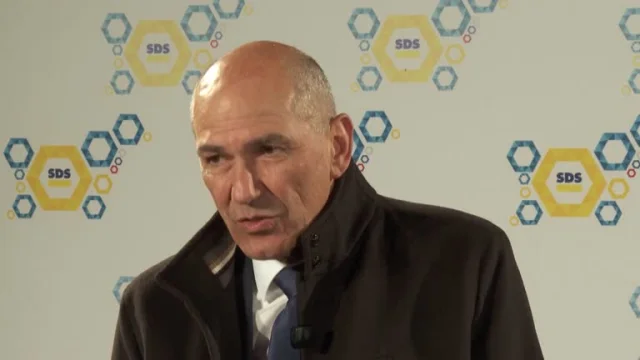
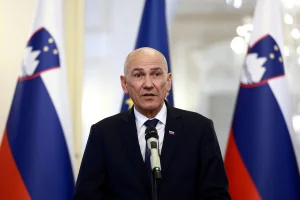
Slovenian Prime Minister Janez Janša is facing domestic opposition after vetoing an EU statement condemning Israel’s plans to expand construction in the E1 corridor east of Jerusalem and defending Slovenia’s right to pursue an independent foreign policy.
The move follows several steps by Janša since returning to power this summer to reverse his predecessors’ hostile stance toward Israel, including a recent meeting with Yesha Council chairman Yossi Dagan, during which he said, “God bless the residents of Judea and Samaria.”
Slovenian President Nataša Pirc Musar, who is highly favored by many of the EU’s Left-of-Center political parties and NGOs, has strongly criticized Janša’s policies, saying that “international law is not a matter of political choice.”
She added that the political and legal consensus of the EU and “international law” clearly state that Israeli construction in Judea and Samaria is illegal and illegitimate.
Janša responded by emphasizing that Slovenia is an independent country entitled to determine its own foreign policy and is not bound by EU consensus, comparing the country’s current position to its former status within Yugoslavia.
“Yugoslavia no longer exists. This is Slovenia,” he declared.
Janša also rejected claims that Israel is committing genocide, saying that despite extensive commentary by media and cultural figures around the world, no competent international agency has declared Israel to be committing a “genocide” in Gaza, the West Bank or anywhere else.
He said the use of the term in relation to Israel is “a political choice of a special kind.”
Janša further argued that Slovenia, as an EU member state, has the same decision-making authority as other member states and cannot be compelled to support a position to which it does not consent.
“We are decision-makers, not slaves,” he declared, adding that his government will continue pursuing a pragmatic policy in all areas under its constitutional authority, including foreign policy, with the interests of Slovenian citizens as its primary and only concern.
The tone and substance of Janša’s policies represent a massive shift from those of his predecessor, former Prime Minister Robert Golob, who was among Israel’s harshest critics in the EU.
The change is being compared to the shift in Colombia’s stance toward Israel under its new president, Abelardo de la Espriella.
A source in Israel’s Foreign Ministry told All Israel News, under the customary condition of anonymity, that Israel’s international standing may be stronger than its public rhetoric suggests.
“Israel is not nearly as unpopular in the international arena as our enemies in the media establishment would like everyone to believe we are,” the source said.
“Some governments make harsh public statements and some even take occasional steps which make our lives more difficult. But most of the time, this is just what is called ‘virtue signaling’ and even those governments which make these unfriendly rhetorical statements quietly continue mutually beneficial cooperation in trade, intelligence, defense, and much else."
The source added that Israel is grateful to countries that publicly support it and expressed hope that more governments will follow the examples of Slovenia and Colombia:
“Occasionally, we see examples of true friends who speak up publicly for us and we’re grateful for that. My personal hope is that more of the quiet ones will see what Slovenia and Colombia’s leaders are doing and it will help them find some courage to speak up themselves.”
You might also like to read this: