The last Lost City of the Gospels: A decade of digging builds the case for biblical Bethsaida



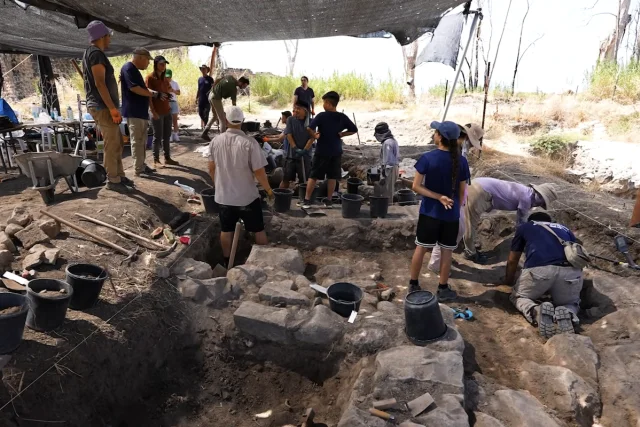
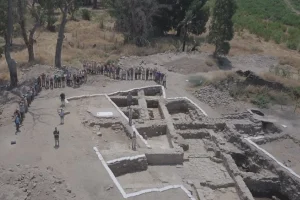
On a hillside east of the Jordan River, where the Sea of Galilee meets the horizon, a team of archaeologists, students, and volunteers has spent ten seasons chasing a question that scholars argued over for more than 150 years: where, exactly, was Bethsaida?
The Gospels are clear that it mattered. After Jerusalem and Capernaum, Bethsaida is the most frequently mentioned site in the New Testament. It was the hometown of Peter, Andrew, and Philip, and the setting for some of the most recorded miracles of Jesus. But its exact location had been lost to history, and for decades, one competing site led the charge.
Now, after ten seasons of excavation at El Araj, a site also known as Ancient Julius, the team believes it has closed the case.
A scholarly argument, settled in the dirt
Dr. Steven Notley, the site's academic director, has been chasing this question since arriving in Israel in 1983 to study the Jewish background of the Gospels. He became convinced early on that the leading candidate for Bethsaida, a site called Et-Tel, didn't fit the evidence.
"In all of the literature, in the Gospels, in the Jewish literature – everything – it's described as being on the lake," Notley explains. Et-Tel sits roughly a mile and a half from the shoreline, "too far away... to have a fishing village." Its excavation record also didn't match the historian Josephus' description of a Jewish fishing village that Herod Philip elevated into a Roman city – a site whose fortunes should be rising, not declining, in the first century.
The debate played out for years in academic journals until 2014, when a shovel survey at El Araj – organized by a former student of Notley's – turned up Roman-era pottery where none was supposed to exist. That survey grew into a full excavation, led by veteran field archaeologist Moti Aviam.
Aviam, who has spent nearly 50 years excavating sites across the Galilee, wasn't easily persuaded. "I'm not going to dig because Rami said so or Stephen said so," he recalls. "It's only because now I'm curious." By the second season, his team had found a Roman layer beneath the site – evidence that ruled out a rival theory that the area had once been a submerged lagoon and couldn't have supported a Roman-era settlement at all.
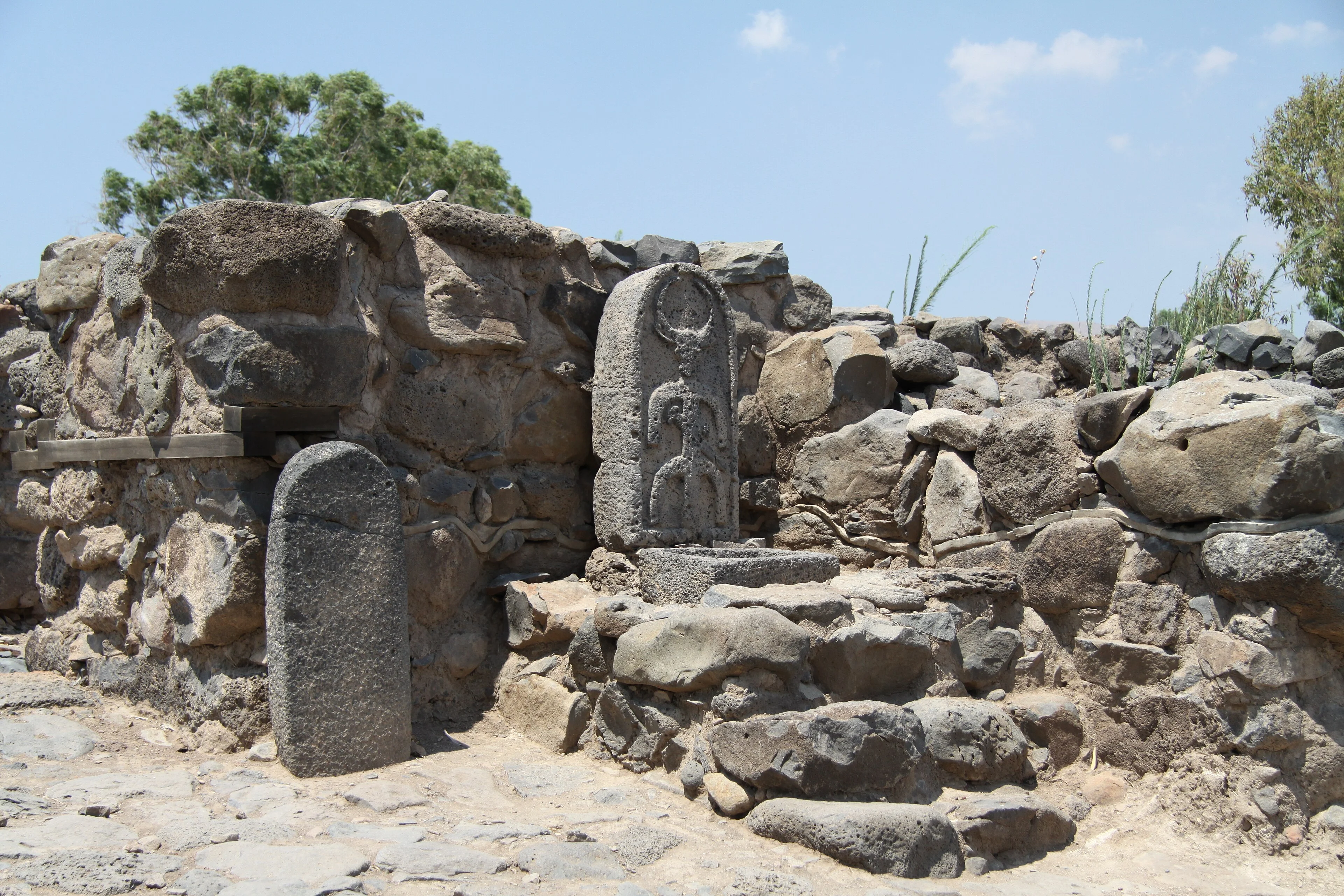
The proof kept accumulating. In 2022, excavators uncovered a nearly perfectly preserved mosaic inside the ruins of a Byzantine-era church – a dedication inscription naming "the chief of the apostles and the keeper of the keys of heaven." Only one figure fits that description in Christian tradition: Peter. A year later, digging beneath the church's most sacred point, the apse, the team found the walls of a first-century home, carefully boxed off and plastered – treated, in other words, like a shrine.
"You're not going to find a plaque that says 'Peter slept here,'" Notley says. "But in archaeological terms, it doesn't get much better than that."
Beyond the discovery: A case for the next generation
For Dr. Chris McKinney, associate director of Lipscomb University's Lanier Center for Archaeology, El Araj represents something beyond a single site – it's a training ground for a new generation of biblical archaeologists. This summer marked the Lanier Center's first season on the project.
McKinney describes the particular jolt of handling an oil lamp pulled straight from a Herodian-era layer, its wick still stained with soot. "This soot that's on the lamp was burning when Philip of Bethsaida and Simon Peter and Andrew – like, it was burning when they were here," he says. "It's an amazing moment of looking across history and time."
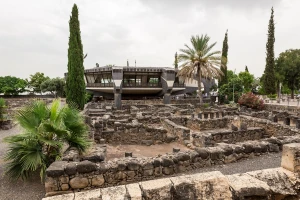
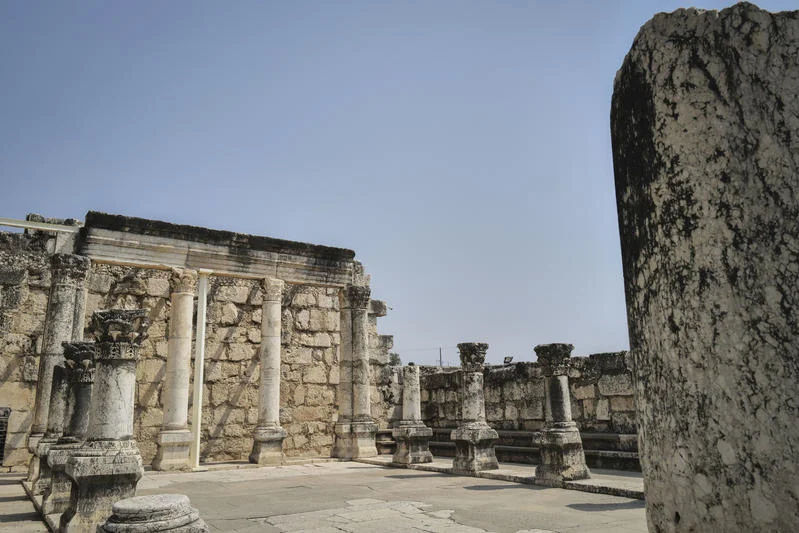
What makes El Araj especially valuable to researchers, McKinney adds, is how undisturbed it is compared to nearby sites like Capernaum or Chorazin, which carry centuries of later construction on top of their first-century layers. "Here we have an opportunity to excavate a city that's exactly from the time of Jesus," he says – a rare chance to apply modern archaeological techniques to a site that hasn't already been picked over.
Digging as a spiritual discipline
For the students doing the physical work, often starting before sunrise and putting in 40-hour weeks under the summer sun, the experience is as much personal as it is academic.
Amber, entering Lipscomb's PhD program in biblical archaeology this fall, calls the dig the capstone of years of study. "Everything you see here literally was sitting for thousands of years," she says. "We're the ones that brought it to see the light of day again. Literally buried treasure."
For Amber, a Christian, the physical landscape itself is part of the discovery. "I look out at the same hills Jesus looked at every day," she says. "Reading the scriptures again just brings it to life."
Notley, who has led the project through a pandemic, a war, and even a wildfire that unexpectedly cleared brush and revealed new sections of the site's 15-acre footprint, describes the work in similar terms, not just as scholarship but as testimony. "I am a firm believer that the land sheds light and helps us to understand more, to discover more about the Scriptures," he says. "It becomes a 3D Gospel."
Ten years in, with a Roman bathhouse, a Byzantine church, first-century Jewish stone vessels, and an inscription pointing to the apostle Peter all pulled from the same square hillside, the team believes the debate over Bethsaida's location is effectively over.
"It's not a smoking gun," Aviam says. "It's the gun itself.”
Support our independent, on-the-ground reporting from Israel. Become a $5/month Ally.
You might also like to read this: