Caught between grief, isolation and disillusionment: Southern Syria's Druze one year after the massacre




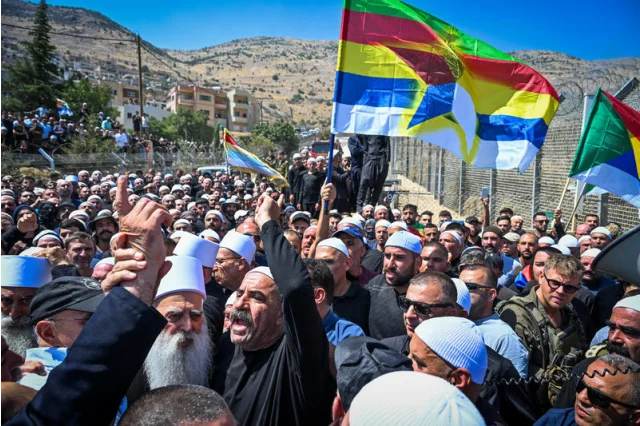
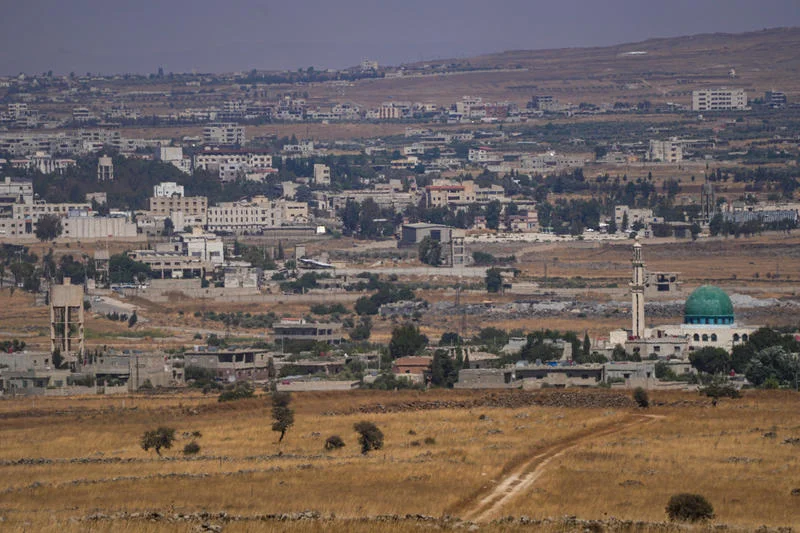
One year after some 2,000 Druze people were massacred in southern Syria’s Suweida province, many of them civilians, the so-called “Mountain of the Druze” remains in a state of limbo.
It is the only region that has not been integrated into the new Syrian state, but also, despite repeated reports and claims, is neither about to be annexed by Israel nor truly independent.
Having been promised accountability for the massacres conducted with the active participation of government-affiliated troops, the Druze community is today still cut off from the rest of the country, deeply disillusioned about the chances for reconciliation, fearful of a hostile takeover from Damascus while suffering from internal divisions about the best way forward.
Against this background, the families of the at least 1,707 victims killed between July 14 and 19 (according to an independent UN commission of inquiry) marked an anniversary characterized by ongoing grief, the consciousness of injustice, and the resulting bitterness at the lack of change since then.
Suweida today
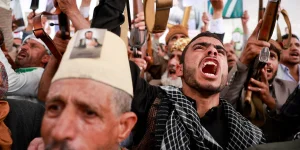
Following the massacres, the community’s leadership became dominated by forces loyal to Sheikh Hikmat al-Hijri. The spiritual leader was once part of a kind of triumvirate of sheikhs leading Suweida’s Druze, but, through various means – including ruthless violence against rivals, as his critics claim – has now become the de facto political head of the community.
He is also the leader most identified with a pro-Israel and anti-Damascus stance and has repeatedly thanked Israel for intervening to halt the killings and sending aid. On the occasion of the anniversary, Hijri declared that his goal is “the independence of the State of Bashan,” using the biblical name for the region.
This, he said, could be achieved through “the establishment of an independent state, a region under the protection of another country, or integration into another country, in accordance with the interests of the people of the region.”
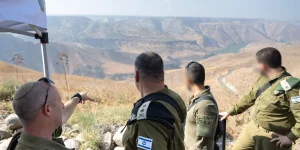
For now, the 28,000-strong “National Guard” militia, which is loyal to Hijri’s camp, is holding the frontlines with the government-affiliated troops while being in “constant contact” with Israel, according to a New York Times report citing the militia’s spokesman.
The political fights are part of the reason that the province is still largely cut off from the rest of the country, causing shortages in many areas. The fights are playing out against a background of ongoing grief and mourning over the many victims of the massacres, who are also facing administrative obstacles from the Damascus authorities.
The state-appointed governor of the region currently operates from one of the dozens of villages that were destroyed and depopulated in the province.
Suweida officials told the NYT that the government has repeatedly cut off the supply of electricity and water, and is delaying or preventing humanitarian aid convoys from reaching the province.
Families of the victims told the Arabic-language news outlet Daraj that the governor’s administration is forcing them to accept documents with false causes of death to get approval for the paperwork for their loved ones, in an apparent attempt to erase the traces of the massacre – particularly the involvement of government forces.
Recalling the massacres
The anniversary of the massacres has refocused media attention on testimonies and new information about the massacres.
One of the worst incidents was the assault on Suweida National Hospital by Bedouin militias and fighters affiliated with the government’s Ministries of Defense and Interior, which highlighted the radical sectarian nature and Islamist motivations of the violence.
Talking to Daraj, nurse S.H. recounted that men wearing the uniforms of the General Security Directorate broke into the hospital with assault rifles.
When they entered, “They asked the patients, ‘Are you Druze?’ They then shot some of the patients and wounded people in the chest as they lay in their beds, while shouting insults such as, ‘Filth’ and ‘Pigs.’ They ordered some of them, ‘Howl, you dog.’ Then they turned to us, the medical staff, and asked, ‘Are you Druze?’”
“They separated the men from the women. They forced all of us to kneel and confiscated our mobile phones. One of the gunmen asked for a pair of scissors and used them to cut the mustache of an elderly Druze sheik as he lay in his hospital bed. They also violently tore a necklace from around the neck of one of our fellow nurses, saying, ‘This is immorality and heresy.’”
A doctor recalled that “the bodies first filled the morgue. When there was no room left, they overflowed into the refrigerated storage yard beside it on the southern side, then into the courtyard in front of the MRI department, then into corridors throughout the hospital, both nearby and farther away, and eventually across the open grounds surrounding the building and onto the sidewalks outside.”
With the massacre raging outside the hospital at the same time, family members continued bringing in more bodies. “Some pickup trucks remained parked with their cargo of bodies because there was simply nowhere left to unload them. A significant number of the victims were men and women wearing traditional religious dress. The dead ranged in age from one year old to nearly ninety,” the doctor said.
When the militias withdrew several days later, the medical team documented 1,275 bodies at the hospital alone, in addition to around 80 bodies of Bedouin and government-affiliated troops.
Local sources put the death toll at almost 2,000, though the UN has estimated roughly 1,400 people dead.
Alienation and disillusionment
Worsening the long-term prospects for reconciliation even further is the fact that the massacre was preceded and aided by a campaign of sectarian and religious incitement, starting in the spring of 2025.
Journalist Mazen Ezzi wrote in Daraj that the conflict was framed “under the slogan ‘resolving the conflict between Druze and Bedouin,’” with the Druze community being labeled “apostates,” foreign “agents,” and the “internal enemy” who needs to be eliminated to unify the country under the newly reestablished rule of the Sunni Muslim majority.
“Druze communities were blamed for the failures of transitional governance, for the monopoly of arms by state actors, for being subject to Israeli strikes, and even for the persistence of [international] sanctions,” wrote Ezzi.
Even worse – the Druze felt left completely alone after the massacre, their plight not drawing any assistance or even attention from their supposed fellow Syrians, despite the Druze having always been at the forefront of a Syrian nationalism that transcended the various ethnic and religious sects.
“The event itself is horrific, but what gave it its unprecedented significance was what the people of Suwaida called “betrayal,'” analyzed Mohammed Sami Al-Kayyal, a Syrian writer at the Germany-based Kurdish Center for Studies.
“This declared massacre, with all its intentions, took place under the very eyes and ears of all segments of Syrian society, and of course, all Arab states, without causing any shock…[the Druze] had always considered themselves the embodiment of Syrian patriotism and Arab nationalism… all of this was of no avail when all these systems turned against them and became a justification for their extermination.”
This shock, explains Al-Kayyal, has caused many Druze to abandon hope in the Syrian nation-state: “From ‘Jabal al-Arab’ [Arab Mountain] to ‘Bashan’ [the biblical name for the Golan Heights]; from the ‘Great Syrian Revolt’ to demands for secession from Syria; from ‘Druze Unitarian Muslims’ to simply ‘Druze Unitarians.’ If the price of integration into Syrian nationalism was the Arabization and Islamization of the self, then all this Arabism and Islamization was, in effect, their undoing.”
The trajectory of the new Syrian government remains unclear. Western and particularly U.S. pressure to legitimize and rehabilitate the country to finally impose a relative peace in the area could help prevent radicalization.
However, while fears of a full-blown jihadist caliphate led by the former terrorist al-Sharaa are probably premature, the newly acquired power and influence of the long-suppressed Sunni Muslim majority will make it hard for the president to resist aligning with Islamist-influenced governments in Ankara and Doha, projecting a bleak future for the Druze and other minorities in the new Syria.
Several reports indicate that journalists are detained, and even killed, while trying to report on sectarian violence. In July, German journalist Eva Maria Michelmann was freed after five months in detention, testifying to arbitrary use of solitary confinement and frequent torture in the new regime’s prisons.
“But let us not give up hope that Syria will become a democratic country,” Michelmann stated.
For the Druze, one year after the massacre, the glimmers of hope are dim.
Support our independent, on-the-ground reporting from Israel. Become a $5/month Ally.
You might also like to read this: