Father of Israeli hero who protected couple in Oct 7 ‘bunker of death’ designs their wedding ketubah
The Jewish marriage contract weaves together symbols of loss, resilience and renewal





Aner Shapira has become a household name in Israel, known for his bravery after footage showed him standing unarmed between Hamas terrorists and the entrance to a shelter packed with young people on Oct. 7, 2023.
With his bare hands, the 22-year-old musician and off-duty soldier threw back grenade after grenade as they were hurled into the shelter. It was long believed that he repelled seven of them before being killed by an eighth, until an IDF investigation presented to his family in April found that he had thrown back about 10 or more. “Even after he was hit by an RPG and lost one of his hands, he still managed to throw out two more grenades,” his mother, Shira Shapira, told Israel’s Channel 7 last spring.
Twenty-seven Nova music festivalgoers were crammed into that shelter. Sixteen of them were killed, seven survived and four were taken hostage to Gaza. Among the survivors was Ziv Abud, who advocated for the release of her then-boyfriend, Eliya Cohen, throughout his 505 days in captivity.
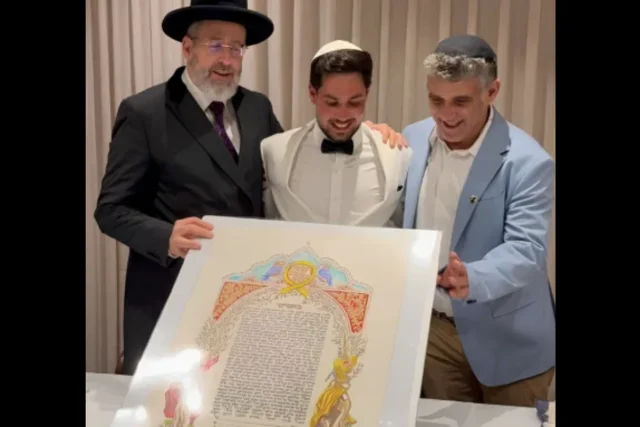
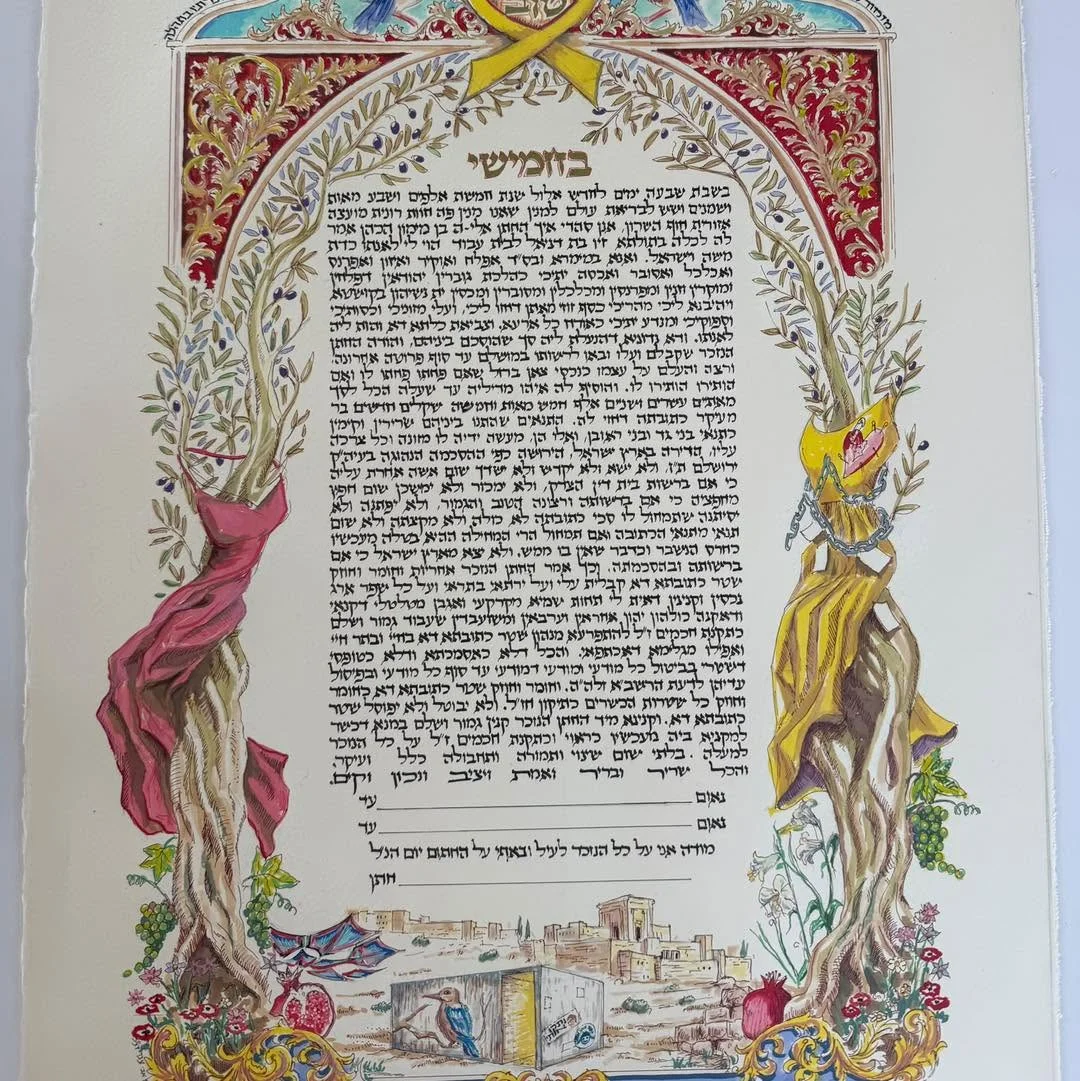
This week, the two (Ziv and Eliya) were married in a ceremony that honored Shapira, without whose sacrifice they would not be alive. Shapira’s father, Moshe, an architect and illustrator, designed their ketubah, or Jewish marriage contract, weaving into it symbols of loss, resilience and renewal that have come to define Israel.
In a social media post, Shapira’s mother said the ketubah plan with Abud began in May 2024 at the unveiling of a sculpture in Aner’s memory in France. While Eliya was still being held hostage, Moshe told Ziv, “When he comes back, and you get married, I’ll design your ketubah.” His words came true: Eliya returned, the couple later became engaged, and work on the ketubah began.
Shapira’s mother described the imagery, “The shelter from which light emerges, Ziv’s dresses from demonstrations calling for his return, the Nova tent, the anemones of southern Israel, the sticker in memory of Amit – and, of course, pomegranates,” (in Hebrew, the word rimon means both pomegranate and grenade), “but not those grenades, rather pomegranate fruit: symbols of life."
The demonstrations Shapira referred to were two of Abud’s most memorable efforts to keep Cohen’s captivity in the public eye. On Tu B’Av in 2024, Israel's equivalent of Valentine’s Day, Abud staged a solitary candlelit dinner on a beach promenade, sitting in a red silk dress across from a hostage poster of Cohen in an appeal for his release. The video, which showed emotional crowds reacting to the scene, went viral. In another video, Abud was seen with a poster in hand, walking through the streets of Israel in a yellow dress – the color of the hostage ribbon – pinned with photos of hostages.
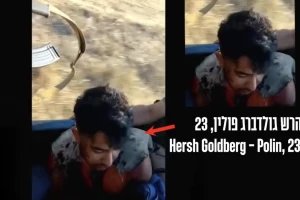
While in captivity, Cohen did not know Abud had survived, having been dragged onto the back of a truck as other Hamas terrorists fired and threw grenades into the shelter where she remained.
Since regaining his freedom, he has released a memoir of his experience, "Mufawadat: 505 Days in Hamas Captivity." Mufawadat, Arabic for negotiations, is what he says came to represent both his life within captivity and his chance of being released.
Despite what Cohen’s book describes as “merciless” physical and mental abuse, he says his captors could not take from him “the light within.” That light continues to spread as survivors of the worst Jewish massacre since the Holocaust continue to rebuild their lives, carrying forward the memory of those who made it possible.
Support our independent, on-the-ground reporting from Israel. Become a $5/month Ally.

You might also like to read this: