









opinion The fear factor: Whatever happened to the fear of God?
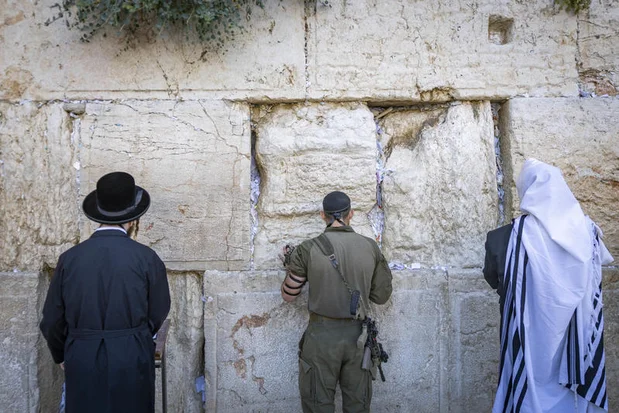
Throughout their entire existence, our Jewish friends have seldom known the luxury of living without the element of fear hovering over them. From the Assyrian onslaught, to the Babylonian siege and captivity, to the Roman destruction of Jerusalem, to the Muslim and Crusader assaults, all the way to the Holocaust horrors and beyond, not to mention thousands of pogroms in between, Jews have known what it is like to live in fear of those who sought their very annihilation.
To this very day those Jews living in the south of Israel in places like Sderot and Be’eri, in the north in places like Kiryat Shmona and Metula, all along the coast, in Tel Aviv and its suburbs, and even in the holy city of Jerusalem, they all know the fear of hunkering down with their families in bomb shelters while rockets, drones and all types of missiles have rained down upon them. To be an Israeli is to know what it is to live with constant threats from without and fears from within.
In today’s world, with the alarming rise of antisemitic violence, many Jews in the western world live with the fear that a simple stroll down a city sidewalk wearing a kippah will result in a beating or some other act of aggression. Antisemitism, this vicious lie that never seems to die, strikes fear in the hearts of so many innocent victims. However, there is another kind of fear that has been forgotten in our more modern and secular world. What ever happened to the fear of God?
What is it that has enabled our Jewish friends to live through the centuries with so much hatred directed squarely at them, only time and time again, to emerge resilient through unwanted wars and unintended catastrophes? The late Rabbi Jonathan Sacks observed that, through it all, “Jews kept faith alive….and faith kept Jews alive.” Their secret has been the constant theme of “yirat HaShem,” the fear of God. The fear of God has been like a thread woven through the fabric of ancient Jewish existence. Read the Torah. Read the Tanakh. On virtually every page you will find this concept of living in the “fear of the Lord.” The Jews of history were once a people who walked daily in the environment of the fear of the Lord…yirat HaShem.
Isaiah’s haunting question should be echoing down the corridors of every Jewish home today—“Who among you fears the Lord?” (Isaiah 50:10). It is as though the prophet is going from person to person, grabbing our coat lapels, looking us squarely in the eyes, and asking “Is there any among you who fears the Lord anymore?” Many of us would be hard pressed to be able to even define the concept of yirat HaShem today. Others would have to admit that although we read about it all through the Bible we seldom, if ever, give it a thought in the daily traffic patterns of our busy lives. The question we should be asking ourselves today is—What ever happened to the fear of God?
The place to begin is with asking a “why” question rather than a “what” question. Why is this idea of yirat HaShem a forgotten subject in our world today among Jews and Christians alike? Could it be that we have lost the concept of the holiness of God? In today’s quest to appear relevant in our modern culture we are tempted, as it were, to take the Lord off His throne of holiness and bring him down here on our human level so that He becomes our “Good Buddy.” Or, He becomes someone for whom we have such little reverence we feel as though we can run up to Him and give Him a high five.
Do you remember when Isaiah got a glimpse of God’s holiness in the sixth chapter of his prophecy? He saw HaShem “high and lifted up” and he heard the angelic choir in their antiphonal chorus singing to Him “Holy, Holy, Holy.” Experiencing this moment of holy and reverential awe, do you think Isaiah’s first inclination was to run up to the throne give Him a high five or try to snap a quick selfie? No, a thousand times no. He responded, “Woe is me for I am undone…for my eyes have seen the King, the Lord of Hosts” (Isaiah 6:5). When we get a glimpse of the Lord in the beauty of His holiness we will begin to see ourselves as we really are-undone and in need of forgiveness and redemption. Let this question sink in once more. It is intensely personal—“Who among you fears the Lord?” What ever happened to the fear of God?
If we had space in this brief article we could walk through every man and woman in the Torah and the entire Hebrew Bible who had the power of God upon them and was used in a mighty way. They all had one common characteristic. In one way or another it is said of each of them that they lived daily in the environment of yirat HaShem, the fear of God. Long centuries ago one solitary man heard the call of God to go to a land where he had never been to become the father of a great nation. Today three billion Christians, two billion Muslims and sixteen million Jews call him “Father Abraham.” Upon ascending Mount Moriah to sacrifice his own son, God stayed his hand just as He was about to thrust the knife into his son, Isaac. At that very moment the Lord spoke from heaven saying, “Now I know that you FEAR GOD because you have not withheld from me your son, your only son” (Genesis 22:12; emphasis added). Father Abraham lived with a healthy concept of the fear of God.
The Bible records that Noah “moved by reverent fear” built the Ark (Hebrews 11:7). The Hebrew midwives in Exodus 1 saved those male Hebrew baby boys because the scripture records they “feared God” more than they feared Pharaoh. After leading the children of Israel though four decades of wilderness wanderings, Moses, knowing he would not go into the Promised Land with them, asks the people an important question before he ascends Mount Nebo and dies. “What does the Lord require of you?” (Deuteronomy 10:12). After all those years of waiting and wandering, now standing on the very threshold of Canaan, Moses points to the one thing God is requiring of them when they cross the Jordan and enter the land of promise. This question should move us to the edge of our seats. “What does the Lord require of you?” And his answer? “But to FEAR THE LORD your God…” (Deuteronomy 10:12; emphasis added). Moses final words to them were framed in a manner to make sure they lived with a sense of “the fear of God.” They crossed over Jordan on dry land walking “in the fear of God.”
Joshua then led them though the conquest of the Promised Land with a healthy sense of the fear of God. At the end of his life, he gathers the people together for a final farewell. And, not surprisingly, he informed them he was now leaving them and left them with these final words—“Now therefore FEAR THE LORD and serve Him in sincerity and faithfulness” (Joshua 24:14; emphasis added). The constant theme of all God’s people throughout their Torah and Bible existence was this idea of the absolute necessity of living with yirat HaShem, the fear of God. The writer of Proverbs speaks of the model wife and mother in chapter 31. If we read far enough into that chapter of scripture we discover the secret of her life down in verse 30, “A woman who fears the Lord, she shall be praised.”
From across the centuries Isaiah asks a question that is as relevant for us today as when it was first asked—“Who among you fears the Lord?” (Isaiah 50:10). What ever happened to the fear of God? What does living in the fear of God actually mean? Does it mean we have to live each day in constant fright…or flight…afraid that God has some big club of retribution and if we say something wrong or do something wrong he will punish us? Does it mean that we have to constantly walk around as though we were walking on egg shells fearing Him in the same sense that we might fear some sidewalk thug sneaking up from behind to harm us? If this is your idea of the fear of the Lord, it is foreign to the meaning of yirat HaShem.
In the language of the Bible, the concept of the fear of God consists of three elements—fear, awe, and reverence. This fear is the conscious awareness of God’s power, His holiness, and His judgement. Awe carries with it the sense of being overwhelmed by God’s majesty and greatness. Reverence is the posture of approaching God with profound honor and respect due His name. This reverential awe should become the controlling motivation of our lives.
Walking daily in an environment of the fear of God is not living with the fear that God will put His hand of retribution ON YOU. It is living with the fear that He might take His hand OFF YOU…His hand of blessing…His hand of anointing…His hand of protection. Walking in the fear of God means we are continually asking ourselves—if we do this or that—if we say this about someone—if we watch this—could God remove His hand of blessing off me? Living with this attitude can make an incredible difference in how we live, what we say, what we do, and which way we turn when we approach the intersections of life. The Mishnah and Talmud unquestionably agree with this assessment. They essentially argue that a person’s character is ultimately revealed by what he does when he remembers that he lives in the presence of God.
This idea of living in such a way that you are ever conscious of God’s hand of blessing is closely akin to the approach taken by Chief Rabbi Isaac HaLevi Herzog, the first Ashkenazi Chief Rabbi of Israel and grandfather to Israeli President Isaac Herzog. To him living in the fear of God and the reverence of heaven (yirat Hashem and yirat shamayim) was fundamental to Jewish life. He expressed that the fear of God was “precious because it is not something God imposes on a person. A person must choose it. The decision to stand in awe of God and submit one’s life to Him is a matter of human choice.”
Living in the fear of God is not the fear of His punishment, of His hand coming down hard on us. It is the fear that because of our own actions He might remove His hand of blessing from us. This is central to the prayer of Jabez who prayed not only for a blessing but that “Your hand might be upon me” (1 Chronicles 4:9-10). This was at the center of Job’s question, “Who among us does not know that it is the hand of God that has done this?” (Job 12:9). This is why Joshua, upon crossing over the Jordan River, built the altar at Gilgal… “so that all the peoples of the earth may know that the hand of the Lord is mighty” (Joshua 4:24).
When we begin to live in this environment of yirat HaShem God gives us a supernatural ability to overcome our sinful desires. Solomon said, “By the fear of the Lord one departs from evil” (Proverbs 16:7). Stop a moment. Read that again. Let it sink in. And, what about Moses at Mount Sinai who reminded the people that “God has come to test you, that the fear of Him may be before you, that you may not sin” (Exodus 20:20). When we live in the fear of God he supernaturally empowers us to live above our sinful desires.
Walking in the fear of God also gives us a sense of supernatural wisdom to make right decisions in life. How many times do we read in Proverbs that “the fear of the Lord is the beginning of wisdom” (Proverbs 9:10)? We have no true wisdom apart from living in the fear of the Lord. It is the very beginning of all wisdom. And what about what the Psalmist said in Psalm 25:14, “The secrets of the Lord are with those who fear Him and to them He will reveal His covenants.” The Bible is a closed book to those who do not stand before him with this sense of reverential awe longing for His hand to rest upon them.
Finally, back to Moses and His concluding emotional words to his people. Before ascending Mt. Nebo to die He gathers them together lifting the Book of God up in His hands, the very words inscribed earlier on Mt. Sinai by the finger of God Himself. A hush falls upon them all. Then Moses reads the Word to the people adding “that you may hear these words and learn to fear the Lord…and that your children may hear these words and learn to fear the Lord your God as long as you live in the land you are going over the Jordan to possess” (Deuteronomy 31:12-13). His dying desire was that his people walk in the fear of the Lord as they go forth in life. Living in the fear of the Lord is a learned behavior drawn from daily truth gleaned from His word.
How do we begin to live in this new dimension of spiritual experience? We begin where Moses did, at the fountain of all truth, the Word of the Living God, the Bible. Speaking in God’s behalf Solomon recorded these words, “If you receive my words and treasure my commands…so that you incline your ear to wisdom, and apply your heart to understanding; Yes, if you cry out for discernment, and lift up your voice for understanding, if you seek her as silver, and search for her as for hidden treasure, THEN YOU WILL UNDERSTAND THE FEAR OF THE LORD” (Proverbs 2:1-5; emphasis added). As the late Chief Rabbi Herzog well said, “The decision to stand in awe of God and submit one’s life to Him is a matter of human choice.” As Solomon says, it is an “If”—“Then” proposition.
King Solomon was purported to be the wisest man who ever lived. He left us, for all posterity, the book of Ecclesiastes to remind us of the folly of everything some of us think is so central to bringing happiness in life…liquor, laughter, lust, luxury, and the like. Then, at the end of this book of wisdom he states, “Now then, hear the conclusion of the whole matter” (Ecclesiastes 12:13). This should make our ears perk up to listen intently. When the wisest man who ever lived, inspired of the Holy Spirit, says here is the sum total of it all; here is the “conclusion to the whole matter,” it would do us well to hear and heed his words. And his answer? “FEAR GOD…FEAR GOD….FEAR GOD.” That is it! Here is the conclusion to the whole matter—“Fear God…and keep His commandments for this is the whole duty of man” (Ecclesiastes 12:13).
Shouldn’t we all be desiring to have the hand of God resting upon us?” It just might be that it was the hand of God leading you to read this article, to bring you to this moment of beginning the new adventure of walking in the fear of God, living in the environment of yirat HaShem. God, hasten the day when your people, called by Your name, no longer have to ask the question….What ever happened to the fear of God?
Popular article:
interview Easter message of resurrection hope amid war at Jerusalem's Garden Tomb

biblical commentary Let my people go: a Passover message for today

4 IDF soldiers killed, 2 wounded in fighting in southern Lebanon, as Israel eliminates dozens of Hezbollah terrorists

Receive latest news & updates
A message from All Israel News
Help us educate Christians on a daily basis about what is happening in Israel & the Middle East and why it matters.
For as little as $10, you can support ALL ISRAEL NEWS, a non-profit media organization that is supported by readers like you.
Latest articles:

opinion North American Jewish organizations to recruit 100 professionals to combat antisemitism

opinion ‘No need’ for pre-election Iran strike, IDF chief says as gov’t, opposition trade blame for potential escalation – report

terror attack 2 Israelis critically wounded, 2 terrorists killed in Hebron shooting; IDF says larger attack was prevented
analysis A people dwelling securely? Israel’s strategic standing, 3 years after Oct 7

opinion Hamas on wheels: What I found in Dearborn reveals a troubling history and a battle over Israel