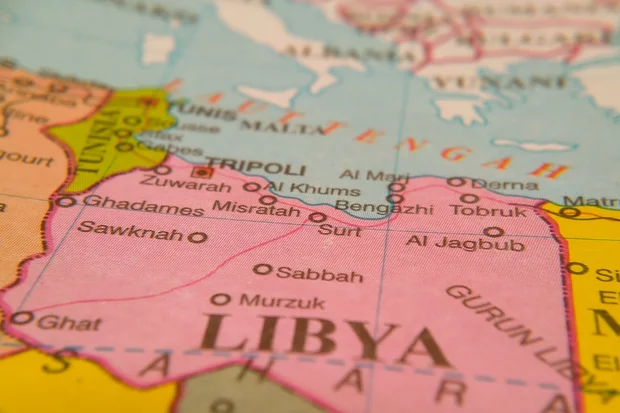









'Ashamed of my British heritage' – Brits react to UK sanctions on Israeli trade
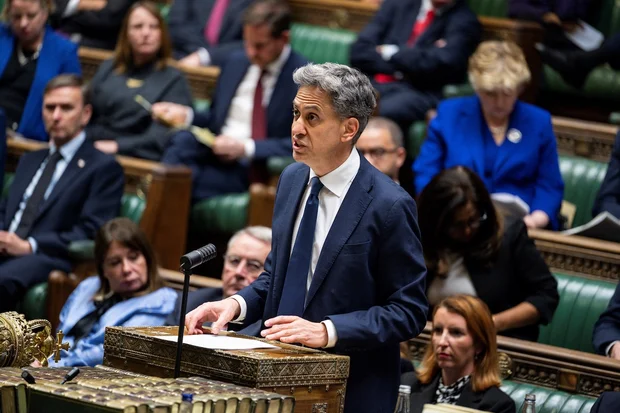
Ed Miliband, the new secretary of state for Foreign and Commonwealth Affairs of the United Kingdom, announced on Tuesday that there will be a “comprehensive reset” of policy towards Israel, banning goods produced in the West Bank entirely.
While the UK has had a free trade agreement with Israel since 2019, the sanctions will be fast tracked by the new Labour government led by Prime Minister Andy Burnham in response to Israel’s E1 settlement plan to connect Maale Adumim with East Jerusalem and Israel’s actions in Gaza.
In a video statement posted online, Miliband said he had heard “stories” in a meeting about the crisis in Gaza from people there on the ground, indicating he would take new measures against Israel.
“Frankly, it was horrific, what is unfolding. You know, the stories that people were telling me of medicines being blocked, children dying while waiting for vital lifesaving treatment. When you hear that account of what is happening, you know that we, as a UK government, as a Prime Minister, have said, have got to act and act more decisively than we have,” he said.
Miliband, who is Jewish, told the House of Commons last week that the E1 plan represented “the crossing of a red line,” as it “cuts through the heart of the West Bank” endangering the viability of a Palestinian state. He also cited the rise in settler violence and restated his commitment to a two-state solution, before promising to take new measures.
Companies producing goods in Israeli settlements did not previously benefit from the preferential tariffs in the trade agreement, but now they will be banned completely in response to a "continued expansion of settlement activity," according to Secretary of Work and Pensions Pat McFadden.
"If they continue to expand then the possibility of that two-state solution becomes ever more difficult to achieve," he explained, clarifying that the measures were not a blanket "boycott of business with Israel."
McFadden emphasized that the relationship between the UK and Israel was “important” from an economic and security point of view, and urged a clear distinction between Israel and the British Jewish community.
Still, there has been considerable anger from the Jewish community and those supporting Israel in response to the sharp turn in UK policy.
In a group for Brits living in Israel, one person posted, “Never have I felt more ashamed of my British heritage than I feel today.”
Many agreed with the sentiment while others, citing settler violence, took the polar opposite view, saying it should have been done long ago.
“It’s not surprising but it’s very upsetting,” Ruth Jacobs, chair of the Jewish Representative Council of Birmingham and West Midlands, told ALL ISRAEL NEWS.
“I wrote to my MP this morning and said that I felt the timing is bad, just before Rosh Hashanah and Yom Kippur… because Jews are gathered together in synagogues, it makes us a bit more vulnerable,” she said, referring back to the attack on a Manchester synagogue last Yom Kippur in which two were killed.
Jacobs said no one she knew in the British Jewish community supported settler violence and objected to Miliband’s accusation of ethnic cleansing, but believes the two-state solution is no longer a realistic goal.
“Miliband talks continuously about a two-state solution, which, to my way of thinking, is definitely not viable and not considered as viable by Israel generally and yet they're still pushing for it. You can't deal with people who would like to see the end of you,” she added. “They'd be happy to have a one-state solution without any Jews in it.”
Jewish commentator Jonathan Sacerdoti also expressed his exasperation.
“Our relationship with Israel is becoming really increasingly hostile, and, of course, Israel is going to want to react to that, especially at this moment just before an election in the country,” he warned.
“The Palestinian cause is literally dragging Great Britain down domestically, internationally, economically, in matters of security,” he said, adding that it has been “nothing but a burden to this country, from the destruction of shops and legitimate businesses to the rise in anti-Jewish violence and hatred, including those attacks on synagogues and ambulances, killings in a synagogue less than a year ago.”
Sacerdoti stated that the government was capitulating to pressure from “a small and extremely vocal group” which he said had bullied the UK into abandoning support for Israel.
He also questioned the suggestion that the E1 plan, which he described as “a 12 square kilometer tract of land between Jerusalem and Maale Adumim,” was endangering the two-state solution.
Ray Grant from the North London Friends of Israel group expressed concern and frustration about how the new sanctions might impact international relations:
“I am absolutely appalled by what our Foreign Secretary, Ed Miliband, has done. This isn't some backbench MP giving an opinion. He is Britain's Foreign Secretary. When he speaks, he speaks for Britain, and his words have consequences,” he said.
Objecting to Milliband’s video statement, which relied on anecdotes rather than evidence, Grant continued,
“You don't have to agree with everything Israel does. I certainly don't. But surely, before Britain's Foreign Secretary makes allegations that cause a diplomatic incident, he should make damn sure he has his facts right. We need our allies. The United States of America and the State of Israel have stood alongside Britain for generations. This is not the time to throw those relationships away chasing hard left and sectarian votes,” he said.
Mike Huckabee, U.S. Ambassador to Israel, indicated that the U.S. may take retaliatory steps against the UK, describing the move as “irrational.” He joined the Israel Foreign Ministry’s criticism of Miliband for repeating stories rather than proven facts, and accused the Labour government of “Jew hate.”
The Brits have lost it. The Jew hate of their government knows no boundaries and knows no facts. https://t.co/W6iZ1ZrHrR
— Ambassador Mike Huckabee (@GovMikeHuckabee) September 5, 2026
"I feel like it's discrimination against the Israeli government. It is discrimination against the Jewish people, and I don't understand the rationale for it,” he said. “It's like throwing a stone and not having an idea of where it's going to land. The UK is a sovereign country; they can do what they want, but so is the U.S."
There may be repercussions from both the U.S. and Israel, with suggestions that the Israeli government might sanction the UK over the Falklands in return, and Bezalel Smotrich is calling for the expulsion of the British ambassador.
Sacerdoti claimed the legislation was being fast-tracked because they knew it would be unpopular.
“They're scared of doing this during the Jewish high holy days, which are coming up, so they want to rush it through now,” he said, suggesting that they also wanted to pass the measures before the Labour Party conference.
“The people they are trying to appeal to… it won't appease them,” he warned, saying that no amount of appeasement will be satisfactory and only projects weakness.
Jacobs added that she was concerned about the ramifications going forward.
“I think the majority of people will be horrified by how this is all worked out, especially now that these other countries are joining in the condemnation, and the decision about how they're going to handle goods from today in Samaria and in the future,” she said.
Popular article:

interview Easter message of resurrection hope amid war at Jerusalem's Garden Tomb

biblical commentary Let my people go: a Passover message for today

4 IDF soldiers killed, 2 wounded in fighting in southern Lebanon, as Israel eliminates dozens of Hezbollah terrorists

Receive latest news & updates
A message from All Israel News
Help us educate Christians on a daily basis about what is happening in Israel & the Middle East and why it matters.
For as little as $10, you can support ALL ISRAEL NEWS, a non-profit media organization that is supported by readers like you.
Latest articles:
North American Jewish organizations to recruit 100 professionals to combat antisemitism

‘No need’ for pre-election Iran strike, IDF chief says as gov’t, opposition trade blame for potential escalation – report

terror attack 2 Israelis critically wounded, 2 terrorists killed in Hebron shooting; IDF says larger attack was prevented

analysis A people dwelling securely? Israel’s strategic standing, 3 years after Oct 7

Hamas on wheels: What I found in Dearborn reveals a troubling history and a battle over Israel