What is Israel’s E1 plan and why has it sparked international opposition?
Offering of residential tenders is part of decades-long plan to connect Jerusalem and Ma’ale Adumim







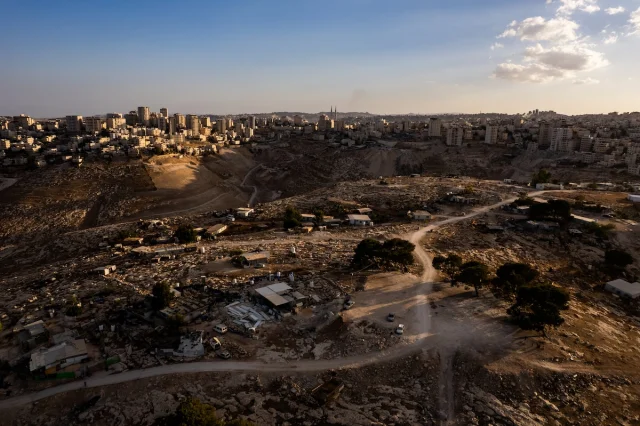
The Israeli government announced plans last week to issue a government tender for almost 1,400 homes in the E1 settlement area in Judea, near Ma'ale Adumim.
The announcement resulted in a sharp response from some European countries, with the British Foreign Secretary Ed Miliband condemning the move as endangering the two-state solution.
“This Israeli Government’s publication of a tender for the E1 settlement project is an unacceptable and destructive act,” read a statement from Miliband.
“E1 would cut across the heart of Palestine and risks separating the West Bank from East Jerusalem, which would endanger the viability of a two-state solution,” the statement continued. “The UK has been clear privately and publicly in our opposition to E1 and our support for a two-state solution as the only way to ensure long-term security and peace for both Palestinians and Israelis.”
The Foreign Secretary’s office also stated, “All settlements damage that prospect and are a flagrant breach of international law.”
When the E1 settlement plan was approved by Israeli Finance Minister Bezalel Smotrich in 2025, he said it "buries the idea of a Palestinian state and continues the many steps we are implementing on the ground as part of the de facto sovereignty plan,” appearing to confirm the European fears.
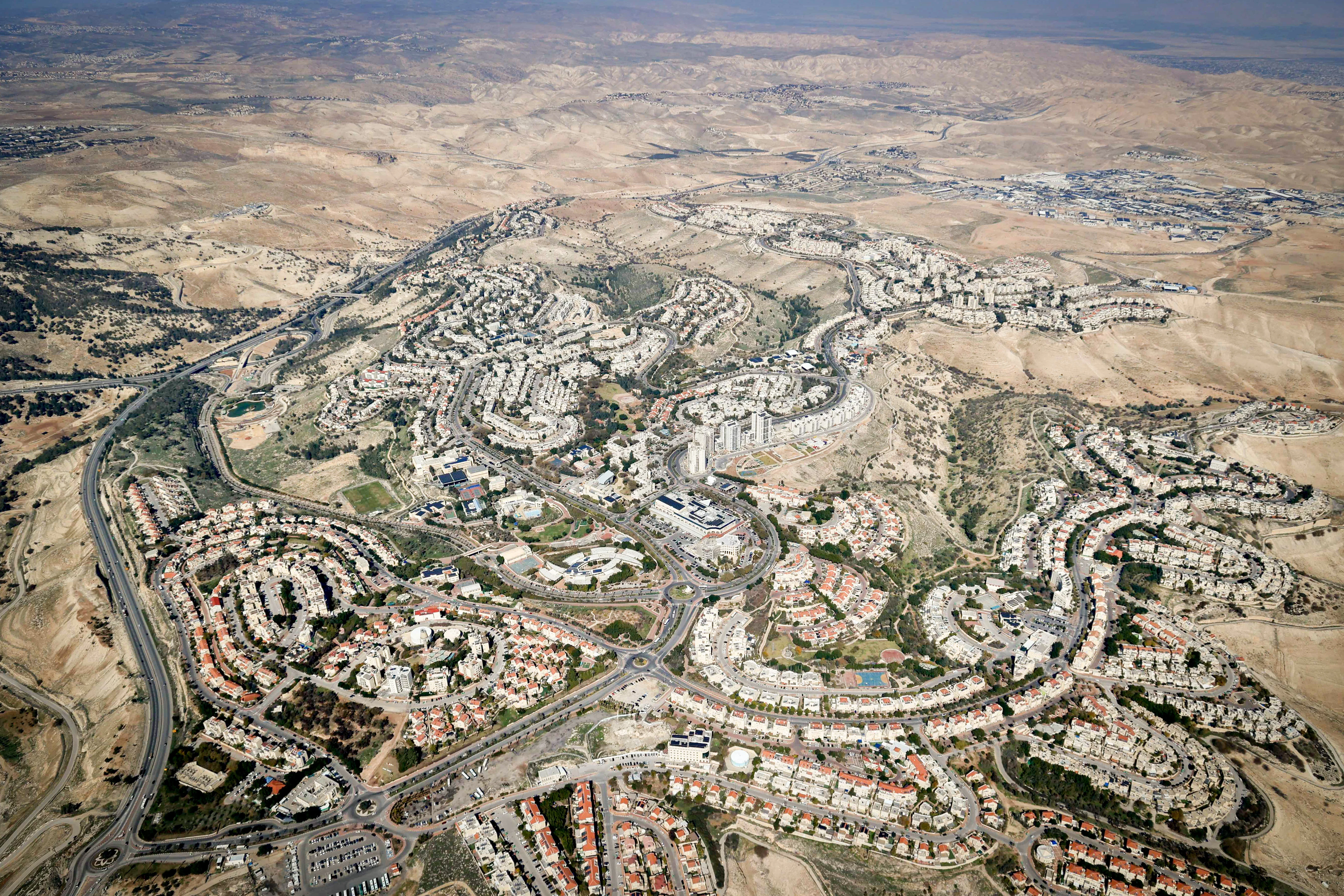
The E1 settlement project is designed to connect the capital Jerusalem with the city of Ma’ale Adumim, where more than 40,000 Israelis reside. The original proposal by the coalition government calls for the construction of around 3,400 residential units.
The recent tender, covering around 1,400 homes, represents only a fraction of the total construction envisioned.
While the exact location was not specified in the announcement, according to the organization Peace Now, which opposes the E1 plan, a previous tender covered “a large neighborhood that will connect Ma’ale Adumim’s built-up area with the industrial zone to its east.”
This area represents land already within the boundaries of Ma’ale Adumim’s anticipated natural expansion.
However, the publication of the tender appears to refer to a new, currently non-existent neighborhood, called Mevaseret Adumim.
Maps displayed by many international human rights groups typically highlight a section of territory near the Palestinian Arab town of a-Za’im, in the area between Jerusalem and Ma’ale Adumim.

There are several Bedouin encampments of the Jahalin tribe within the E1 area that would most likely be affected by the construction.
The Jahalin Bedouin community moved to Judea and Samaria during the period of Jordanian administration, following the 1948 Independence War.
Prior to that, the Jahalin had occupied territory south of Masada down to the Tel Arad region of the northern Negev Desert. Several families were displaced during the establishment of the city of Ma'ale Adumim, moving slightly west and south, forming the communities of Abu Nawar, near the Palestinian city of Azariyah.
Critics, including European Commission President Ursula von der Leyen, said that the publication of the tender “undermines the two-state solution by dividing the West Bank and breaking the territorial continuity of the Palestinian Territories.”
Israeli Foreign Minister Gideon Sa’ar rejected Miliband's statement, accusing him of “turning a blind eye to Palestinian terrorism.”
“I reject outright the statement of the UK Foreign Secretary and the patronizing tone of his words,” Sa’ar posted on his official social media account.
Sa’ar also pointed out that the British were the first to affirm the Jewish right to settle in their historic homeland.
“More than a century ago, the Balfour Declaration formally recognized the historic right of the Jewish people to re-establish their national home in the Land of Israel - including in the area in question.”
I reject outright the statement of the UK Foreign Secretary and the patronising tone of his words.
— Gideon Sa'ar | גדעון סער (@gidonsaar) August 20, 2026
The Jewish people have the right to live throughout the Land of Israel, just as the British have the right to live in London and throughout the United Kingdom. More than a century… https://t.co/eCazg1CU7A
Sa’ar also confirmed that the tenders did not cover any new territory, but rather formalized tenders that had already been approved by the government last year.
Israeli organizations have noted that statements by the European officials are only directed at Israeli construction in the territory, which is defined as Area C, which is under Israeli jurisdiction according to the Oslo Accords. The same officials, they argue, do not similarly criticize illegal Palestinian construction in the same area.
The Palestinian Authority has purportedly been engaging in significant construction efforts of its own, even in some areas where it does not have the authority to issue building permits, the pro-settler Regavim Movement claimed.
Some of this construction appears to be an attempt to establish Palestinian communities in the areas where Israel has been signaling its intention to build for several decades.
At the same time, the Israeli government previously pledged to provide alternative land for Bedouins displaced by the new construction projects.
Several of the Bedouins from nearby communities, who spoke with ALL ISRAEL NEWS on condition of anonymity, said the government has not told them where they will be allowed to move.
The E1 area construction was first proposed in 1994 by then-Prime Minister Yitzhak Rabin. However, due to international pressure, construction projects have not been approved, despite broad Israeli support.
Ma’ale Adumim Mayor Guy Yifrach praised the recent development. "After more than 30 years of promises, struggles and international pressure, today we are turning a vision into reality,” Yifrach told the Jewish News Syndicate.
“E1 will connect Ma’ale Adumim to Jerusalem and ensure the city’s continued growth for future generations.”
Support our independent, on-the-ground reporting from Israel. Become a $5/month Ally.

You might also like to read this: