Jesus and the great rabbinical divide: Hillel or Shammai?




For the past thirty years, whenever my wife and I are in Jerusalem, Friday evenings always find us at “Tamar’s Table” in the Jaffe home for Shabbat dinner. Zalli and Tamar are among our dearest friends and you can always count on a “who’s who” of Jerusalem intellectuals, political figures, educators, and leaders of business and industry to be around their Shabbat table. Needless to say each Friday evening’s conversation and debate is enlightening, engaging, often eye opening, and always extremely thought provoking.
On one of those special Shabbat evenings we listened to an animated discussion related to the teachings and legacies of the two leading Jewish spiritual leaders of first century Judaism in Jerusalem—Shammai and Hillel. To our utter surprise it was not long until the conversation pivoted to a debate about which one of their approaches most influenced one of their own contemporaries, Jesus of Nazareth. To our amazement this table of Orthodox Jews not only knew well the teachings of these two old sages of Jewish lore, but, also seemed to be quite well informed about Jesus and His own teachings.
Shammai (50 BCE-30 CE) was among, if not, the most influential sages during the Second Temple period. His massive following known as the House of Shammai emphasized a more legalistic and rigid approach to Torah interpretation. He is remembered for his impeccable moral standards, his strict obedience to the Torah, and careful observance of the most minute of all the Jewish laws. He was a strict separatist calling for a greater separation from Gentiles in order to preserve and protect Israel’s covenant identity and holiness. His influence, like that of Hillel’s, is still seen today in the faith of many religious Jews.
Hillel (110 BCE-10 CE) was, without question, one of the greatest Jewish teachers in history. His rabbinical school, the House of Hillel, was known for a deep reverence for the Torah but with a more compassionate, humble, and practical approach than that of Shammai. The teachings and ideas of Hillel have had a long lasting influence on the development of Rabbinical Judaism across the centuries. His approach was not as rigid as that of Shammai. In fact, the sages of old had a saying about them—the House of Shammai “binds” while the House of Hillel “looses.”
As the formalities of the actual Shabbat meal concluded that evening, the conversation of the subject at hand intensified. On one side of the Shabbat table a well known lawyer began to persuasively argue that Jesus’ ministry was formed more by the teachings of Rabbi Shammai. His argument was centered on Shammai’s insistence on the seriousness of the law with its high standard of righteousness. He pointed to Jesus own words in the Sermon on the Mount, “"Do not think that I came to destroy the Law or the Prophets. I did not come to destroy but to fulfill. For assuredly, I say to you, till heaven and earth pass away, not one jot or one tittle will by no means pass from the law till all is fulfilled” (Matthew 5:17-18).
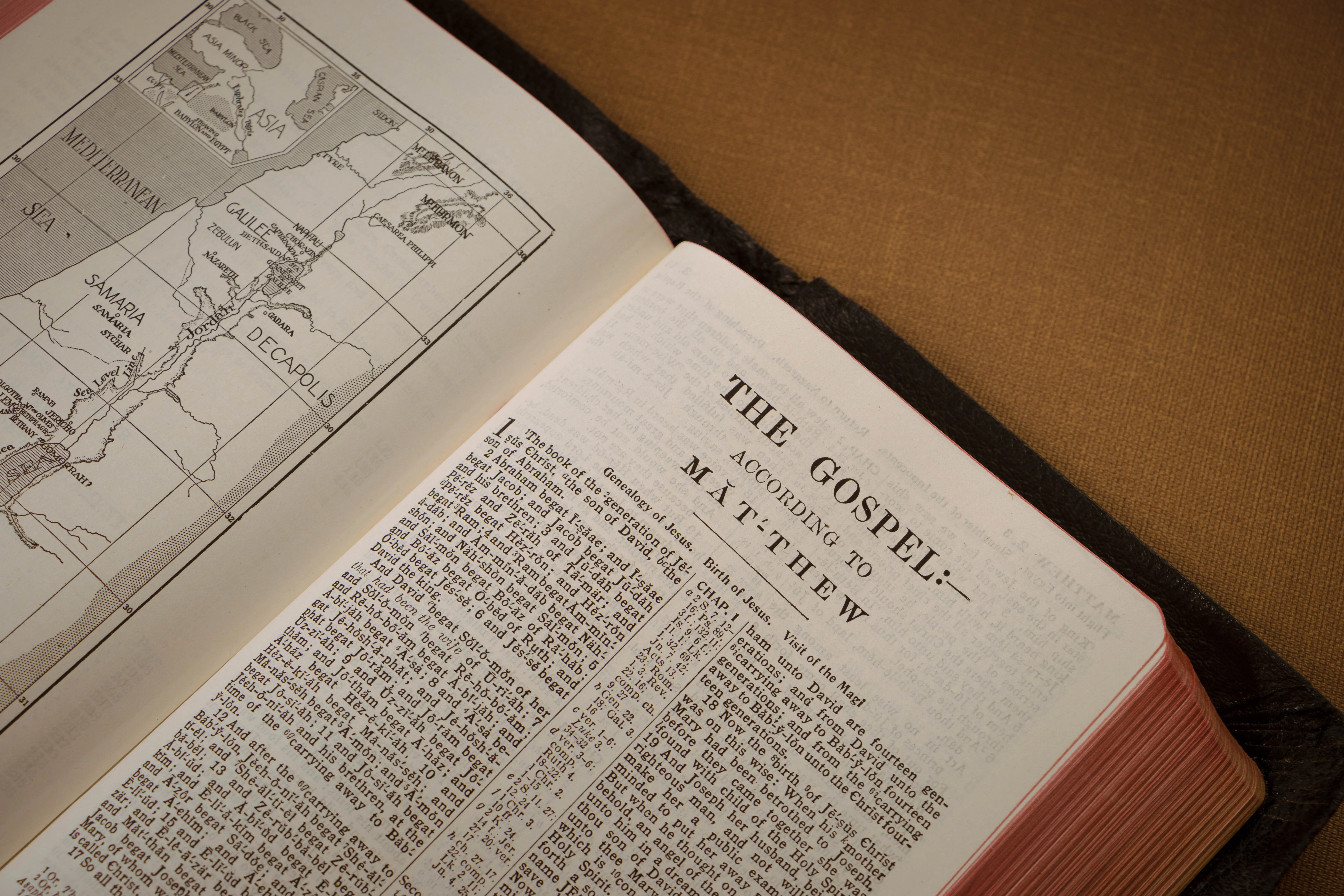
When challenged to illustrate what he meant by this analogy he pointed to the issue of divorce. Shammai, he continued, insisted that a man could divorce his wife only in the case of serious sexual immorality based on the words of Moses in Deuteronomy 24:1. Jesus, he argued, took the same rigid approach and sought to paraphrase the words Jesus spoke in the gospel of Matthew saying, “You have heard it has been said, Whoever divorces his wife, let him give her a certificate of divorce! But I say to you that whoever divorces his wife for any reason except sexual immorality causes her to commit adultery; and whoever marries a woman who is divorced commits adultery” (Matthew 5:31-31). Thus, the case was made that Jesus was influenced more by the teachings of Shammai than by those of Hillel.
This conclusion brought an avalanche of response from a number of guests who were quick to enter the debate on the side of Rabbi Hillel. Someone cited the oft repeated story of a gentile who once confronted Shammai with the request to convert him to Judaism on the condition that the Rabbi teach him the entire Torah while he stood on one foot. Shammai dismissed him abruptly because he considered it a frivolous and impossible request. The man then went to Hillel with the same request and was met with this response, “What is hateful to you do not do to others. This is the whole Torah. The rest is commentary. Go and learn.”
The argument continued that Jesus must have known of this story when he said, “Whatever you want men to do to you, do also to them, for this is the Law and the Prophets” (Matthew 7:12). This “Golden Rule” was the fulfillment of the entire Torah as Hillel had earlier taught. Therefore, as the argument goes, Jesus must have been much more influenced by the life and teachings of Hillel.
Someone else pointed to the emphasis Hillel made that loving one’s neighbor actually summarized the entire Torah and pointed to the words of Jesus who responded when questioned about identifying the greatest of all the Torah commandments said, “You shall love the Lord your God with all your heart, with all your soul, and with all your mind. This is the first and great commandment. And the second it like it: You shall love your neighbor as yourself. On these two commandments hang all the law and the prophets” (Matthew 22:37-40).
Another voice was quick to point out how Hillel was compassionate in his approach to welcoming sinners. Certainly, this was the heart of Jesus who told the familiar story of the prodigal son and the loving father to illustrate how God welcomed home any and all who came in repentance and faith. Still another spoke of Hillel’s emphasis on patience and forgiveness citing Jesus similar words in the Sermon on the Mount to “turn the other cheek” (Matthew 5:39).
So, which of these two Hebrew sages really did influence Jesus the most? There is zero doubt that Jesus grew up in a first century Jewish culture shaped and dominated by these two giants of theological acumen. They not only influenced Jewish thought of their day but continue to do so today, two thousand years later. In fact, over 550 U.S. college and university campuses have registered Hillel Chapters which provide a safe haven for Jewish students and a platform for Jewish culture, social activities and religious life.
Today most every educated Jewish mind is versed in the teachings of both Shammai and Hillel even though they are removed by two millennia in time. Jesus must surely have been cognizant of the teachings of both of these rabbinic icons at a young age. In fact, when He was only twelve years of age He was found in the Temple in Jerusalem debating the learned rabbis and religious leaders who were “amazed and astonished at His understanding and answers” (Luke 2:47).
But, back to Tamar’s table. As an evangelical who believes in the deity of Christ, I was asked to enter the fray with my perspective. Earlier that evening we had all just come from the service at the Jerusalem Great Synagogue where we affirmed the Jewish profession of faith, the Shema, from the words of the Torah, “Hear, O Israel: The LORD our God, the LORD is one” (Deuteronomy 6:4). As Christians we believe this truth with our whole hearts. However, it is no secret that we believe this One God manifests Himself in three persons-Father, Son, and Holy Spirit. After all, Jesus did not just show up for the first time in a manger in Bethlehem. The Bible teaches that He was there in the beginning. John begins his gospel affirming that “In the beginning was the Word, and the Word was with God, and the Word was God. He was in the beginning with God. All things were made through Him, and without Him nothing was made that was made…and the Word became flesh and dwelt among us” (John 1:1-3,14). So the real question should be—“Could Jesus have really been influenced by anyone?”
When it comes to the word “influence” and the discussion of who influences whom, it is best to start with a knowledge of what the word “influence” actually means. The word comes into our English vernacular through two words in Latin which are translated—“in” and “flow.” The word picture is of a mighty river with a strong current, flowing crystal clear and deep and wide. Into this river flow many little streams, creeks, and tributaries which, in entering the river are, in fact, caught up and carried away in its flow. Therefore, those who live lives of influence are those, like this river, who see others get caught up in their flow and be carried along by the current of their own personal convictions and persuasions.
While Jesus had attributes that resembled the teachings of both Shammai and Hillel, my contribution to the debate was that He was not “influenced” by the teachings of either of them or anyone else for that matter. In fact, the real debate centers upon whether anyone could really influence this One who, as evangelicals believe, created the entire cosmos and of whom billions of people alive today believe was actually God Himself incased in human flesh. Jesus shared common ground with both schools on certain issues but the full body of evidence does not support the fact that he was “influenced” by either of them. From His own lips he affirmed that His teachings came from a unique source. He declared, “My teaching is not mine, but His who sent me” (John 7:16). He continued, “I speak just as the Father taught me” (John 8:28).
Rather than fitting neatly into the House of Shammai or into the House of Hillel, Jesus spoke with an authority that transcended them both. He interpreted the Torah in light of what evangelicals believe to be God’s original intent. However, if pressed, it can be argued that He was more like Hillel in that He took the strict demands of the law and made them a matter of the heart.
I am not sure that my take on the subject influenced any of those Jewish minds and hearts at Tamar’s table that evening, but I do hope a seed was planted. Another contemporary Jewish sage of Shammai and Hillel by the name of Saul of Tarsus, who studied at the feet of Rabbi Gamaliel and wrote almost half of our Christian Bible, once said, “I planted, Apollos watered, but God gave the increase” (I Corinthians 3:6).
It would do us all well to learn from the School of Shammai in order to firm up our faith and convictions especially pertaining to the inerrancy of God’s word and obedience to its demands. It would do us equally well to learn the valuable lessons from the School of Hillel such as when we make mistakes—and we all will—it is better to make them on the side of mercy rather than on the side of judgement. And, by taking the best of the teachings of both Shammai and Hillel, we just might get “caught up in the flow” of Jesus who left us these words, “Come and follow me” (Mark 1:17).

Support our independent, on-the-ground reporting from Israel. Become a $5/month Ally.

You might also like to read this: