Ongoing protests keep Jews for Jesus café a focal point in struggle over Jerusalem’s religious-secular divide
Café owner explains reasons for opening on Sabbath, connection to Messianic Jewish organization





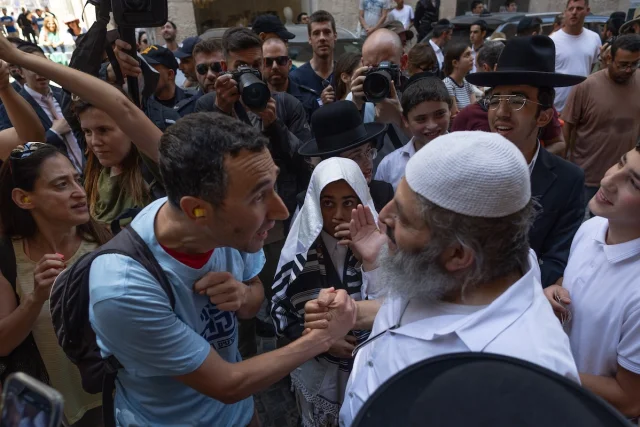
A Jerusalem café which has been the focus of ongoing ultra-Orthodox protests over its decision to open on the Sabbath was targeted again this past weekend—and this time in an unusual manner.
Security cameras documented a woman approaching the entrance of Café Basimta overnight between Friday and Saturday and placing glue on the lock—an incident which delayed the café's opening by 40 minutes on Saturday morning in yet another disruption to the repeated Sabbath protests by religious Jewish groups.
Café owner Yoel Ben David never imagined when he decided to open the coffee shop on Shabbat that he would be facing weeks of continuous protests.
“Nor was I planning to find myself in the midst of a national debate and battle over the nature of the country,” he said.
Ben David said that part of the motivation to open on Saturday was the lack of activities in the city after most venues close down for Shabbat beginning Friday night.
“I live in Jerusalem. Sabbath is boring,” Ben David told All Israel News. “You know, you walk around the center of town, it's kind of, like, unless you're in certain streets, it feels kind of dead.”
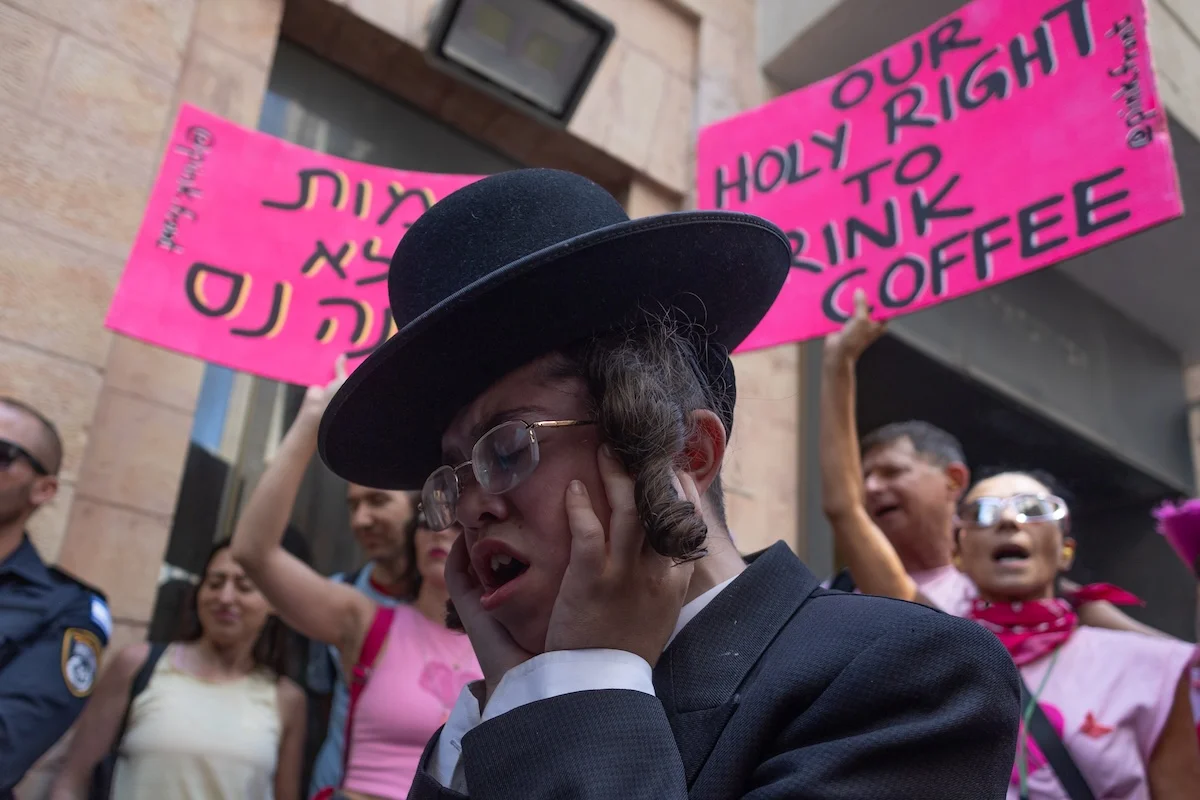
The café attracted almost no attention during the first couple of weeks. That changed when Israeli journalist Shaul Amsterdamski, a regular visitor to the coffee shop, posted about Café Basimta on his Instagram account.
“He put on his Instagram, ‘They were open on Shabbat.’ And, you know, tons of people came,” Ben David said.
Shortly after that, so did the protesters.
Pressed on the issue of keeping the Sabbath—a tradition important for many Messianic Jews —Ben David expounded,
“I think one of the verses I keep talking about when discussing this with someone who wants to have a theological conversation has been Jesus' very clear conversation about the Sabbath,” Ben David told All Israel News’ Oriel Moran in a video interview. “And he said that the Sabbath is for man, not man for the Sabbath.”
Ben David, who lived for several years as an Orthodox Jew, said he understands the perspective of the ultra-Orthodox protesters.
“As a former religious person myself, I understand. I understand the root feelings that come behind their behavior,” he said. “Because within the belief system, their worldview, they're doing their utmost to try and serve God. So I understand that.”
In fact, many Haredi groups have described the protests as defending the sanctity of the Sabbath.
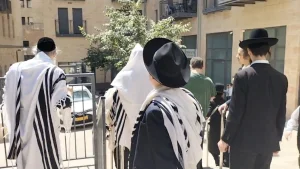
“The café breaks through the boundaries of the Sabbath and is a finger in the eye for the sanctity of the Sabbath, which has been preserved in its entirety and sanctity in these ultra-Orthodox, religious and traditional areas,” the Committee for the Sanctity of Jerusalem, the organization behind the demonstrations, said in a statement.
Ben David said he envisions the café as a place that serves all people of Jerusalem, including students looking for a place to study.
“I really love the students, the young people,” he explained. “That's another reason for opening on Shabbat, needing a place to study.”
The neighborhood of Nachlaot, where the café is located, has undergone many changes over the years and was even once the heart of the city’s bohemian culture.
However, in recent decades, the number of religious Jewish families moving in has increased—a trend that has held true for most of Jerusalem. The city has progressively become more religious since the 1980s, when most of its population was secular Jews.
But the neighborhood continues to host a mix of secular and religious Jews, and Café Basimta is not the only coffee shop in the area that is open on the Sabbath.
The café’s connection to Jews for Jesus raised some eyebrows in Israel after it was publicized on Israeli news channels, but that does not seem to be the focus of recent protests.
Ben David said he has never attempted to hide the Messianic connection. In a recent interview on Israel’s Channel 13, he was asked about his association with both the Anglican Church (he is an Anglican priest) and Jews for Jesus. In his response he directly acknowledged these connections.
Ben David believes this kind of attention is positive for the Messianic Jewish community in Israel.
“I'm sitting on a TV channel at 7 p.m., so this is like prime time, and we are essentially talking about normalization of believing in Jesus,” he recounted.
Ben David said he hopes that people who come to the coffee shop will ask about Jews for Jesus, but “it's not a conversation that they are going to find or be manipulated into or forced into.”
He opposes forcing a conversation on people that they didn’t ask for, he explained.
“At no point have we hidden things, but we didn't hang a cross over the front door, we didn't put big signs, because we don't think that somebody who just wants to come and enjoy our excellent coffee needs to necessarily engage in a conversation that they weren't looking for when they came to get a coffee,” Ben David stated.
“But as people get to know us and community is created, people find out. And again, people can also opt in and opt out of that conversation,” he said.
Please take a moment to join believers worldwide praying for Israel right now. Add your light to the live prayer map—and show the world one more watchman praying for the peace of Jerusalem.

You might also like to read this: