Outrage over Jerusalem café reveals religious tensions, shifting demographics within Israel’s capital
Café’s ties to 'Jews for Jesus' adds a new layer to an already sensitive debate




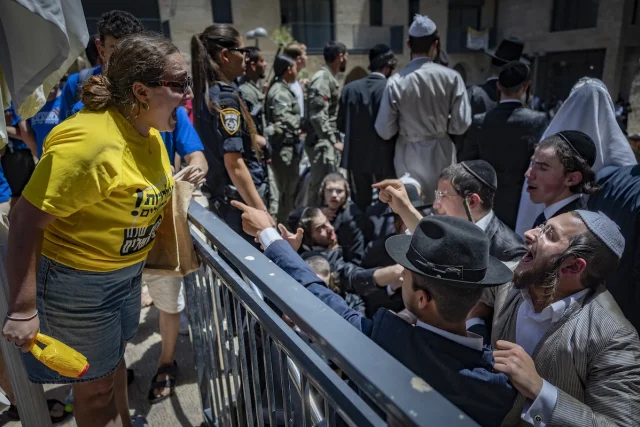
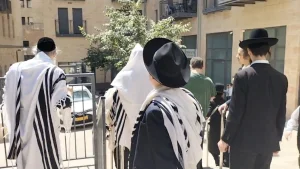
For five consecutive weeks, a group of ultra-Orthodox Jews has been protesting the opening of a small café on Shabbat, in the heart of Jerusalem.
Café BaSimta (‘Café in the Alley’) has become a focal point of growing tensions in the capital city, highlighting the changing demographics, as Jerusalem’s population becomes increasingly religious each year.
While most businesses in Jerusalem remain closed on Shabbat due to the owners’ religious beliefs or out of consideration for the city’s religious community, a number of cafés have traditionally remained open, serving the capital’s smaller but significant secular population.
Café BaSimta has become the focus of ultra-Orthodox protests, with large numbers of supporters – including some from outside Jerusalem – gathering to express support for the café and for the right of such businesses to operate on Shabbat. The café is not the only business in the Nahlaot neighborhood open on Shabbat, but the large crowds of protesters have drawn attention to the café and the broader debate over Jerusalem’s religious character.
In the last couple of decades, several other cafés have stopped opening on Shabbat due to pressure. The neighborhood itself, once the center of Jerusalem’s bohemian culture, has become increasingly Orthodox.
The controversy also drew right-wing opposition Knesset member Avigdor Liberman, who visited the café last Saturday.
“This morning I arrived to support the coffee shop in downtown Jerusalem that is being attacked by extremists,” Liberman posted on social media.
Addressing the ultra-Orthodox young men who were protesting, he suggested that they focus their energy on confronting Israel’s enemies, not other Jews.
“The vandalism we're seeing behind me – all of this just proves that these guys need to channel their energy against Hamas, against Hezbollah, against the Houthis, but not here in Jerusalem, against peaceful citizens,” he wrote.
However, recently the café’s ties to the non-profit organization Jews for Jesus were discovered, complicating what had initially seemed like a simple disagreement between secular and religious Jews.
Messianic Jews, or Jews who believe that Jesus is the Jewish Messiah, are a small community within Israel, and not widely accepted by the broader culture.
While most Messianic Jews continue to identify as Jewish, mainstream Rabbinic Judaism generally does not recognize them as Jews.
The café’s connection to Jews for Jesus was first publicized by Or LeAchim, an ultra-Orthodox anti-missionary organization that has posted signs warning about the café’s ties to the group. One sign stated, “The missionary-messianic influence operates all the more forcefully by winning over hearts through food and drink.”
“As if that were not enough, they added sin upon crime and began operating the place on the holy Sabbath, with disgraceful Sabbath desecration in the heart of the holy city,” the sign continued.
Or LeAchim said it plans to focus more on the café’s ties to Jews for Jesus during a future weekday protest, seeking to highlight what it describes as the owners’ missionary activity.
Yoel Ben David, the manager of Café BaSimta, said that proselytizing is not the café’s primary purpose.
“Everyone accuses us of that,” Ben David said regarding evangelism. “The Jesus goal is not completely out, but it’s not front and center.”
Ben David previously lived as a Hasidic Jew, a sub-group of ultra-Orthodox Judaism, even serving with the rabbinate of the IDF during his mandatory military service.
Ben David rejects the rabbinic Jewish concept that a person stops being a Jew once they begin to believe in Jesus.
“If Jesus is the Jewish Messiah,” Ben David asked, “what could be more Jewish than believing in Jesus?”
Please take a moment to join believers worldwide praying for Israel right now. Add your light to the live prayer map—and show the world one more watchman praying for the peace of Jerusalem.

You might also like to read this: