Could integrating Arab Israelis be as critical as integrating the Haredim?






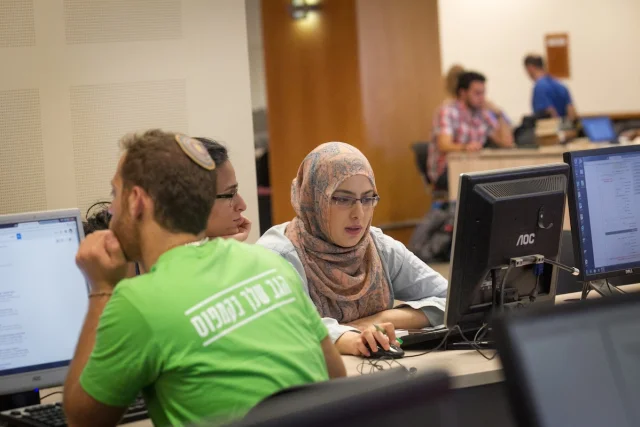
If Israel elects another government that fails to better integrate Arab citizens into the economy, the country's long-term prosperity could be at risk, according to at least one prominent Arab citizen of Israel who spoke with All Israel News.
Maisam Jaljuli, CEO of Tsofen-Tashbik, a joint Arab-Jewish nonprofit organization that promotes the growth of Israel's high-tech sector within the Arab community as an economic engine, told ALL ISRAEL NEWS that "you cannot ignore 20% of the population; you cannot fail to integrate them economically and expect that in 20 years Israel will continue to be one of the most developed countries."
She added that "the prosperity of Israel depends on this 20%, and to have it, you needed to invest yesterday, not now."
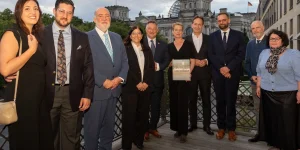
Jaljuli was one of three tech leaders who participated last week in an American Innovation Forum event hosted by JYP Forum and America Hub Israel (U.S. Embassy Jerusalem). The other participants were Alona Eyal-Fried, Senior HR Leader at Microsoft Israel, and Naor Levi, vice president of engineering at Cross River.
The discussion focused on developing Jerusalem's high-tech ecosystem and expanding opportunities for young people, both Jewish and Arab, to enter the industry. Jaljuli spoke with All Israel News by phone following the event.
The conversation comes as Israel continues to debate the future of ultra-Orthodox military service and the broader question of societal and workforce participation.
Many economists have warned that if a growing share of the Haredi population neither serves in the military nor performs national service nor fully participates in the workforce, Israel's economy could face significant long-term challenges.
According to the Israel Democracy Institute, around 20% of first graders in Israel are ultra-Orthodox. At the same time, Arab children account for roughly 22% of first-grade students nationwide, according to a report by Prof. Dan Ben-David published in Israel Hayom.
The demographic trends are especially pronounced in Jerusalem. Arabs make up approximately 39% of the city's population, according to the Jerusalem Institute for Policy Research. Haredi residents account for roughly 28% to 29.5%, according to the Institute for Strategy and Haredi Policy.
Yet while the Haredi draft and workforce debate has become a central political issue, Jaljuli argues that the societal and economic integration of Arab citizens receives far less attention. Whether because of the political shift to the right following the Oct. 7 attacks or for other reasons, she said the issue has largely been sidelined.
"This is the main challenge for the next government: how to integrate Arab citizens into the economy in a way that really leads to a win-win situation for the whole Israeli society," Jaljuli said.
Today, about 19,000 Arab professionals are working in Israel's tech industry, accounting for approximately 4% of the workforce, Jaljuli said.
While that is a small share, around 13,000 Arab students are currently studying STEM and other technology-related fields at Israeli universities. However, many worry they will struggle to find opportunities that match their skills if they remain in Israel after graduation.
"If we are talking about the challenges of the industry right now, there are no jobs for juniors," Jaljuli said.
She argued that Arab graduates often begin at a disadvantage compared to their Jewish peers because they do not serve in the military, where many Jewish Israelis gain experience in intelligence and elite technology units that provide valuable professional skills and networks.
In addition, she said, some Arab graduates face language barriers in Hebrew and English. Since Oct. 7, she added, many Israeli companies have also viewed Arab applicants "suspiciously," creating yet another obstacle.
"I think that it's the role of the government, the industry, and civil society to provide these young students with the tools that can help them integrate more in the industry in the future," she said.
Jaljuli believes Israeli companies, especially in places like Jerusalem, where there is a large Arab student population, could do far more to recruit from this talent pool and recognize the value these candidates bring.
"I think Israeli companies are not aware of these talents. They are invisible," Jaljuli told ALL ISRAEL NEWS.
Too many employers, she said, see hiring an Arab graduate as "a favor," when in reality these young professionals have the skills to strengthen their companies.
She pointed to another gap. According to Bank of Israel data, around 80% of Haredi women participate in the workforce, compared with roughly 45% of Arab women. While employment among Arab women has gradually increased over time, the disparity remains significant.
Jaljuli believes one reason is that policymakers have increasingly focused on integrating the Haredi community into the workforce, while the challenges facing Arab citizens have received far less attention. She said that imbalance needs to change.
She acknowledged that multinational companies operating in Israel have generally done a better job than many Israeli firms at building diverse workforces. However, she said that trend has weakened because of geopolitical pressures and changing corporate priorities, including the rollback of diversity, equity, and inclusion initiatives under the Trump administration.
At the same time, many global companies have slowed hiring for entry-level positions because experienced workers are readily available, making it even harder for recent graduates to break into the industry.
Those challenges have been compounded by a slowdown in Israel's technology sector. A June article in Globes reported that layoffs have accelerated, driven by the strength of the shekel against the U.S. dollar and the rapid adoption of artificial intelligence tools in the workplace.
The report also noted that multinational companies in Israel have been downsizing, restructuring, and relocating some operations.
"They [global companies] are also shrinking here in Israel, and I think also the geopolitical issue is affecting their work in Israel," Jaljuli said.
While renewed threats from U.S. President Donald Trump have fueled concerns that Israel could once again find itself in a direct confrontation with Iran, most polling suggests voters are, at least for now, more focused on domestic issues, including national unity and the relationship between religion and state.
As political thinker and Oz Party head Einat Wilf recently told the author, "The big change that should happen from this election... I call it higher inclusivity and higher demands. There should be greater expectations for all Israeli citizens to serve their country, but it should be inclusive."
For Jaljuli, inclusivity must extend beyond military or national service to economic opportunity. She argues that if Israel hopes to remain one of the world's leading innovation economies, the next government cannot afford to overlook one-fifth of its population.
In her view, integrating Arab citizens into the workforce is not only a matter of equality, but also an economic imperative that will help determine Israel's future prosperity.
You might also like to read this: