UN Watch report accuses UN officials of advancing Chinese, Russian and Qatari interests



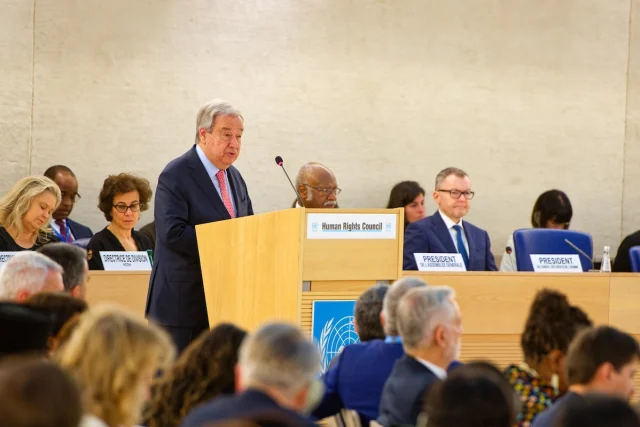
UN officials tasked with promoting global human rights allegedly received funding from China, Russia and Qatar in exchange for advancing the interests of those governments, according to a new report by the watchdog organization UN Watch.
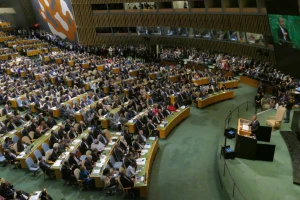
The report focuses on the UN Human Rights Council’s Special Procedures system, whose independent rapporteurs and experts are officially expected to operate impartially as they investigate human rights abuses worldwide.
Former UN Secretary-General Kofi Annan once described the Special Procedures mechanism as “the crown jewel of the UN human rights system.”
According to the report, however, undisclosed or improper funding from authoritarian states has contributed to the system's politicization and undermined its credibility.
The report also alleges that bias is especially visible in UN positions concerning Israel and the broader Middle East conflict.
The Human Rights Council currently employs 59 Special Procedures mandates (officials), including 46 thematic experts and 13 with country-specific mandates.
Although the officials do not receive formal UN salaries, they are provided funding for staff, training and international travel, while also receiving access to influential UN platforms, reports and media exposure.
UN Watch noted that reports issued by Special Procedures “have a weighty doctrinal authority,” citing the European Center for Law and Justice (ECLJ), and are “very often referenced by national and international bodies, in particular by courts.”
The reports can influence the positions taken by the International Court of Justice, the International Criminal Court, governments, and major international media outlets.
One of the most controversial UN officials cited in this latest UN Watch report is Francesca Albanese, the UN special rapporteur on the human rights situation in the Palestinian territories. Albanese has faced repeated accusations of antisemitism and anti-Israel bias over past comments and public statements.
Albanese recently drew backlash after accusing Jews of being “arrogant” and urging Germany to stop supporting Israel due to the Holocaust. In February, she described Israel as a “common enemy” of humanity during an Al Jazeera conference in Qatar, invoking what critics called a classic antisemitic trope. European, U.S. and Israeli officials have since condemned Albanese and demanded her resignation.
The article also argues that the UN disproportionately targets Israel compared to other nations.
The UN passes more resolutions condemning Israel each year than resolutions against all other countries combined, while rarely criticizing authoritarian governments such as China, Russia, Qatar or Iran, according to the report.
Last month, the UN faced backlash after nominating China and Iran to key human rights positions within the organization. UN Watch executive director Hillel Neuer condemned the appointments.
“Appointing China, Cuba, and Saudi Arabia to oversee the work of human rights activists is like putting Al Capone in charge of fighting organized crime,” Neuer stated.
“It’s truly indefensible and puts lives at risk," he warned.
The report concludes that the UN Special Procedures system is increasingly undermining its own mandate by empowering supposedly impartial experts who advance politicized narratives, disproportionately target democratic states such as Israel and overlook systematic abuses committed by the authoritarian governments that help fund them.
It also warns that insufficient transparency and accountability have further damaged the credibility of the UN human rights system.
You might also like to read this: