Gaza Board of Peace blames Hamas' refusal to disarm for stalled ceasefire
Gaza anti-Hamas militia leader: 'Hundreds want to move to our area'





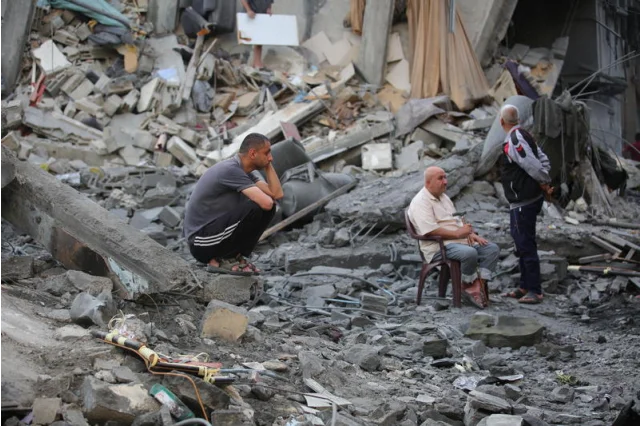
Hamas’ refusal to agree to proposed disarmament plans is the main obstacle to progress in the Gaza Strip, the U.S.-led Board of Peace (BoP) said this week.
Despite months-long negotiations with the BoP and the organization's High Representative Nickolay Mladenov, the terror group has refused several proposals for a phased disarmament, leaving the ceasefire and its reconstruction plan stalled.
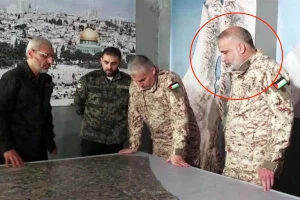
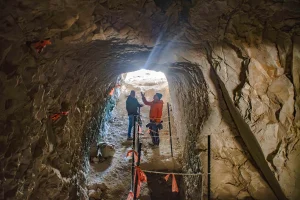
The Israeli military has slowly expanded the territory under its control to around 60% of the Gaza Strip, launching occasional airstrikes, including one that killed Hamas’ new military chief on Tuesday, and continuing to dismantle terror infrastructure and tunnels.
“At this stage, the principal obstacle to full implementation [of the ceasefire] remains Hamas’ refusal to accept verified decommissioning, relinquish coercive control, and permit a genuine civilian transition in Gaza,” according to a BoP report cited by The Jerusalem Post.
Following today’s #UN Security Council briefing, I am publishing the core elements of the proposed 15-point “Roadmap to Complete the Implementation of President Trump’s Gaza Comprehensive Peace Plan” in plain language.
— Nickolay E. MLADENOV (@nmladenov) May 21, 2026
• Points 1–5: Principles
• Points 6–11: Security
• Points…
Addressing the BoP Council, Mladenov called on member states to use “every means at [their] disposal” to pressure Hamas, as well as the dozens of smaller militias and terror groups in Gaza, to disarm and submit to the internationally-backed roadmap for reconstruction.
Mladenov said last week that the goal of the plan is “not simply to preserve a ceasefire. It is to move Gaza out of a permanent cycle of war and humanitarian collapse toward recovery, reconstruction and Palestinian self-governance. It is built around restoring civilian life, rebuilding Gaza’s economy and institutions, and creating a credible pathway toward Palestinian self-determination and statehood.”
Regarding weapons, he said his proposal “does not call for immediate surrender or unilateral disarmament. It outlines a phased, Palestinian-led and internationally verified process carried out gradually and according to an agreed timetable.”
“The proposal explicitly states that weapons would transfer to Palestinians operating under the [new technocratic government NCAG] with international monitoring arrangements. The process is designed to happen incrementally, sector by sector, alongside reciprocal implementation steps, including gradual Israeli withdrawal and the expansion of reconstruction activity,” he added.
Don’t fall for Hamas’ cheap propaganda.
— COGAT (@cogatonline) May 25, 2026
Hamas is trying once again to recycle its "starvation" campaign to generate international pressure and support, thereby justifying its refusal of President Trump’s plan.
The data, backed by the CMCC mechanism, speaks for itself:
-600… pic.twitter.com/juZLatP3Gm
Hamas spokesman Hazem Qassem again rejected the BoP's proposal, claiming that Israel was responsible for the delay, and arguing that it “reflects continued adoption of the Israeli position and serves as an attempt to justify further Israeli escalation.”
Mladenov then criticized Israel for a lack of cooperation, noting, “Implementation cannot advance through Palestinian obligations alone. The continued killings, Israeli restrictions, and delays affecting humanitarian flows are not abstract issues.”
The ceasefire’s full implementation has also faced other challenges, including a lack of funding. The BoP’s fund for the reconstruction of Gaza remains empty, the Financial Times reported on Wednesday, despite several states having pledged donations totaling $17 billion. According to the report, the only funds transferred so far are $20 million from Morocco, earmarked for Mladenov’s office and salaries for the technocratic Palestinian committee (NCAG).
Meanwhile, Hamas continues its efforts to re-establish full control over the remaining 40% of the Gaza Strip, with Hussam al-Astal, head of the anti-Hamas militia in Khan Younis, telling The Jerusalem Post that the terror group discourages opposition with psychological warfare.
It was recently reported that several members of anti-Hamas militias have requested to leave and return to areas under Hamas control.
A Hamas unit responsible for internal crackdowns stated that the increase in requests “reflects the extent of confusion and collapse within these gangs following the disclosure of their criminal activities and complete subordination to the occupation.”
“What Hamas says is not true,” al-Astal said, adding that “dozens, even hundreds, of people in Gaza are trying to move to our area… Hamas is afraid and wants to prevent that, so that’s why they spread these things.”
Despite the stalled ceasefire, al-Astal noted his group's efforts to advance a local reconstruction of Gaza. “We already have a school here, and we call not only for youth to come join us in military training, but also for doctors, engineers, and anyone who can contribute and serve the people of Gaza,” he said.
“People are tired of Hamas. They’ve had enough,” he continued. “I tell the people of Gaza: let’s end Hamas’s oppression. No more political organizations that only care for their own members and interests. Let’s allow our young generation to live and develop.”
“We can live side by side with Israel; I do not see a problem with that.”
You might also like to read this: