Two Roman-era busts found in excavation of Byzantine wine vat near Haifa
Excavation for Israel Railways expansion uncovers ancient statues depicting historical figures



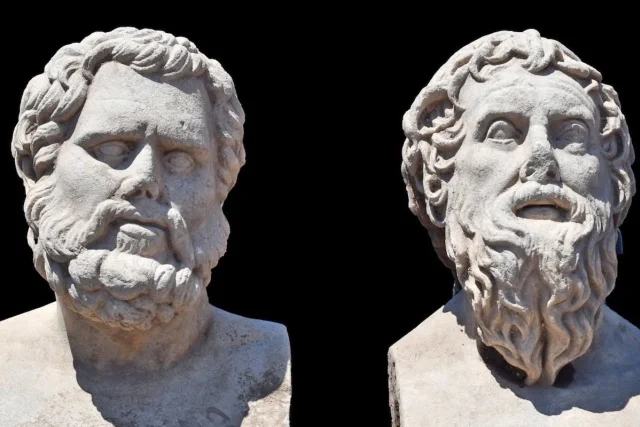
Two marble statues, around 1,700 years old, depicting figures from the Greco-Roman world, were recently discovered buried in a wine collection vat of a Byzantine winepress near Haifa.
The statues were discovered as part of an excavation being carried out by the Transportation Ministry and Israel Railways during work to expand Israel’s coastal rail lines.
That rail expansion project, known as the High-Speed Coastal Railway, should allow trains between Tel Aviv and Haifa to operate at speeds of up to 250 kilometers per hour (155 miles per hour), shortening travel times to around 30 minutes.
Large construction projects in Israel require the involvement of the Israel Antiquities Authority (IAA), to find and preserve important historical remains and artifacts.
Known as protomes, the bust-like works depict only the figures’ heads and part of the upper torsos. One of the statues has a preserved Greek inscription bearing the name “Lycurgus."
The Israel Antiquities Authority said the statues were uncovered about three weeks ago, during the final days of work at the site.
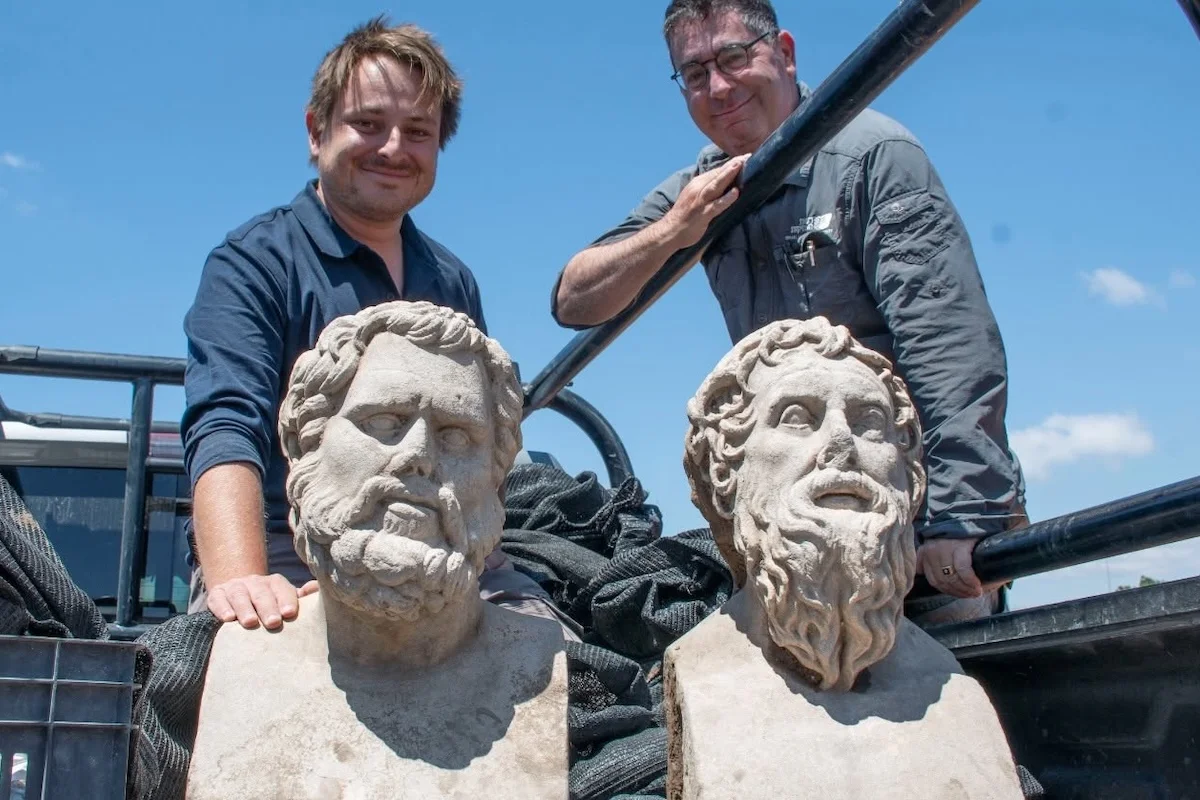
The statues will undergo a cleaning and conservation process, while additional research continues to identify the figures and determine the exact context for their placement in the wine vat.
“We found the types of things that we would normally find in a site like this: jars, coins strewn around, pieces of glass and metal,” said Eliran Oren, who, along with Avishag Reiss, directed the dig for the IAA.
“On the last day of the dig, we found this very big surprise,” Oren said. “The really big discoveries always turn up on the last day.”
The two directors noted that the promotes were not found in situ (i.e., in their original placement) but had been moved to the vat.
“The statues date back to the Roman period, and interestingly, they were not discovered in situ,” the two said. “They were found lying neatly face down, inside a wine collection pit of a wine press from the Roman-Byzantine period.”
The directors said the two statues “were buried when the wine press went out of use. For now, it is not known why the statues were hidden here. Perhaps to preserve them.”
The two statues stand about 55 centimeters (22 inches) tall and weigh approximately 60 kilograms (132 pounds) each.
One of the statues bears the Greek name “Lycurgus,” which could refer to one of two well-known figures from Greek history.
“One possibility is that this is Lycurgus of Sparta, the founder of the doctrine of education and military discipline for which Sparta is remembered,” Oren said. “But that’s a complicated thesis because historians only began mentioning him hundreds of years after he supposedly lived, so we don’t even know whether he was a real or fictional character.”
The other Lycurgus was an Athenian statesman and orator who lived in the 4th century B.C.
The statues are both older than the site where they were found, and the researchers do not know how they reached the early Byzantine-era winepress.
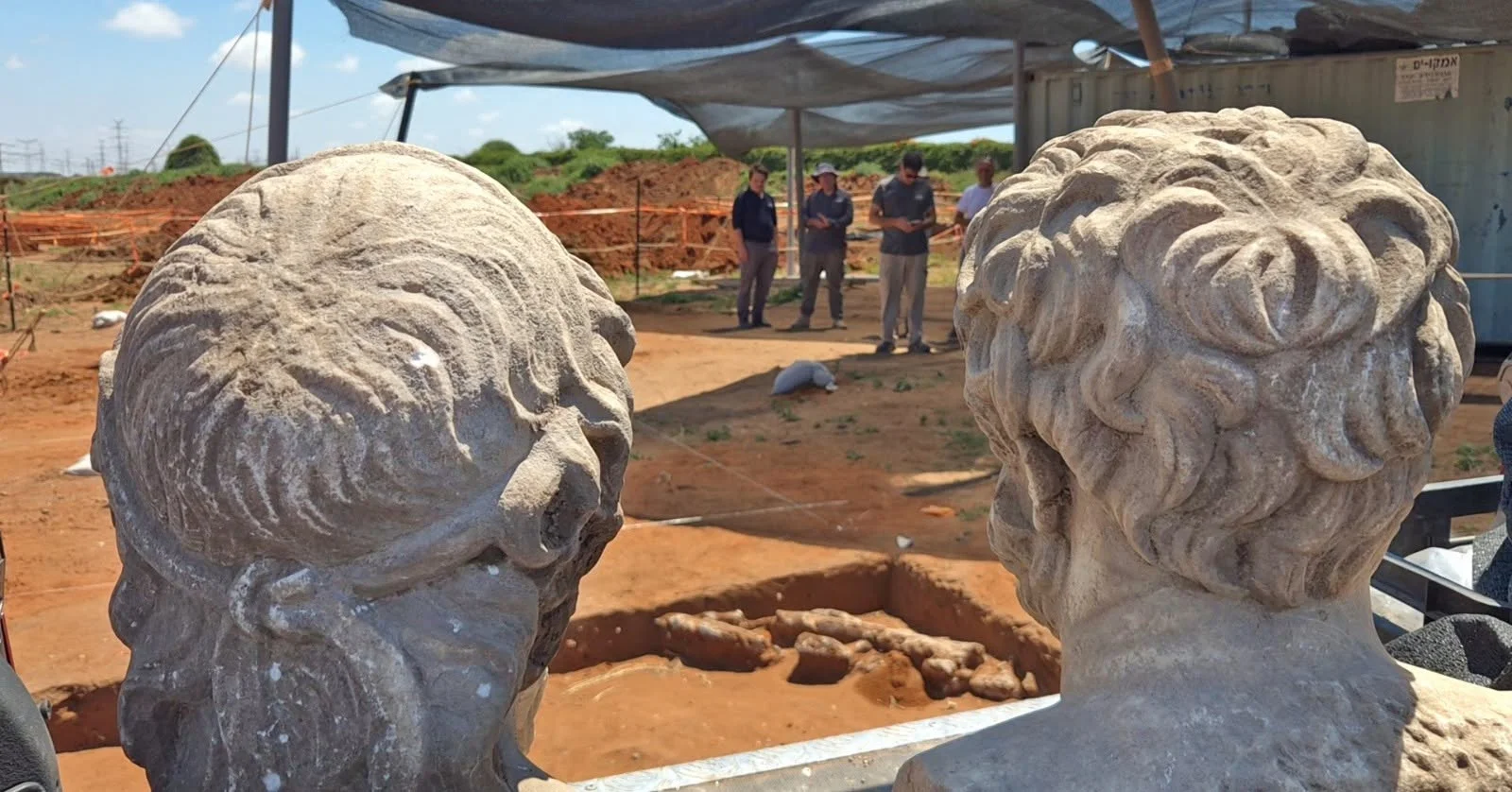
“These statues join a series of portraits of historical figures that have been discovered in the past in Caesarea,” Dr. Peter Gendelman, an expert on the Caesarea region for the Israel Antiquities Authority, explained. “The last time such a figure was discovered here was in the 1990s.”
“During the Roman period, statues of this type were displayed both in public buildings and in the homes of the elite, who sought to connect themselves to the cultural and spiritual world of antiquity,” Dr. Gendelman said. “Not far from the discovery site, remains of a bathhouse were previously uncovered, and it is possible that the statues adorned a luxurious villa of one of the people of Caesarea.”
Eliran Oren said the statues could have been buried in the context of conflict between pagans and Christians during that period, in which statues of gods or figures from Greek mythology were often targeted.
“We don’t know yet if it was due to fear of war, or theft, or conflicts that were being fought at the time between the Christian world and the pagan world,” Oren explained.
The IAA said the statues will be put on public display for the first time at an archaeological conference this week at Tel Aviv’s MUZA – Eretz Israel Museum, and will remain on display during the summer months.
You might also like to read this: