PM Netanyahu touts achievements against Iran while distancing himself from US-Iran deal
Netanyahu concedes: 'The struggle is not over and done'





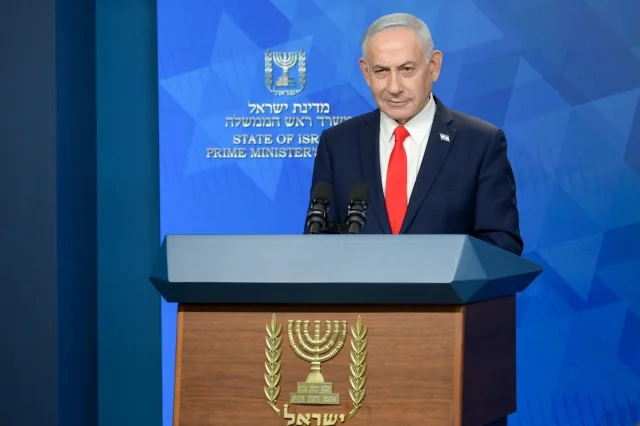
Following the American declaration that an agreement with the Iranian regime has been reached, Prime Minister Benjamin Netanyahu addressed the Israeli public in a rare press conference, touting his achievements during the war while declaring that Iran’s “Axis of Evil is weaker than ever.”
The statement came after strong criticism of the emerging agreement from across Israel’s political spectrum, and after Israel appeared to be completely sidelined during the negotiation process.
Air Force chief Maj.-Gen. Omer Tischler also confirmed on Tuesday that Netanyahu halted a massive wave of airstrikes against Iran two weeks ago, under pressure from the Trump administration not to endanger the talks that eventually led to the deal.
Apparently acknowledging the lack of known details about the agreement, Netanyahu began his statement by vowing that “with an agreement, without an agreement – Iran will not have nuclear weapons. Not today, and not tomorrow.”
Statement by Prime Minister Benjamin Netanyahu at the press conference last night:
— Prime Minister of Israel (@IsraeliPM) June 16, 2026
"Dear citizens of Israel,
For decades, I have been fighting against Iran’s efforts to arm itself with nuclear weapons. I can define it as my life’s mission. I have met this challenge to this… pic.twitter.com/U6vfY2svX9
Responding to a reporter’s question, he later asserted that despite reported tensions, he and U.S. President Donald Trump “have a relationship of partners who know each other… many times we see eye to eye, and there are also cases in which we see less eye to eye. I am responsible for Israel’s security interests. I stand up for them.”
He went on to list what he described as the campaign's major achievements against Iran, saying, “We have fended off an immediate threat of annihilation. Together with our American friends, we launched the largest offensive air operation in Israel’s history.”
Netanyahu then pointed to strikes against Iran's nuclear program and military leadership, adding, “We neutralized nuclear scientists, decapitated the leaders of the terror regime, pulverized nuclear facilities, destroyed missiles and the vast majority of the factories that produce them.”
He also highlighted broader damage to Iran's military infrastructure, stating that Israel had “struck countless military industries and infrastructures, destroyed their navy, their air force, neutralized Basij commanders who massacred the Iranian people, and caused enormous damage… to the economy of Iran that took them decades to build.”
Netanyahu reiterated his claim that the regime was not only close to achieving a nuclear weapon but also intended to “bury its missile and nuclear industry deep underground” just before the war.
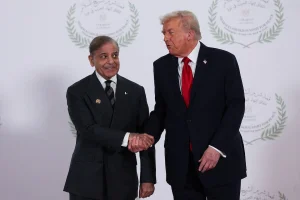
“This agreement was made by the United States, by the president of the United States. And he believes that he can truly combine both the opening of the [Strait of Hormuz] and the cancellation of the nuclear program… And I repeat and say that this is his decision, and he is leading it,” he asserted.
But despite all the achievements, Netanyahu was forced to concede that “the struggle is not over and done. We will need to maintain our vigilance, remain strong and determined to defend ourselves as required.”
Repeating a point made by Defense Minister Israel Katz this week, Netanyahu highlighted the creation of security zones in the Gaza Strip, Lebanon and Syria as one of the main achievements of the war. He also reiterated that, despite the Iran deal reportedly calling for a withdrawal in Lebanon, the IDF would hold all three zones for the foreseeable future.
“I wish to clarify: we will remain in the security zones for as long as it is required to defend our country. Because after October 7th, I established a simple principle: Israel will not allow terror organizations to encamp on our borders; to tunnel into our territory; to prepare for a massacre close to our citizens.”
The prime minister closed his statement with an election pitch. He later told reporters that, despite rumors to the contrary, he fully intends to run in the coming elections, which are scheduled for October.
“We will continue to neutralize threats in the region; we will build new alliances with countries in the region and beyond. We will ensure our own domestic armament independence; this is another principle I established, and I am investing 350 billion NIS in that, as a supplement to the defense budget. We will develop technologies that break the boundaries of imagination, and we will turn Israel into an even stronger power,” Netanyahu promised.
Most senior opposition leaders responded to Netanyahu’s statements on Monday evening.
Gadi Eisenkot, the former IDF chief and current leader of the Yashar! Party who has been rising in recent polls, called the statement “very regrettable… especially in light of the failure to achieve the war's objectives after nearly three years.”
“We heard the same declarations again, which are once more a sleight of hand, a denial of goals he had previously declared, and above all, zero real answers to a people that endured the hardest years in its history. Iran will continue to be a bitter enemy against which we will continue to operate and thwart its actions,” Eisenkot said.
Naftali Bennet, Eisenkot's main rival for leadership in the opposition bloc, slammed Netanyahu for implying that “as long as he is Prime Minister, Iran will not have nuclear weapons. Meaning, the second he is no longer Prime Minister—Israel will be destroyed.”
“This is a terrible and false statement. The greatest disaster that has happened since the founding of the state happened on his watch,” Bennett charged.
“The term of this Netanyahu government began with a civil war, continued with the October 7 massacre, and is now ending with a historic failure against Iran,” he told reporters at his own press conference.
Bennett promised to do “everything” differently once he is reelected as prime minister, including “returning to the security concept of fast, strong, and decisive wars,” improving the diplomatic service, particularly public diplomacy, and “enforcing mandatory conscription,” among others.
You might also like to read this: