Israel sanctions Iran-linked cryptocurrency accounts used to fund Hezbollah, other proxies
Sanctions represent cooperation with US initiatives to restrict illicit Iranian finance networks



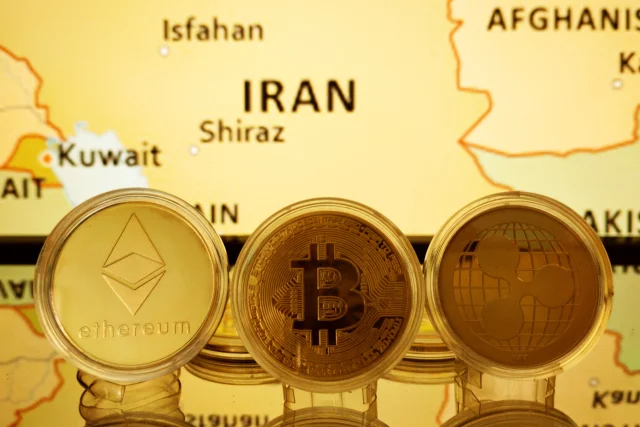
Israel announced the sanctioning of 37 cryptocurrency wallets linked to the Islamic Revolutionary Guard Corps (IRGC), many of which were used to transfer funds to its proxies, Hezbollah and Hamas.
The National Bureau for Counter Terror Financing (NBCTF) in the Ministry of Defense uncovered the cryptocurrency-based financing infrastructure with help from Israeli intelligence agencies.
Defense Minister Israel Katz said on Wednesday morning that he signed sanctions orders against 37 cryptocurrency wallets associated with IRGC financing infrastructure. The wallets contained cryptocurrencies valued at over NIS 24 million (approximately $US 8 million).
That investigation revealed that the cryptocurrency wallets were used to transfer tens of millions of dollars to terrorist organizations supported by Iran, primarily Hezbollah, in a way that avoided already existing banking sanctions.
Hezbollah has ben trying to rehabilitate its resources and infrastructure, following the devastating setbacks it suffered fighting against Israel since Oct. 7, 2023.
The use of cryptocurrency by the Iranian regime and its proxies has been increasing in recent years with the tightening of sanctions by the Western world in an effort to cut off terror financing.
At the same time, Israel has been finding and attacking other Hezbollah and Hamas finance streams, including the use of money changing networks, often based out of Turkey.
Defense Minister Israel Katz said the sanctions represent another battlefield in Israel’s fight against Iranian terror:
“The campaign against Iran is not only being waged on the battlefield - but also in the fight for the money that drives terrorism. Every dollar that is withheld from the Revolutionary Guards is a dollar that will not reach Hezbollah, Hamas, the Houthis and Iran's (other) terrorist proxies. We will continue to target all the financing axes of the Iranian terrorist axis, everywhere and by any means.”
The Israeli effort joins similar efforts by the United States. In early June, the Treasury Department announced sanctions on Iran’s largest cryptocurrency exchange, Nobitex, and some of its founders.
In its announcement, the Treasury stated that Nobitex “has provided significant support to the regime, processing more than 50 percent of all Iranian digital asset inflows in 2025 and facilitating payments tied to Iran’s terrorist activities, sanctions evasion efforts, and Islamic Revolutionary Guard Corps (IRGC)-linked transactions, including activity associated with IRGC-affiliated ransomware actors.”
At the same time, the Wall Street Journal reported that the Chinese-managed CoinEx cryptocurrency exchange hosted two wallets controlled by the Central Bank of Iran. The funds in those wallets were traced back to funds stolen by North Korean hackers from the Bybit currency exchange in early 2025.
CoinEx became the largest foreign partner of Nobitex after cryptocurrency exchange Binance began enforcement of U.S. sanctions measures in 2022 and 2023.
Those sanctions came as part of a U.S. effort to cut off all funding sources used by the Islamic Republic to avoid existing sanctions, dubbed “Operation Economic Fury.”
“Under President Trump’s leadership, Treasury will continue to cut off Iran’s illicit smuggling and terror proxy networks,” Treasury Secretary Scott Bessent said at the time.
“Financial institutions should be on notice that Treasury will leverage all tools and authorities, including secondary sanctions, against those that continue to support Tehran’s terrorist activities,” he continued.
Later in April, Bessent announced the freezing of Iranian cryptocurrency accounts worth $344 million.
“Treasury’s Office of Foreign Assets Control is sanctioning multiple wallets tied to Iran — resulting in the freeze of $344 million in cryptocurrency,” Bessent wrote on 𝕏. “We will follow the money that Tehran is desperately attempting to move outside of the country and target all financial lifelines tied to the regime.”
The regime also floated a plan to use payments in Bitcoin as part of its strategy to control the Strait of Hormuz. That plan would require ships traversing the critical waterway to buy “insurance” from the Iranian Ministry of Economic Affairs, billed as “Secure Digital Insurance for Maritime Cargo.”
A report in the regime-affiliated Fars News said the plan could generate over $10 billion for the country.
“Under the Economy Ministry's plan, managing the Strait through an insurance framework would enable the issuance of various marine insurance policies as well as certificates of financial responsibility,” it reported.
The rise of cryptocurrency use in Iran has risen in recent years as citizens have sought relief from the weakening rial amid heavy sanctions pressure on the Iranian economy.
Besides the use of cryptocurrency by government agencies, attempting to avoid Western sanctions, researchers estimate that around 13% of Iranians own cryptocurrency.
The Israeli announcement of cryptocurrency sanctions signals a more aggressive posture in combating Iran’s financial aid network for its proxies, particularly as ceasefire agreements signal a temporary reduction in military activities against those same entities.
You might also like to read this: