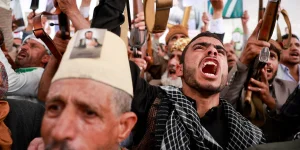
Iraq's 'Kataib Hezbollah' terrorists offer to buy weapons from disarming militias




Security analysts are debating the significance of a recent announcement by Kataib Hezbollah, the Iranian-backed Shi’ite militia in Iraq, that it intends to purchase drones and missiles from other armed groups that are “not involved in the Islamic resistance” and have “decided to lay down their arms.”
Analysts cited by regional media suggested the statement may be aimed at acquiring weapons from the Saraya al-Salam militia led by Shi’ite cleric Muqtada al-Sadr, a rival of Kataib Hezbollah within Iraq’s Popular Mobilization Forces (PMF).
The PMF, a coalition of mostly Shi’ite militias that serves as a major pillar of Iranian influence in Iraq, is formally integrated into Iraq's state security system and reportedly receives government funding. However, many of its constituent groups retain operational autonomy, limiting Baghdad’s ability to control their activities or counter Tehran’s influence.
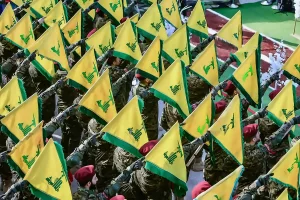
The Kataib Hezbollah (KH) organization is officially designated by the United States as a Foreign Terrorist Organization, and several of its leaders have been sanctioned as Specially Designated Global Terrorists (SDGTs). The group is responsible for killing American troops in Iraq and Jordan, and also kidnapping American journalists and aid workers.
KH spokesman Abu Mujahid al-Assaf said, “We welcome every step taken by our brothers (not involved in the Islamic Resistance) that aims to confine weapons to the hands of the state, enhance security, stability and civil peace, preserve the capabilities of the dear Iraqi people and remind us that jihad work today is a collective duty, and we will perform it on behalf of the brothers who decided to leave it, and if we need them, they are close and will not fall short.”
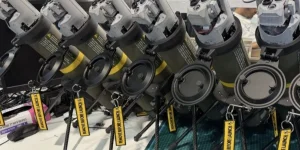
He continued, “We are ready to cooperate and take a constructive role in providing some facilities and guidance between those entities and the Popular Mobilization Forces leadership concerned with this file, including supervising the inventory of weapons and their transfer and storage in a safe manner, receiving some special weapons for which there are no specialists in the state agencies, such as drones, suicide aircraft, cruise missiles, anti-armor missiles, and others."
Al-Assaf said KH was prepared to purchase weapons from militias that have abandoned armed activity, while also providing financial support to the families of killed and wounded fighters and to members who leave service. The group said it respected the decisions of factions that choose to end their participation in armed operations and praised those that surrender their weapons to the state, describing the matter as “their affair and their decision.”
Analysts suggest KH could benefit regardless of whether Saraya al-Salam ultimately decides to disarm. If it gives up its weapons, KH could strengthen its own position within the PMF. At the same time, the disarmament of a major PMF faction could weaken the broader militia network. Some observers believe KH's offer may also be intended to discourage Saraya al-Salam from pursuing disarmament by publicly highlighting the consequences of such a move.
KH has been involved in repeated confrontations with U.S. forces in Iraq, and several of its senior operatives have been killed in military operations over the years. In January 2020, the group's deputy commander, Abu Mahdi al-Muhandis, was killed in a U.S. drone strike near Baghdad International Airport alongside Qasem Soleimani, the commander of Iran's Quds Force. The strike highlighted the close ties between Iran and Iraq's Kataib Hezbollah.
You might also like to read this: