Iran disputes US claims it will open nuclear sites to inspectors, buy American agricultural products
‘If Iran doesn’t behave, I will do what I have to do’ Trump says after Switzerland talks conclude



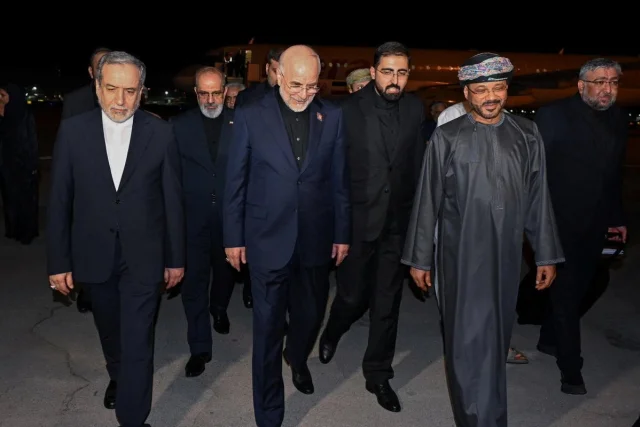
The Iranian regime denied claims by U.S. Vice President JD Vance that Iran had “agreed to invite IAEA inspectors back into their country.”
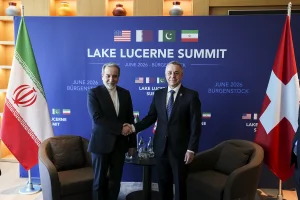
Vance had made the announcement at a press briefing following the end of the high-level talks at Bürgenstock, the Qatari-owned resort that hosted the negotiations.
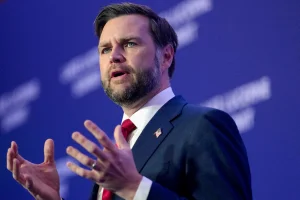
“Yesterday was a very, very good day,” Vance told reporters on Monday, saying the talks “made a lot of progress.”
The vice president claimed the talks “accomplished four things for the American people,” including opening the Strait of Hormuz, establishing deconfliction mechanisms, and the return of International Atomic Energy Agency (IAEA) inspectors to Iran.
BREAKING: VP Vance announces major progress made by the United States and its negotiating team while finalizing a deal with Iran:
— Fox News (@FoxNews) June 22, 2026
“Yesterday was a very, very good day. We made a lot of good progress. We did exactly what we wanted to do… the Iranians have agreed to invite IAEA… pic.twitter.com/ExpYCS2KK2
“The Iranians have agreed to invite IAEA inspectors back into their country,” Vance stated. “That is a major milestone for the American people. And the first step in permanently denuclearizing- permanently ending a nuclear weapons program in Iran.”
President Trump echoed the claims by Vance, writing that Iran “will agree to have ‘Major Weapons Inspections’.”
“Everybody is fully aware that Iran will agree to have Major Weapons Inspections in order to ensure ‘Nuclear Honesty’ long into the future,” Trump wrote to Truth Social on Monday.
However, the regime-affiliated Tasnim news agency denied Vance’s claims.
“The entry of IAEA inspectors into Iran is in violation of the memorandum of understanding and highly damaging,” Tasnim reported on Monday evening, ahead of the return of the Iranian delegation.
“As of this moment, the matter of issuing permission for the entry of IAEA inspectors into Iran has not been confirmed by the Iranian negotiating team or other responsible officials in the government,” the site added.
Further, Tasnim said that the Iranian regime has a deliberate policy of “nuclear ambiguity” regarding the certainty of its nuclear materials following the June 2025 combined U.S.-Israeli strikes on nuclear sites in Iran.
“One of Iran's most important current assets, which prevents some of America's foolishness, is the policy of ‘nuclear ambiguity’ and the uncertainty about the location of enriched materials storage for the Americans,” Tasnim reported, claiming that the U.S. has “put all their efforts into countering this nuclear ambiguity and obtaining the necessary information in this regard.”
“If the policy of nuclear ambiguity collapses with the arrival of IAEA inspectors in Iran and the Americans complete their information on this issue, it will only benefit the enemy,” Tasnim added.
The site also cited regime officials, who claim that the Iranian delegation did not allow IAEA Director General Rafael Grossi to participate in the talks in Bürgenstock.
Iranian Foreign Ministry spokesman Esmail Baghaei said there had been no changes to Iran’s relationship with the IAEA.
“Iran’s interactions with the agency, in line with its obligations under safeguard agreements, will continue according to the existing framework and in compliance with the resolutions of the Islamic Consultative Assembly and the decisions of the Supreme National Security Council,” Baghaei said in a statement.
Iranian officials also rejected claims by President Trump and Vice President Vance that Iran would purchase American agricultural products, such as food, with funds being released as part of the negotiations.
Speaking to reporters in the White House late Monday evening, President Trump claimed, “All that money's coming back in the form of purchases of food which they desperately need. They have 91 million people; they can't feed them. So, the money that we lift is going to go to our farmers.”
“Based on the signed memorandums, there is no obligation to buy agricultural inputs from the United States,” Iran’s Central Bank governor Abdolnaser Hemmati told Tasnim News.
Despite Iran rejecting U.S. claims regarding outcomes for the talks, Treasury Secretary Scott Bessent stated on 𝕏 that the Treasury “issued a temporary 60-day general license authorizing the production, delivery, and sale of Iranian oil.”
Under President @realDonaldTrump and @VP, we continue to make the world safer and more prosperous.
— Treasury Secretary Scott Bessent (@SecScottBessent) June 22, 2026
In line with the ongoing productive talks in Switzerland, Iran has committed to free and open transit in the Strait of Hormuz and to permit International Atomic Energy Agency…
The White House indicated the nuclear weapons issue remains the primary focus in the negotiations.
Asked if he would be willing to launch further attacks on Iran if the regime is not compliant with agreements, and in light of the risk of global depression, Trump responded, “Nuclear weapon supersedes depression.”
“Depression is real bad. Nuclear weapon will cause depression much more quickly,” Trump told reporters.
“If Iran doesn’t live up to their agreement, or if they’re not behaving, I will do what I have to do,” he added. “As long as Iran respects us, we are not going to have any trouble.”
You might also like to read this: