









IDF warns Hezbollah’s night-time drone capabilities are rapidly advancing
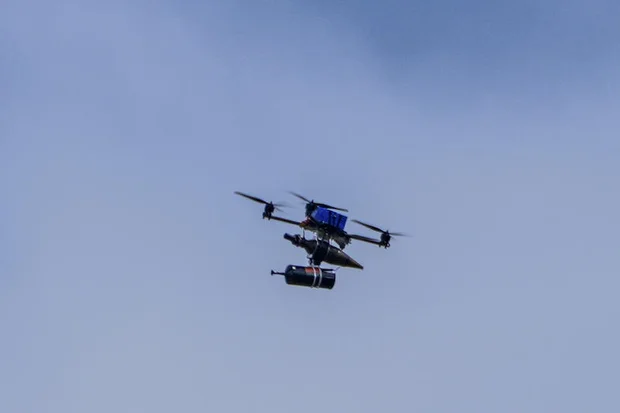
The Israeli military is increasingly concerned about Hezbollah’s upgraded night-time first-person view (FPV) drone capabilities following a series of recent attacks that have killed and wounded Israeli soldiers in southern Lebanon.
Military officials warn that the Iran-backed terrorist group is steadily improving not only its drone operations but also the accuracy and effectiveness of its broader arsenal. The growing threat has prompted the IDF to shift tactics and accelerate its efforts to counter Hezbollah’s evolving capabilities.
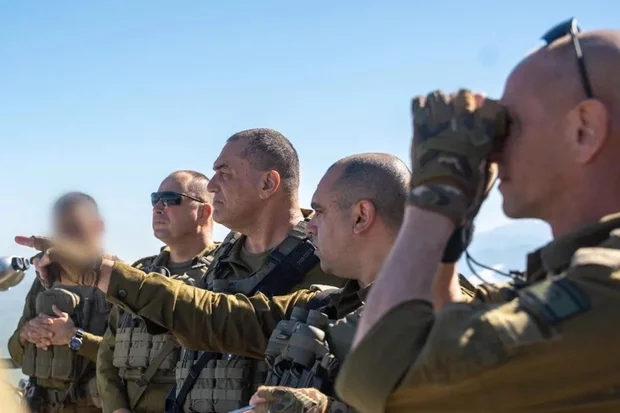
"It’s quite unusual that the drone struck a force at night. That still hasn’t happened to combat teams before," an IDF Givati Brigade reconnaissance soldier assessed after inspecting deployed combat troops.
The concerns follow a series of drone attacks, including one on Sunday in which a Hezbollah FPV drone killed Capt. Dr. Ori Yosef Silvester, the physician of the Givati Brigade’s Shaked Battalion, during a daytime strike.
"There is a steadily rising learning curve, and not only with drones," IDF military officials warned. "They improve the accuracy of their fire every time. That’s why we try to keep moving as much as possible, both in the security zone along the Yellow Line and during maneuver operations, rather than remaining static."
Security sources believe Hezbollah’s upgraded capabilities are the result of the organization studying Israeli military tactics over time.
After losing thousands of operatives since launching attacks on Israel on Oct. 8, 2023, Hezbollah is reportedly avoiding large-scale direct clashes with Israeli forces in southern Lebanon and instead focusing on stand-off attacks using drones and other weapons systems.
The IDF has responded by improving protective netting around military assets and enhancing its ability to detect and intercept Hezbollah FPV drones. Last month, reports indicated that the military also plans to manufacture thousands of suicide drones to counter the growing threat.
Speaking on condition of anonymity, an IDF military official revealed that Hezbollah operatives continue to operate near Israeli military positions in Lebanon.
"They are withdrawing toward the next line of houses, sometimes hundreds of meters farther back," the military official said. "We hope that in the near future we will see some change in this threat, especially for residents of northern Israel."
IDF Col. (res.) Oren Zini, former commander of the Menashe Brigade, warned last month that Hezbollah drones could potentially reach central Israel, including Tel Aviv.
Israeli military personnel have expressed frustration that Hezbollah continues to improve its capabilities despite the American-brokered ceasefire reached in April.
"Fifteen people have been killed during what is supposed to be a ceasefire, when there really is no ceasefire," one IDF soldier said while visiting a friend who was injured in an FPV drone attack.
"Maybe Hezbollah’s drones now have new thermal cameras and they can actually see our forces moving," the soldier speculated. "How many more people will be killed during this 'ceasefire'? How many? The time has come to act and explain to U.S. President Donald Trump that action is necessary."
Cameron Chell, a security expert and CEO of the drone-producing company Draganfly, believes Hezbollah has developed “game-changing” capabilities with small but deadly night-time drones.
"These drones are typically used by teams in the field to carry out lethal missions or immediate surveillance missions directly in the operational area," Chell explained. "What they are able to do is use thermal sensors to fly at night and use heat signatures to identify IDF forces."
Looking ahead, Chell said he believes Hezbollah’s drone campaign is likely to intensify. "What you’re going to see is an escalation in drone usage and innovation in asymmetric warfare in this particular region by Hezbollah."
"The IDF will have to change much of its strategy regarding its ability to move and operate at night," he said. "They will now have to take into account that Hezbollah has nighttime capabilities, at least for surveillance through thermal cameras and also for attack operations."
Chell concluded, "Someone is providing Hezbollah with the equipment. Whether it comes through Iran, China, Russia, Afghanistan or the black market, someone is obtaining enough products and feeding them into their supply chains."
Popular article:

interview Easter message of resurrection hope amid war at Jerusalem's Garden Tomb

biblical commentary Let my people go: a Passover message for today
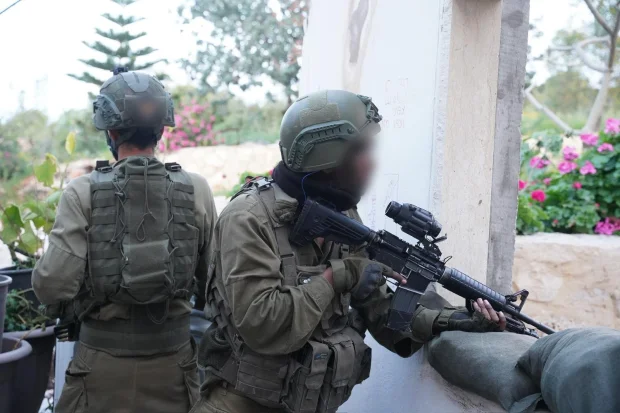
4 IDF soldiers killed, 2 wounded in fighting in southern Lebanon, as Israel eliminates dozens of Hezbollah terrorists

Receive latest news & updates
A message from All Israel News
Help us educate Christians on a daily basis about what is happening in Israel & the Middle East and why it matters.
For as little as $10, you can support ALL ISRAEL NEWS, a non-profit media organization that is supported by readers like you.
Latest articles:
North American Jewish organizations to recruit 100 professionals to combat antisemitism

‘No need’ for pre-election Iran strike, IDF chief says as gov’t, opposition trade blame for potential escalation – report
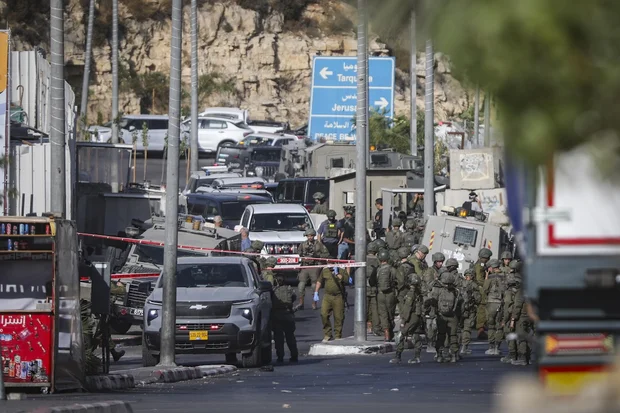
terror attack 2 Israeli soldiers killed, 2 terrorists eliminated in Hebron shooting; IDF says much larger attack was prevented
analysis A people dwelling securely? Israel’s strategic standing, 3 years after Oct 7

Hamas on wheels: What I found in Dearborn reveals a troubling history and a battle over Israel