Germany criticized by Council of Europe over antisemitism policies and free speech concerns



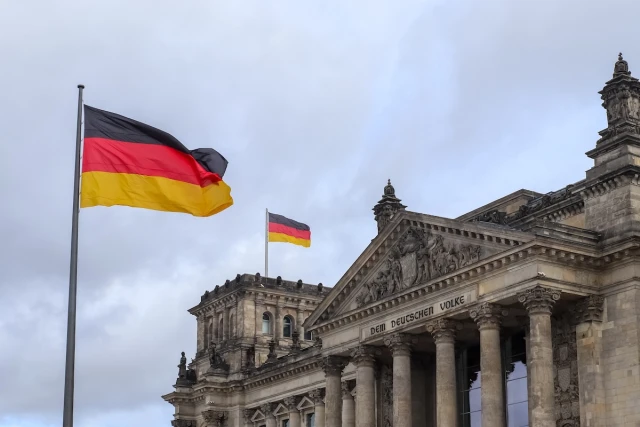
Germany is facing criticism from the Council of Europe for what it describes as an overly strict and “expansive” interpretation of antisemitism, according to a report released on Wednesday.
The Council’s Commissioner for Human Rights, Michael O’Flaherty, visited Germany last October to assess the situation regarding antisemitism. In the report, O’Flaherty argued that the German government has at times conflated antisemitism with “legitimate criticism of the Israeli government.”
“Freedom of expression has faced disproportionate restrictions, particularly in debates about Palestinian rights and legitimate criticism of the Israeli government,” O’Flaherty said.
The senior European official argued that Berlin imposed pressure on “peaceful protests” and undermined what he termed democratic freedoms – “especially those related to the Palestine solidarity movement.”
While expressing support for Germany’s efforts to combat antisemitism, O’Flaherty emphasized, “The distinction between legitimate criticism of state policies and antisemitism must not become blurred.” He added that the International Holocaust Remembrance Alliance (IHRA) working definition of antisemitism must “not be distorted or misapplied to stifle freedom of expression or legitimate criticism of state policies.”
Reports indicate that anti-Israel and antisemitic incidents have increased in Germany following the Hamas Oct. 7, 2023, attacks in southern Israel. In his criticism of German authorities, O’Flaherty did not address concerns raised by some officials and observers that certain protest slogans – such as “Globalize the Intifada” and “Free Palestine from the River to Sea” – have been interpreted as inciting violence against Israelis and Jews.
The IHRA working definition of antisemitism includes forms of discourse that deny or delegitimize Israel’s right to exist as the homeland of the Jewish people. Authorities and researchers have reported that some expressions rejecting Israel’s existence have emerged within segments of protest movements and communities in Germany and other Western democracies, although such views are not representative of any broader population.
In 2024, the German government denied citizenship to individuals who call for Israel’s destruction.
O’Flaherty condemned the measure, arguing that limiting “criticism of Israel” could jeopardize residency or naturalization prospects, or even lead to criminal liability. He also said restrictions on anti-Israel rallies should not be based on the content of messages and slogans, as long as they remain within the limits of Article 10(2) of the European Convention on Human Rights (ECHR). O’Flaherty also praised Germany for its efforts to protect the local Jewish community.
The German government responded by stressing that it disagreed with the Council of Europe’s claim that Berlin applies an overly strict definition of antisemitism, issuing a statement: “These reach their limits wherever they are directed against the rights of others and violate rules which are necessary for all to live peacefully together. This applies to all expressions of opinion, assemblies and associations, including those in the context of pro-Palestinian protests,”
While recognizing the right of individuals to demonstrate amid Middle East tensions, Berlin argued that the conflict “unfortunately also serves as a motive and justification for some other actors to commit crimes in Germany.”
“These anti-Israel and anti-Jewish rallies typically consist of a broad spectrum of participants who have nothing in common except pure hatred of Israel and the Jewish people.”
You might also like to read this: