EU Aviation Safety Agency urges avoiding Iran, Iraq, Lebanon, eases Israel restrictions




The European Union Aviation Safety Agency (EASA) eased its aviation safety guidance for Israel on Wednesday while continuing to warn airlines to avoid Iranian, Iraqi, and Lebanese airspace because of renewed tensions involving the Iranian regime and the United States.
Under the updated guidance, Israel's previous high-risk conflict-zone advisory has expired and been replaced with a medium-level Information Note, indicating that some security risks remain but no longer warrant EASA's highest level of aviation warning.
"Following the agreed ceasefire agreements and the overall reduction in short-term tensions, the Integrated EU Aviation Security Risk Assessment Group decided not to extend the existing Conflict Zone Information Bulletin (CZIB) on the Middle East and Persian Gulf, which expires on July 8, 2026," EASA announced.
"The European Commission and EASA, together with the Member States, will continue to closely monitor the situation to assess the evolving threats and risks, including any increase or reduction in risks for EU aircraft operators, and remain ready to take action as appropriate," it added.
The revised guidance comes as tensions between Washington and Tehran remain elevated despite a reduction in broader regional hostilities.
"They're scum, the deal is over," U.S. President Donald Trump said on Wednesday after signaling growing U.S. frustration with the ayatollah regime concerning the lack of progress in the talks to end the war.
The U.S. military struck Iranian military sites in response to Iran's attacks on civilian vessels in the Strait of Hormuz. The Iranian regime retaliated with strikes on several Arab Gulf states, raising international concerns that the escalating confrontation could reignite a full-scale war.
Although Israel has not been affected by the latest exchange of military fire between Washington and Tehran, the Israeli military is preparing for the possibility that Israel could become involved in a renewed conflict with Iran.
EASA also eased aviation guidance for other parts of the Middle East that are not currently affected by the Iranian missile strikes.
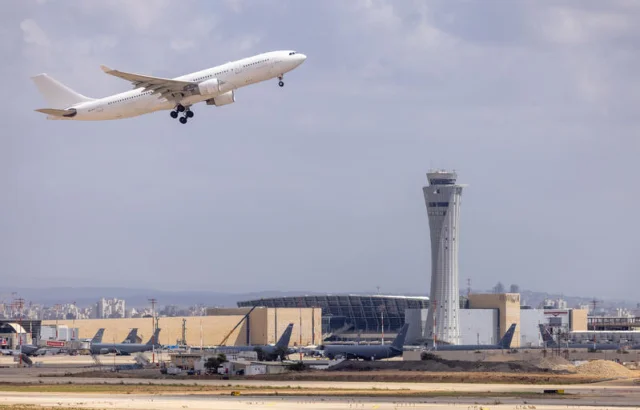
The updated advisory allows international carriers to decide independently whether to resume flights to and from Israel. Germany's Lufthansa, Spain's Air Europe, and Hungary's Wizz Air have already resumed service.
By contrast, U.S.-based Delta Air Lines has announced it will not resume flights until September, while British Airways has indicated a potential return in October.
Many international airlines have repeatedly suspended flights to Israel since Hamas' Oct. 7, 2023, attack because of fluctuating security conditions. Following the fragile ceasefire with Iran in early April, several carriers signaled plans to restore service.
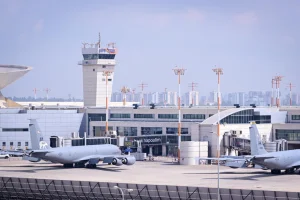
The Israeli Transportation Ministry recently announced that it had reached an agreement with the U.S. military to relocate dozens of U.S. military aircraft from Ben Gurion Airport to Israeli air bases in order to ease congestion for civilian traffic.
Israel Airports Authority Director General Sharon Kedmi warned that the continued presence of U.S. refueling aircraft at the airport could significantly disrupt travel for as many as 100,000 passengers during the peak summer travel season in July and August.
Meanwhile, Israeli airline Arkia announced that it will resume twice-weekly flights to the Moroccan city of Marrakesh.
"The resumption of the route comes after an extended period of joint efforts with aviation and security authorities, and marks significant news for Israeli travelers wishing to return and visit Morocco," Arkia stated.
You might also like to read this: