Yoḥanan the Baptist – the dissident of the priestly elite
Part Two: The real people of the New Covenant: Lives behind the names





This article is part of Real People of the New Covenant: Lives Behind the Names, a series by ALL ISRAEL NEWS contextualizing the historical figures of the biblical narrative. Exploring the history and archaeology of the Land offers an objective framework for reading the text, grounding distant figures within their concrete environment.
In the historical landscape of first-century Judea, family lineage strongly shaped socio-economic destiny. As the son of Zeḥariyah and Elisheva (Zechariah and Elizabeth), whom we explored in Part 1, Yoḥanan (John) was born into the hereditary priestly aristocracy of Jerusalem – a position closely associated with formal literacy, high social status, and economic privilege. By the established norms of Jewish society, his path was largely pre-determined: he was expected to wear the fine white linen robes of a Kohen (priest) and serve within the monumental complex of the Jerusalem Temple.
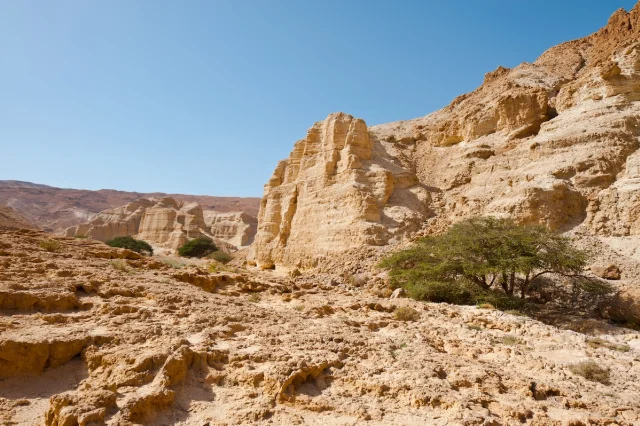
Instead, his choices directly subverted the expectations of his social class. Known historically as John the Baptist, his Hebrew name, Yoḥanan (יוֹחָנָן), translates to “The Lord is Gracious.” Yet the message he carried from the arid canyons of the Judean wilderness functioned as a radical critique of the contemporary religious establishment.
Yoḥanan's regional influence and subsequent political execution represent some of the most securely documented events of the ancient world. Beyond the accounts in the New Covenant, his public ministry and death are explicitly recorded by the first-century Jewish historian Flavius Josephus in his monumental work Antiquities of the Jews (Book XVIII), as preserved in modern editions and translations.
The desert protest: a socio-religious break
Yoḥanan’s relocation to the desert can be understood not merely as an act of mystical isolation, but as a deliberate ideological protest against the political compromise of the Temple hierarchy. During this period, the high priesthood – heavily dominated by the Sadducee faction – maintained its power through political alliances and close collaboration with the Roman authorities. By refusing to assume his inherited duties in Jerusalem, Yoḥanan effectively renounced the aristocratic privileges available to him.
Archaeological surveys conducted in the Qumran region demonstrate that the Judean Desert functioned as a major gathering point for a dissident community, often understood as having priestly roots and rejecting what they saw as the corruption of the urban sanctuary. These groups maintained a strict commitment to ritual purity outside the institutional framework of Jerusalem, as reflected in both the Dead Sea Scrolls and the dense concentration of ritual immersion installations in the area.
This specific environment clarifies the functional realities of Yoḥanan’s wilderness lifestyle. The account in Matthew 3:4 notes that his diet consisted of "locusts and wild honey." While unusual to modern readers, Leviticus 11:22 explicitly classifies certain kinds of locusts as ritually clean food. In an environment where Temple-supervised ritual slaughter was impossible, these resources allowed a devout priest to maintain dietary purity without relying on the commercialized food systems of the capital.
Furthermore, while traditional Jewish immersion was typically performed repeatedly within private, stone-cut step-pools (mikvaot), Yoḥanan introduced what appears to be a significant structural innovation. By conducting ritual washing (tvilah) outdoors as a public, once-for-all moral commitment in the natural flow of the Jordan River, he positioned his practice outside the financial and administrative structures associated with the Jerusalem priesthood.
The geopolitical confrontation at Machaerus
Yoḥanan systematically extended his movement into the strategic territories of the Jordan Valley and Perea, placing his ministry directly within the jurisdiction of Herod Antipas, the Roman-backed tetrarch of Galilee and Perea. His public condemnation of Antipas for violating biblical law by marrying his brother’s wife (Mark 6:18) acted as a direct challenge to the moral legitimacy of the ruling dynasty.
While the Gospel accounts preserve the moral reason for his arrest, Josephus supplies the political context. In Antiquities 18.5.2, he reports that Herod Antipas feared Yoḥanan’s immense influence over the crowds might spark a rebellion against his fragile rule. To remove this perceived threat, Antipas ordered Yoḥanan’s arrest and imprisonment at the remote palace-fortress of Machaerus.
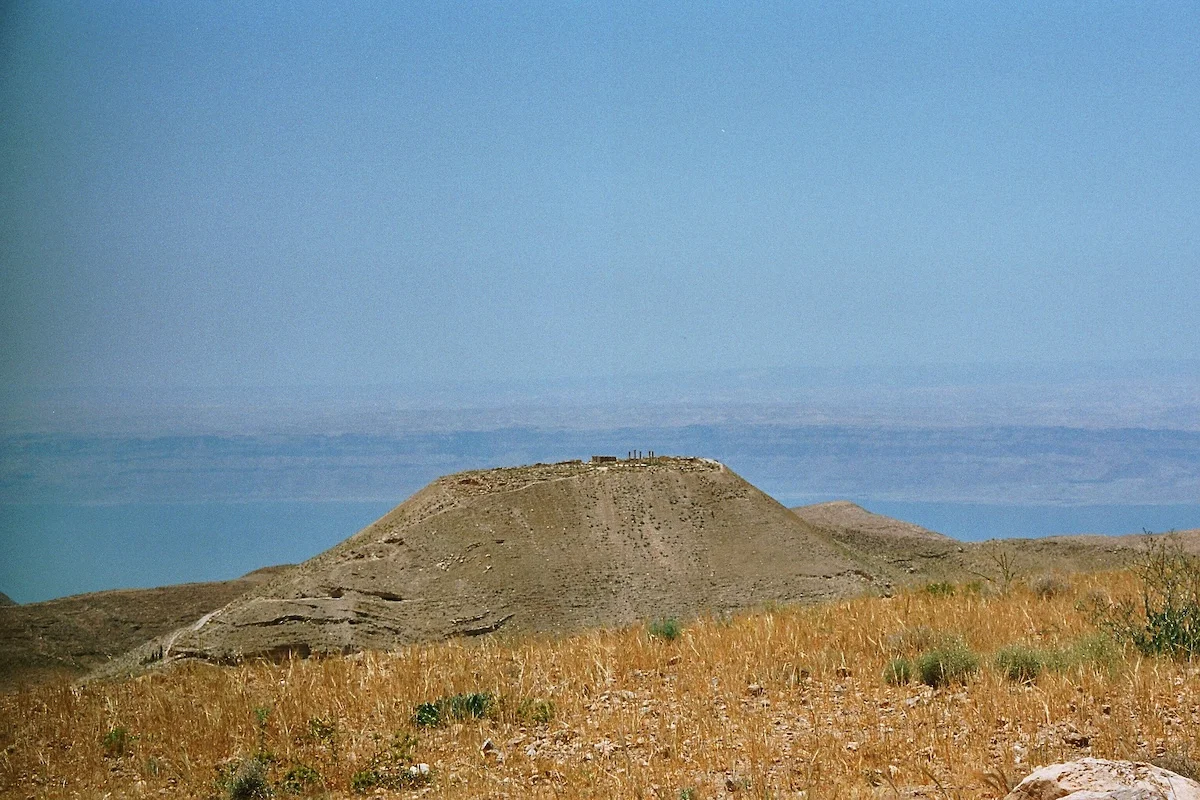
Recent archaeological investigations at the Machaerus site in modern Jordan have mapped the physical reality of this Herodian stronghold. Excavations reveal fortified royal courtyards, Roman-style bathhouses, reception halls, and deep subterranean cisterns and storage spaces that could have served as secure holding areas.
Within this military complex, Yoḥanan’s earthly race ended with his execution by beheading, as the Gospel record affirms, while Josephus independently confirms his imprisonment and death at the hands of Herod Antipas.
The blueprint of conviction
Analyzing Yoḥanan within his authentic socio-cultural context shifts the understanding of his historical role. He was not a marginalized outsider with nothing to lose; he was an elite insider who voluntarily relinquished a life of physical comfort and institutional prestige in Jerusalem to operate on the geographic and political periphery.
The linguistic interplay within his family lineage reflects a meaningful sequence. Because Zeḥaryah ("The Lord Remembers") remained faithful through decades of institutional duty, Yoḥanan ("The Lord is Gracious") was positioned to step into the wilderness, establishing the prophetic call to repentance required to prepare the way for the ministry of Yeshua, Jesus.
Ultimately, Yoḥanan's legacy offers a stark historical model of integrity largely decoupled from institutional validation. His historical footprint stands not as a monument to political failure, but as concrete evidence of a life aligned with a singular, uncompromised purpose.
Next in the series: Miryam and Yosef: From Nazareth’s workshops to the ministry of Yeshua