Understanding the current fight over the office of Attorney General in Israel




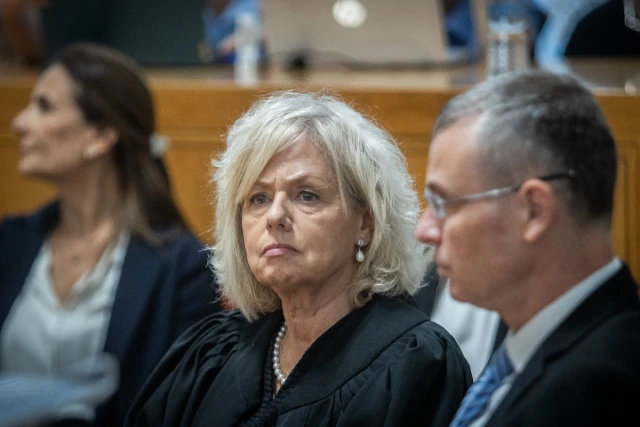
Israel's attorney general has become one of the most critical figures in the coalition government’s attempts to pursue its judicial reform program.
Part of the conflict stems from the unique nature of the attorney general in the Israeli political system compared to other democratic countries.
The AG holds two different responsibilities simultaneously: that of legal advisor to the government – but whose advice is legally binding – as well as the chief prosecutor, even for government figures accused of crimes or wrongdoing.
In most democracies, these functions are divided between two separate offices. In Israel, the attorney general’s office combines the role of the government’s primary legal advisor and representative, while also being the chief prosecutor, tasked with investigating government officials.
These two positions create a situation in which the attorney general could be responsible for providing legal advice to the very people being investigated by the AG’s office.
This combination of roles, often kept separate, has led to a situation in which one of the most powerful legal offices in the world has a built-in potential conflict of interest.
Known as “the legal advisor to the government” (היועץ/ת המשפטי/ת לממשלה) in Hebrew, the attorney general has four main areas of responsibility:
Head of the public prosecution system;
Representative of the state in all legal proceedings;
Chief legal counsel to the government;
Representative of the public interest in all legal matters.
Historically, the office was created to ensure legal integrity for the executive branch (of government), provide safeguards for democracy, and uphold the rule of law.
Despite these crucial responsibilities, the office of the attorney general is not codified in Israeli law, and the responsibilities of the office have grown over time based on precedent and decisions by both the government and the judiciary.
The role and power of the attorney general have grown over the years.
The office of attorney general was established in 1948, as the provisional government sought to organize the executive branch's legal structure following the end of the British Mandate. In the early years, the position had no set length of appointment, nor a clear legal definition of its role.
In 1962, the first Arrant Commission determined that the government [cabinet] is not legally bound to abide by the attorney general’s opinion, although “good order in the country requires that the government usually relate to the legal opinion of someone who fulfills the role of 'Attorney General.’” However, the commission determined that government authorities are bound by the AG’s legal opinion.
In 1993, then Attorney General Yosef Harish ordered Prime Minister Yitzhak Rabin to fire ministers Aryeh Deri and Raphael Pinhasi from the government, after indictments were filed against the two. When Rabin refused, the matter came before the Supreme Court.
State Attorney Dorit Beinisch was required to represent both sides of the dispute, as it involved the Attorney General against the government. This case demonstrated the inherent conflict of interest possible in having one office fulfill different roles.
During that case, Supreme Court President Aharon Barak expanded the authority of the AG, ruling that "The Attorney General is the authorized interpreter of the law regarding the executive branch.”
However, Barak also cemented the inherent potential for conflict of interest by ruling that the AG “must represent the Prime Minister before us according to the Attorney General's legal understanding.”
In 1997, then-Prime Minister Benjamin Netanyahu, serving in office for the first time, attempted to appoint Roni Bar-On to the position of attorney general in the so-called "Bar-On-Hebron affair,” despite Bar-On being unqualified for the position.
That case involved an apparent quid pro quo in which ultra-Orthodox Shas party leader Aryeh Deri recommended Bar-On’s appointment to the AG’s office, believing Bar-On would support a favorable plea deal for Deri, who was facing corruption charges.
In return, Deri was reported to have promised to support Netanyahu’s Hebron agreement, which would see IDF troops withdraw from 80% of Hebron as part of the Oslo II agreements.
That led to the convening of the Shamgar Commission, named after former Israeli Supreme Court president Meir Shamgar, to examine ambiguities in the legal framework governing the attorney general, including the appointment process and the AG's relationship to the political echelon.
That commission established two important points: it recommended the attorney general allow the government to seek independent counsel in the event of a disagreement between the two, and it affirmed the AG’s legal authority to advance criminal proceedings against government ministers deemed to be violating the law.
The commission also determined that the attorney general should be appointed by the government on the commission's recommendation.
The commission itself would consist of a retired Supreme Court justice, a former justice minister or attorney general, a Knesset member selected by the Knesset Constitution, Law and Justice Committee, an attorney selected by the Israel Bar Association, and a legal expert in civil and criminal law selected by the heads of Israel's university law schools.
Usually, that commission recommends a group of candidates, one of whom is selected by the justice minister, and then approved by the cabinet.
In 2000, a government resolution standardized the attorney general’s position as a one-time, six-year position, in order to improve independence from the executive branch.
However, all of these developments were never codified into law, leading to many unanswered questions regarding the AG’s authority and the government’s ability to change or regulate the office.
Importantly, the Shamgar Commission also determined a framework for the dismissal of a sitting attorney general. It established four acceptable reasons for firing an attorney general: physical incapacitation, misconduct, criminal investigation or indictment, or severe disagreements with the government preventing cooperation.
The government must submit a written request to the appointment committee, which will then hold a hearing at which the attorney general presents testimony. The committee subsequently issues a recommendation. While the government is not legally bound by the recommendation, disregarding it could leave the decision vulnerable to review by the High Court of Justice.
The inherent potential for conflict of interest in the office of the attorney general has prompted calls by previous governments and legal experts to split the office into two separate positions.
A proposal to do so was put forward by the Kohelet Forum, whose legal opinions were used to justify some of the coalition’s proposed Judicial Reforms.
However, following the announcement of charges of bribery, fraud, and breach of trust against Prime Minister Netanyahu in 2019, the relationship between the AG and the government became more charged.
Previous AG Avichai Mandelblit, who was appointed by Netanyahu, filed the indictments. Mandelblit also issued a conflict-of-interest arrangement, which prevented Netanyahu from intervening in matters impacting his trial, including judicial appointments and relevant legislation.
When the coalition government announced its judicial reforms under Justice Minister Yariv Levin, the proposal to split the office of the attorney general caught the attention of many, who saw it as a sign that Netanyahu’s political partners were attempting to interfere in his corruption cases.
Later, coalition allies introduced a bill that would allow the government to investigate the attorney general and the state prosecutor in cases of suspected wrongdoing.
The need for an independent investigator empowered to investigate the attorney general returned to public attention following the exposure of the Sde Teiman affair. The case involved allegations that IDF Military Advocate-General Maj.-Gen. Yifat Tomer-Yerushalmi may have cooperated with Attorney General Gali Baharav-Miara in the leaking and alleged cover-up of an edited surveillance video purportedly showing soldiers abusing a Hamas detainee at the Sde Teiman Prison facility.
The coalition also initiated proceedings to dismiss Baharav-Miara, even taking a no-confidence vote against her, seeing her as an adversarial figure who has often refused to represent the government in its judicial reforms.
The move to dismiss Baharav-Miara prompted another confrontation with the High Court of Justice, which froze the firing. Baharav-Miara expressed the concern of many, saying that the coalition was attempting to fire the person in charge of investigating Netanyahu.
At the same time, there are legitimate disagreements over the scope and limits of the attorney-general's powers on all sides of the debate.
Critics of the AG’s office argue that the current model grants the attorney general excessive influence over political affairs. This has the potential to undermine democratic governance by an unelected official. They also claim the principle of separation of powers is damaged by giving so much power to one official, who often appears to function as a servant of the High Court of Justice.
However, supporters insist that a legal office able to prevent abuses of power, protect minority rights, and protect legal norms against the interests of political majorities is necessary to uphold the rule of law.
The current conflict over the attorney general, along with the disagreements between the government and the High Court of Justice, highlights the lack of a written constitution, clearly delineating government responsibilities and offering a balance of powers.
With upcoming elections, the unresolved nature of the coalition’s judicial reform program also promises to be a continued area of campaign activity.
Please take a moment to join believers worldwide praying for Israel right now. Add your light to the live prayer map—and show the world one more watchman praying for the peace of Jerusalem.

You might also like to read this: