The Erdoğan deal: Is Trump taking a dangerous gamble?




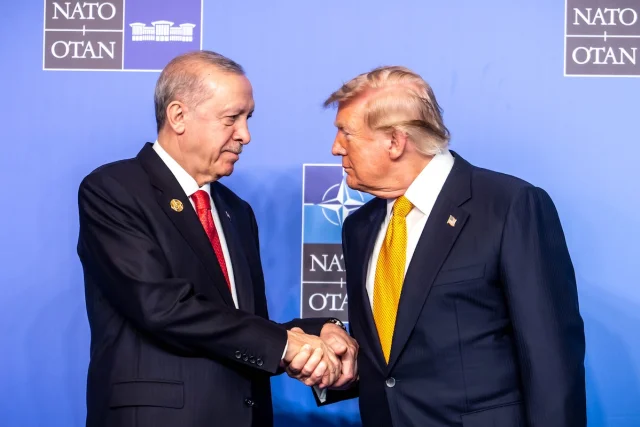
For U.S. President Donald Trump, it’s always about “the deal.” To that end, he has never hidden that he places a premium on personal relationships with world leaders. Even the bad ones.
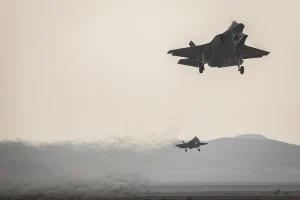
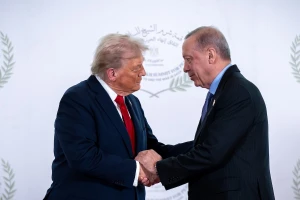
Sitting alongside Turkish President Recep Tayyip Erdoğan, Trump didn’t just praise the longtime Turkish leader; he also opened the door to restoring Turkey’s access to America’s F-35 fighter jet program and signaled that U.S. sanctions imposed during his first administration could soon be lifted.
“It’s a decision we’re going to make,” Trump said. “We have a better relationship with Turkey, and Turkey’s been, in many ways, much more loyal than other countries that we think would be loyal.”
“It’s something, certainly, we would consider. It’s a great plane, it’s the best, currently the best plane by far,” he added.
Trump also indicated his administration intends to remove sanctions that were imposed after Turkey purchased Russia’s S-400 missile defense system. “I can tell you we’re going to take the sanctions off,” he said, “It’s time.”
Later, Trump went even further. “I have no concerns at all about anything.” And while praising the U.S.-Turkey relationship, he said, “I would say the relationship with Turkey right now is better, probably, than it’s ever been.”
The comments immediately reignited a debate that has simmered in Washington for years.
Should the United States restore a key NATO ally to the F-35 program because the broader strategic relationship has improved? Or do the reasons Turkey was removed from the program still outweigh the potential diplomatic benefits?
Trump’s approach appears rooted in a broader strategic calculation. Turkey occupies one of the most important pieces of real estate in the world. It borders Syria, Iraq and Iran. It controls access between the Black Sea and the Mediterranean. It has NATO’s second-largest military. At a time when Washington is trying to manage Russia, contain Iran and compete with China, few countries occupy a more important geographic position.
Trump clearly believes personal diplomacy is part of this key equation. He even suggested that his relationship with Erdoğan helped keep Turkey from becoming more directly involved during the recent conflict involving Iran.
“He was a prime candidate to go into the war with Iran – maybe on the Iran side, because he’s not a big fan of Israel,” Trump said. “I asked him to stay out. He stayed out.”
A day later, Trump praised Erdoğan again. “Erdogan is a great leader, a very strong person… Everything I’ve ever asked from him, he’s done.”
Supporters of this “play nice” approach to Erdoğan believe that keeping Turkey firmly anchored in NATO is preferable to allowing it to drift closer to Moscow or Beijing. However, critics contend that personal chemistry does not address key national security issues and it sure doesn’t seem to make Israel feel comfortable at all.
Turkey’s decision to purchase the Russian-made S-400 air defense system is a concern.
Why should Turkey be rewarded with U.S. F-35s under those circumstances? Both Republican and Democrat administrations have warned that operating the S-400 alongside the F-35 could pose unacceptable risks to one of America’s most advanced stealth aircraft.
Congressman Mark Alford from Missouri recently laid out those concerns in stark terms to ALL ISRAEL NEWS:
“The problem is they also are buying weapons from Russia, and we don’t want them to get these F-35’s, any part of them, and then be able to somehow get some information to Russia about our stealth capabilities, which we also use on the B-2 and the B-21 platform that we’re building out at Palmdale, California.”
Alford added another warning, saying, “If that information is acquired by Russia, they’re going to give it to China and possibly Iran and others, which would really put a dent in our defense system, our national security.”
To be blunt, President Trump’s rhetoric this week from the NATO meeting regarding Turkey is deeply concerning.
The president thinks Erdoğan is a good guy, but apparently Trump’s analysis of what a good guy is centers on Erdoğan treating him nicely and on the Turkish president deciding not to go to war on Iran’s side.
That does not make Erdoğan a great guy. The fact that Erdoğan would even consider going to war on the wrong side of this military conflict is actually the exact opposite of being a good guy.
I understand the so-called 4-D Chess Game that Trump is playing. Turkey is a vital strategic partner in that region who can serve as an intermediary of sorts with Russia and China. I understand there's a long game here but it's a bridge too far to say that Turkey can be trusted and that Erdoğan is a good guy.
I feel that's beyond the pale and simply not true.
After all, this is a guy who has called for the destruction of Israel and has grand plans to take over the wider Middle East as part of a global caliphate.
Please take a moment to join believers worldwide praying for Israel right now. Add your light to the live prayer map—and show the world one more watchman praying for the peace of Jerusalem.

You might also like to read this: