US launches 2nd round of strikes on Iran over attacks in Hormuz Strait; Trump threatens ‘it will get worse’
Strikes raise concerns of a resumption of hostilities, as Trump and Iranian leaders escalate rhetoric





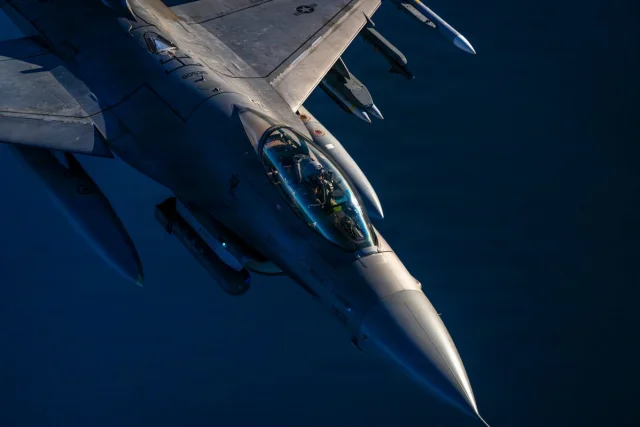
The United States launched another round of strikes on Iranian targets overnight, a day after conducting around 80 retaliatory strikes in response to the Iranian attacks on commercial shipping in the Strait of Hormuz.
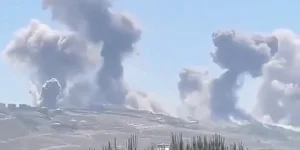
Explosions were reported in multiple locations near the Persian Gulf, including the port cities of Bandar Abbas, Konarak, and Chabahar, according to the official Islamic Republic News Agency (IRNA).
Iranian media also reported explosions in the city of Bushehr, which houses a nuclear power plant complex.
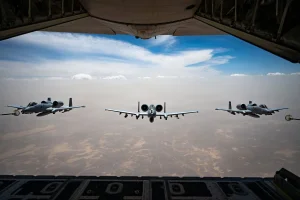
U.S. Central Command (CENTCOM) said it struck “approximately 90 Iranian military targets including air defense systems, coastal surveillance assets, missile and drone storage sites, naval capabilities, and military logistics infrastructure along Iran’s coastline.”
The strikes were intended to “further degrade Iran's ability to attack commercial shipping and innocent civilian mariners in the Strait of Hormuz,” CENTCOM stated.
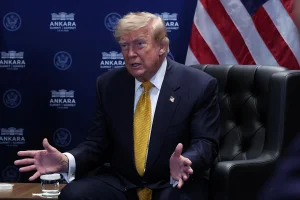
Following the strikes, U.S. President Donald Trump posted an image from a previous strike in Iran, while saying, “This is in retribution for yesterday’s bombing of ships by Iran. If it happens again, it will get much worse!”
“This is in retribution for yesterday’s bombing of ships by Iran. If it happens again, it will get much worse!” - President Donald J. Trump pic.twitter.com/TKKf8cIzCr
— The White House (@WhiteHouse) July 8, 2026
Aboard the Qatari-donated Air Force One flight back to the U.S., President Trump again claimed that Iran “called a little while ago, they want to make a deal so badly.”
“I just don’t (know) if they are worthy of making a deal. I don’t know if they are going to honor a deal, that’s the problem,” Trump told reporters on the flight.
The day before, he called Iran's leaders "scum," and said that, in his view, the Memorandum of Understanding and its corresponding 60-day ceasefire is "over."
Meanwhile, the Islamic Republic responded to the U.S. strikes by attacking sites in Kuwait and Bahrain.
Shortly after the U.S. president made his comments, air raid sirens sounded in two countries, as the Islamic Revolutionary Guard Corps (IRGC) said it attacked “key infrastructure and facilities” on U.S. bases in those countries in retaliation for the CENTCOM strikes.
Ahead of the burial of former Supreme Leader Ayatollah Ali Khamenei in his hometown of Mashhad, state TV reported train service between Tehran and Mashhad has been suspended as a result of the U.S. strikes.
While the state TV report blamed “a criminal attack by the US-Israeli enemy,” Israeli forces have not participated in the recent rounds of U.S. strikes.
On Wednesday evening, Iran’s Press TV reported that the regime threatened to close the Strait of Hormuz if the U.S. carried out strikes in Iran.
At the same time, a statement from the regime claimed that Iran is acting within the agreement of the Memorandum of Understanding by limiting the shipping traffic to only those lanes it has approved.
“The memorandum of understanding signed on this matter clearly states that Iran will reopen the strait in accordance with its own arrangements. Therefore, Iran will not permit the establishment of any new route outside the framework of its own arrangements,” the statement said.
Following the U.S. announcement of its intention to conduct additional strikes on Iran, earlier on Wednesday, Iranian media carried calls to cancel the MoU and withdraw from the negotiations.
"The U.S. has yet to learn that bullying and breaking its commitments no longer come without a cost. Let me be clear: If you strike, you will be struck back," Iranian Parliament Speaker and top negotiator, Mohammad Bagher Ghalibaf, wrote on 𝕏.
“The Strait of Hormuz will be reopened only under Iranian arrangements, not through U.S. threats,” he added.
The U.S. strikes on July 7 took place after Iran fired on several commercial ships traversing the strait near the coast of Oman, following the shipping lanes approved by the U.S. and Oman.
The renewed U.S. strikes have raised concerns that the MoU could be breaking down, with the potential of renewed open conflict. Israeli public broadcaster Kan News reported on Wednesday that U.S. refueling aircraft were returning to the region amid the strikes, in possible preparation for further hostilities.
An Israeli security source told Hebrew media that Israel is on high alert over the possibility of further escalation with Iran; however, there are currently no indications that Iran is preparing to attack Israel.
"At this stage, there is no knowledge of any special preparations by the Revolutionary Guards to launch missiles at the Israeli home front,” the source said.
Israel’s political leadership has said that any Iranian attack on Israel will be met with a harsh response.
You might also like to read this: