The remarkable 12,000 mile journey of the Isaiah scroll from Qumran to Jerusalem




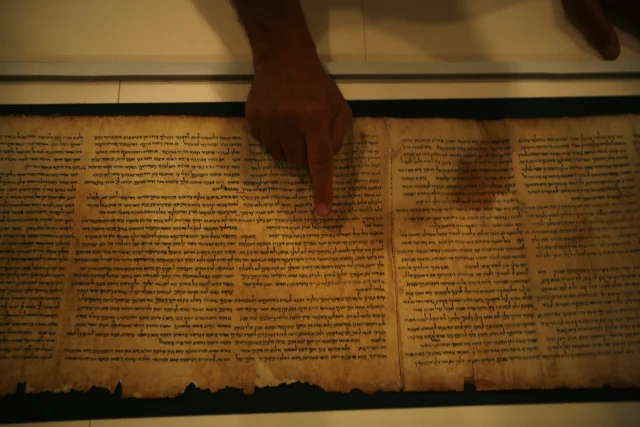
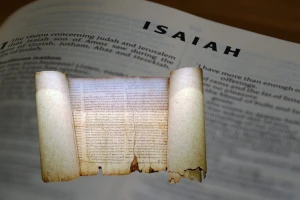
The Isaiah Scroll, the most complete and important of the Dead Sea Scrolls discovered in Qumran, is currently on display at the Israel Museum for the first time since 1968.
Although the distance from Qumran to Jerusalem is a mere 23 kilometers (14 miles), the manuscript has traveled thousands of miles on an epic journey since its discovery in 1947.
Just as the ancient Israelites made what could have been a day’s journey from Egypt to Israel last for more than 40 years, the Isaiah Scroll took a massive, multi-legged detour before ending up in the museum in Jerusalem, where it has become the star of the show.
The Dead Sea Scrolls were famously stumbled upon by Bedouin shepherds the year before Israel was formally established. The museum exhibit tells of the legend that, while searching for a lost goat, the shepherds threw a stone into a cave beside the Dead Sea and were puzzled to hear the clanging of pottery, so they went into the cave to explore.
The clay jars contained treasures that had been hidden there silently for more than 2,000 years, dating back to the first and even second century BC.
Unaware of exactly what they had discovered, the shepherds passed the jars containing the scrolls to a Bedouin cobbler named Khalil Iskander, also known as “Kandu.” Kandu then took the four scrolls to St. Mark’s Syriac Orthodox Church in Jerusalem's Old City, thinking that the archbishop might be able to read the script and appreciate the contents enough to purchase them.
Athanasius Yeshua Samuel was born in Syria on Christmas Day 40 years earlier, hence receiving the name of Yeshua, which is Jesus in Aramaic, a language that the Assyrians still speak today.
Samuel escaped the Armenian Genocide and ended up in Jerusalem, where he became the archbishop of St. Mark’s. With his grasp of ancient languages, he recognized the scrolls' significance.
St. Mark’s itself is also extremely significant, and perhaps it was more than serendipity that brought the scroll to that particular church. It is believed to be the house of Mary, the mother of Mark, making it the very first place where the disciples gathered.
Archbishop Samuel found 24 Jordanian dinars (equivalent to $97 today) in his drawer to purchase the scrolls, a deal which Kandu described as “a lot of dirty paper in exchange for a bit of clean paper,” according to the Israel Museum. The archbishop began to examine them closely and slowly became aware of just how monumental the treasure in his hands really was.
At the same time, other portions of the invaluable scrolls had found their way into the market and come to the attention of experts such as Eliezer. L. Sukenik, an archaeologist and senior professor at Hebrew University.
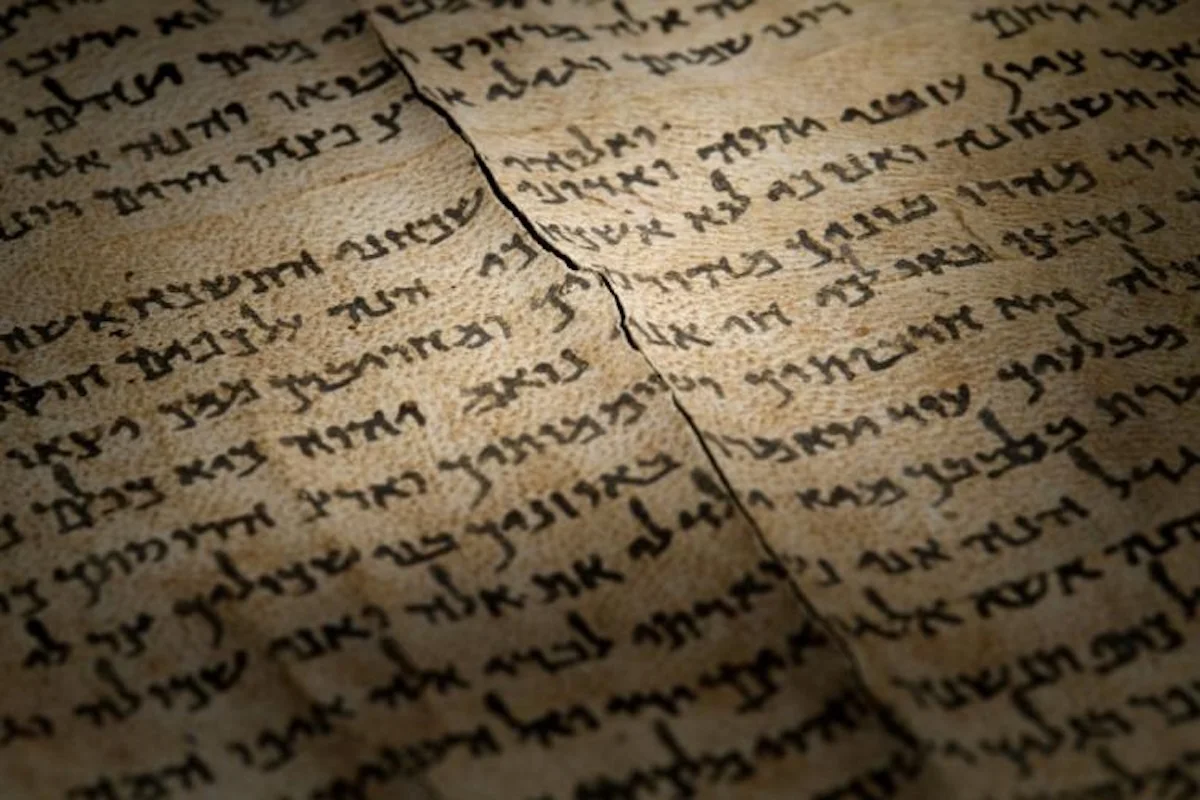
Archbishop Samuel met Sukenik in Jerusalem once it became clear how important the scrolls were – the four in his care including the Great Isaiah Scroll, the Habakkuk Commentary, and the Manual of Discipline now known as the “St. Mark’s Scrolls.”
Sukenik could only look on with longing as by now the scrolls were worth a fortune. The professor had examined the Hebrew letters on other Dead Sea parchments (as fate would have it on Nov 29, 1947, just before the UN Assembly vote) and understood their value.
He wrote in his diary on Dec. 1, “I read more of the parchments. This may be a great revelation beyond our wildest prayers.”
Instead of selling to Sukenik, Archbishop Samuel took the four St. Mark’s Scrolls all the way over to the U.S., as he felt that they needed to be seen and appreciated by a larger audience. They were displayed at institutions across the land, including the Library of Congress in Washington, Baltimore’s Walters Museum, and Duke University in North Carolina, as the War of Independence raged in Israel.
While the Archbishop eventually decided to make his home in the US and became the first Metropolitan and Archbishop of the Syriac Orthodox Church of Antioch in North America, the scrolls were destined to return to the land where they were written.
In 1954, Sukenik’s son saw the St. Mark’s Scrolls advertised in the Wall Street Journal. He alerted the Israeli government, and in a very expensive and highly engineered operation, he arranged the purchase of the scrolls for $250,000 and brought them back to Israel on four separate planes.
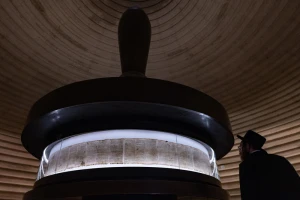
The 7.17-meter (23.5-foot) long Isaiah Scroll is written on pieces of leather sewn into one long piece. There are signs of damage and repair, but the complete book of the Bible was displayed in the built-for-purpose “Shrine of the Book” at the Israel Museum, which opened to the public in 1965.
It was showcased in a room resembling a Torah ark, with the entire scroll wrapped around a central pillar for the world to see.
However, the real deal was soon replaced by an exact replica to preserve the invaluable artifact, and it has been kept in the vaults since 1968.
Now, for the museum's 60th anniversary, visitors are invited to take a seven-minute glimpse under carefully controlled conditions.
Author Doron Kornbluth shared his experience of seeing the scroll up close, and how it had impacted him even as a seasoned tour guide:
“I'd seen photographs, replicas, and fragments of it for decades. I'd read books and countless articles about its historical importance. None of that prepared me for standing a few feet away from the actual scroll. Suddenly, Isaiah was no longer just a prophet from long ago. He and his message became real and relevant.”
As much as the Isaiah Scroll transports us back to the ancient history of the Bible, insisting that we face up to its reality in the present, the story of how it got there is also part of Jerusalem’s living history today.
Tucked into the side of Armenian Patriarch Street is Touma coffee shop run by a relative of the man who received the scrolls in the first place.
“Yes, it’s on my mother’s side,” Elias Mascobi told ALL ISRAEL NEWS, explaining the family connections. “It's special to be from the Aramaic community because let's say 90% of the people understand what the Aramaic means, and this is special in our church,” he said, emphasizing the need for faithfulness and hope in the turbulent Middle East.
Although Arabic is his native tongue, Mascobi understands much of the Aramaic used in the church liturgy, including the Lord’s Prayer. He also knows Hebrew, the language of scrolls that passed through his church via his distant relative Yeshua Samuel almost 80 years ago.
The ancient script on the Isaiah Scroll is hard to make out even for Hebrew speakers, but many can still read enough to be awestruck by the sudden proximity of its message.
“Generation after generation has read these same chapters, found comfort in these same promises, and wrestled with these same challenges,” Kornbluth marveled after seeing the scroll in all its glory.
From the quiet rest of 2,000 years in a desert cave to the hands of Bedouin traders, the scrolls were delivered not to a great cathedral or dazzling institution, but rather to the little church where it is believed that Mark, the writer of the Gospel, once lived.
They were then flown halfway across the world by a man named after the very Messiah Isaiah wrote so much about, before being redeemed and presented to the world at the Israel Museum.
The word went out from Zion, from the site of the first church in Jerusalem, to the world and then back again. Tell me that’s not prophetic.
You might also like to read this: