What will happen to Iran? Analyst Ali Siadatan weighs in



The rapid pace of change and drama in the Middle East has been dizzying even for seasoned analysts. But amid the uncertainty, are there any discernible trends? Is there an observable trajectory for Iran? Iranian author and commentator Ali Siadatan shares some helpful insights.
It has been well established that the people of Iran are distinct from the Islamic regime that rules them, but Siadatan highlights the generational differences between elderly clerics and the youth under their control. He believes fundamental change is coming.
“The extent of this change and the shape that it will take is what we're now going to witness unfold,” he told ALL ISRAEL NEWS. “It's dependent on circumstances, and external and internal pressure are the two levers we're now looking at to see how this change will be molded into place.”
In other words, the future of Iran does not only depend on external players such as the Trump administration, Israel, Qatar and Turkey, but on the 90 million people within the country itself.
Siadatan describes the transformation that has been building within the population as a piece of the puzzle often neglected in analyses of the regime.
He reminds us that the people of Iran have been living under censorship for the past 47 years, concealing the massive transformation that Iranians have undergone when it comes to spirituality and their own understanding of what happened to them.
“The grandchildren of the revolutionaries are the ones that are leading the charge right now, and they have, by and large, set sail for secularism,” he said. “There's an ideological shift in the belly of the nation, and this is foundational in understanding the force of change.”
In contrast with the generation that “made the covenant with the clerics,” he believes there has been a profound change of heart and mind in the increasingly young population. Pointing out that 75% of the population is under 40, he describes the disillusionment many Iranians feel.
“The malaise that they are feeling, the hopelessness, that their government... (means they) can't really live up to their full potential,” he says, relating to the way the Iranian economy has ground to a halt under the radical regime. “The natural resources of the country are tremendous. The working force is tremendous. But bureaucracy prevents this from coming to fruition,” he elaborated.
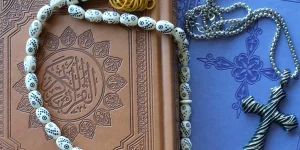
Siadatan says that under the constitution devised by the Mullahs, Iran is no longer a nation but essentially a mosque, or an “Umma,” which is the Islamic word for community of Muslims.
However, it transpires that this radicalized mosque-state has proved unable to run a state capable of successfully participating in the international arena.
“Khomeini, the founder of the Islamic Republic, made speeches in which he said ‘I’m not interested in nation, or in national aspirations, but in Islam,’” Siadatan says. “The resources of the government are not designed to run a country, but to further an ideological cause.”
The apocalyptic goals of the ayatollahs have taken priority over the prosperity of the people, leading to widespread antagonism against the regime. As a telling indicator, Siadatan points to the dramatic decrease in Islamic names for Iranian children born in recent years.
“If you look at the birth certificates, one of the main documents of the government you can actually trust… you can see that since 2005 the choice of Islamic names has catapulted downwards, like a waterfall. The chart looks steep, like Niagara Falls, going straight down,” he said. “No one calls their kids by Islamic names anymore. But this itself is one of the signs of change and heart and mind. People are going back to pre-Islamic Iran to look for national identity.”
This rejection of Islam and search for older Persian roots can also be seen in an array of posts on social media highlighting the original Persian name of the Strait of Hormuz, which historians generally believe was named after Hormizd, a Zoroastrian god, according to the Times of India.
“Iranians basically have a PhD in Islamic Marxism,” Siadatan says. “Now, everybody gets it. These guys (the ayatollah regime) want to go to war with Israel and summon the Mahdi. This is not just some talking point. This is not rhetoric for their faithful base. This is their policy.”
That policy has created an entire generation that can’t build a life, can’t move forward, can't marry, can't buy a house, can't live up to its full potential, can’t build companies, can’t engage in technological advancement, or trade, and, according to Siadatan, is essentially “held hostage by old men.”
“These are men in their 80s and 90s and their ideological disciples, and their foreign mercenaries, are funded with money from Iranian oil. This system is no longer sustainable… This is madness,” he stated. “People want to get on with their lives.”
As the currency is in freefall and the bureaucracy collapses, no reform or law of parliament can make it work. “Eventually, all of this has come to a head,” he said. The money for mercenaries will eventually run dry, along with their apocalyptic aspirations. “Their theocracy is, by design, unable to function in the modern world.”
Recognizing that other Arab states have interests in what happens next with Iran, whether economically or ideologically, and that the crashed Iranian economy could get another breath of life from an American deal, Siadatan concedes there are multiple external factors at play. However, looking at the untenable reality facing the 90-million-strong population, he remains convinced that the regime’s end has come.
“The defeat that they have sustained in this war has removed the aura of invincibility and fear that people had through all the psychological programming they used to run the country,” he says. “The malaise has come to the surface. The unsustainability of the current system and the failed state’s reality is now at the forefront of everyone's consciousness.”
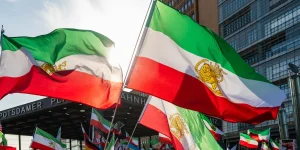
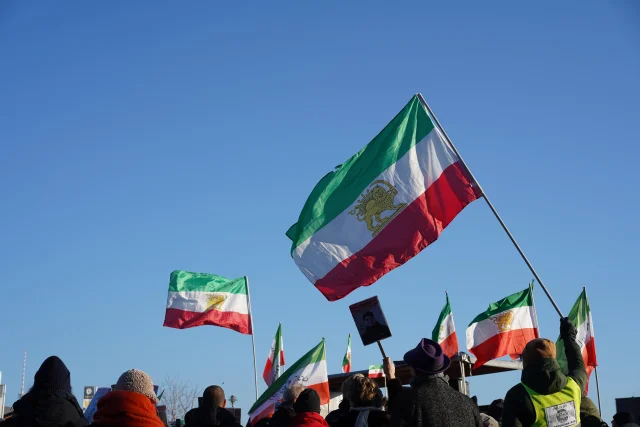
Siadatan acknowledges that the speed and extent of the regime’s transformation remain unclear, but he considers the shift inevitable. He believes tens of millions are now calling for Crown Prince Reza Pahlavi even though many were not previously monarchists, arguing that a national consensus has emerged against the regime.
Currently, U.S. President Donald Trump is perceived as politically vulnerable by the regime because of midterm election pressure, the volatile stock market, and the price of oil, giving hope to the ayatollahs that their regime could survive. However, Siadatan believes their hope is misplaced.
“They'll get away with it for a short amount of time. They’re going to try to torture, kill their way, and rape their way, and murder their way through it,” he warns.
“[The Islamic regime] has layers and layers to it that have to be punched through for the whole thing to collapse,” he says. “The only thing we can say for sure is that the system, the government, has been fundamentally transformed through this war, and is no longer the same.”
You might also like to read this: