With Iran deal appearing closer than ever, Israel scrambles to keep operational freedom against Hezbollah
US & Iran representatives reach deal – but Trump and Khamenei still need to sign off




A “memorandum of understanding” (MOU) between Washington and Tehran that would extend the ceasefire for 60 days and open the Strait of Hormuz while nuclear talks continue appeared closer than ever on Thursday, though the countries’ top leaders have yet to signal their final approval.
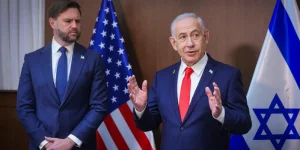
U.S. Vice President JD Vance said on Thursday that the United States and Iran were “very close” to reaching a MOU, after the respective negotiating teams agreed on a framework, according to the Axios news outlet.
“Hopefully, we'll continue to make progress and the president will be in a position where he can endorse the agreement, but obviously that's still TBD (to be decided),” Vance said. “I can't guarantee that we're going to get there ... but right now I feel pretty good about it.”
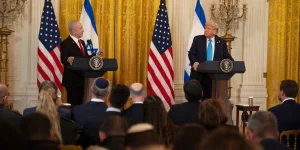
Jerusalem has generally opposed a deal with the Iranian regime but has reportedly focused on improving the conditions of a potential agreement, estimating that Israel won’t be able to persuade U.S. President Donald Trump not to sign it.
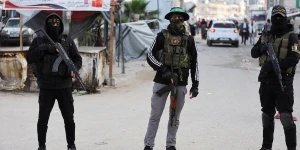
In addition to Israel’s main goals of stopping the nuclear and ballistic missiles programs as well as the support for Iran’s proxies, Israel has strenuously sought to prevent a “unification” of the Iranian and Lebanese fronts, pushing the U.S. to approve an escalation of strikes against Hezbollah after it increased its attacks against Israel in recent weeks.
“Iran has made significant, material, and dramatic concessions to the United States that would have been impossible only a short time ago,” says @StephenM.
— Rapid Response 47 (@RapidResponse47) May 29, 2026
“But again, there’s no deal until there’s a deal, nothing’s final until it’s final, and @POTUS has been clear — that he… pic.twitter.com/d7e7nXW6Nf
Despite reports that U.S. President Donald Trump is leaning toward approving the MOU, Israeli officials say the delay stems from the lack of approval by Iran’s Supreme Leader, Mojtaba Khamenei. They added that Israeli Prime Minister Benjamin Netanyahu has sought to use the delay in discussions with Trump to argue that Tehran is “playing games with him.”
The first clause of the MOU reportedly refers to the fighting against Hezbollah, stating that it intends to end “all hostilities in the region, including and especially in Lebanon.”
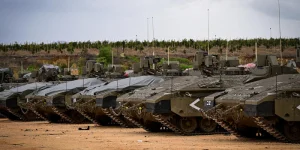
According to Ynet, this is what pushed Netanyahu to approve requests from the military to intensify the operations in Lebanon, including new ground offensives beyond the Yellow Line, to stabilize the situation before a potential agreement ends Israel’s freedom to operate in the area.
Residents of northern Israel have been pressuring the government to take stronger action against Hezbollah, which has recently intensified attacks on border communities with dozens of drones being launched daily.
Responding to a query by Army Radio, a senior IDF official responded, “Time is definitely a factor. We cannot keep taking time endlessly and dragging this on for more months. It would not be right to prolong the war over time. But there are opportunities here to change the reality – and to influence the disarmament of Hezbollah.”
“With every passing day, Hezbollah weakens a little more. There is a major opportunity here to pressure Hezbollah further and achieve gains.”
.@SecScottBessent: @POTUS has made it very clear. Iran has to turn over their highly enriched uranium. They can not pursue a nuclear weapon, and the Strait of Hormuz has to have free transit. He’s not going to take a bad deal. He's going to make a great deal for the American… pic.twitter.com/vYihwFfxfq
— Rapid Response 47 (@RapidResponse47) May 28, 2026
The IDF also said that while there are political constraints for strikes deep inside Lebanon, particularly in Beirut, there are no limitations for southern Lebanon. “On the contrary,” a senior officer said, “there are absolutely no restrictions and this does not interfere with the forces. We are carrying out significant offensive actions in order to substantially reduce the threats to the communities – including the drone threat.”
IDF officials emphasized that the military has been responding strongly to Hezbollah’s attacks, killing some 800 Hezbollah operatives and wounding more than 10,000 since the ceasefire began.
IDF Spokesman Brig.-Gen. Effie Defrin addressed the recent deadly attacks on IDF personnel and Israeli civilians, including the killing of IDF Sgt. Rotem Yanai, the 12th soldier to fall during the ceasefire and the eighth killed by a Hezbollah drone.
“We are constantly dealing with the drone threat,” Defrin said. “The best minds in the IDF and outside it are engaged in this. We are focusing on three main efforts – the detection effort, intended to provide early warning to the forces, where progress has already been made; in addition, we are improving interception efforts; and the protection of forces on the ground. As the chief of staff said yesterday, there are no limitations in the use of force and resources when it comes to the security of our troops and our residents.”
However, IDF officials expressed doubt about whether Israel can successfully pressure Washington to disconnect the Iranian and Lebanese fronts in the MOU. They also affirmed that, despite potential future efforts by the Lebanese state to disarm Hezbollah, “only the IDF will be able to carry out this mission,” according to Army Radio.
You might also like to read this: