Why JD Vance's Israel comments could haunt a presidential run



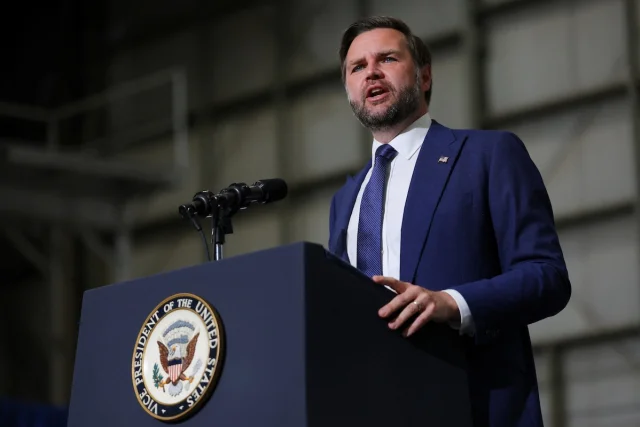
U.S. Vice President JD Vance has never been afraid to challenge Republican foreign policy orthodoxy, but his latest comments about Israel during a lengthy interview with popular podcaster Joe Rogan this week may represent his biggest political gamble yet. It’s risky business.
In the nearly three-hour conversation, Vance did not simply defend the Trump administration’s effort to negotiate a Memorandum of Understanding (MOU) with Iran. He accused elements within the Israeli government of actively trying to undermine those negotiations through what he described as a well-funded influence campaign targeting both the deal and him personally.
Those remarks have ignited sharp criticism from many of Israel’s strongest supporters inside the Republican Party and conservative movement. More on that reaction in a moment.
Vance laid out his frustrations in unmistakable terms. “I definitely think you’ve seen this very discreet, extremely well-funded campaign to try to derail the negotiation and try to derail the deal. There was this TIME article that came out; a friend sent it to me, it’s worth reading because it lists a bunch of people who have quite literally been paid by a former Trump campaign person who was himself paid by certain elements within the Israeli government and those people are attacking me viciously for, quite literally trying to accomplish the negotiation objectives that the president set for the country…when I open up the pages of TIME magazine and I see that there’s a literal foreign influence campaign being funded to tank the very deal that I was pursuing. And, oh, by the way, many of the people who were receiving that money were actually attacking me in completely dishonest ways, you know, my response to that is, well, go to hell. I’m going to do what I have to do for the American people. I represent America first.”
The vice president did add an important qualifier during the interview. He acknowledged that countries routinely attempt to influence American foreign policy and argued that the larger issue was whether U.S. leaders allow that influence to affect their judgment. Even so, his remarks have ruffled pro-Israel conservatives.
Not surprisingly, the backlash came quickly. Florida Republican Congressman Randy Fine, one of Israel’s most outspoken defenders on Capitol Hill, told me that he rejects Vance’s argument outright.
“I think it’s disappointing. The most pernicious form of anti-Semitism is when other people do something and it doesn’t bother you at all. But when Jews or Israel do it, you lose your absolute mind. When we have real issues with influencers affecting our elections in this country, China is doing it, Russia is doing it, Iran is doing it. Qatar is doing it. Turkey is doing it. But the same voices that are completely silent or turn a blind eye about that lose their minds when Israel supposedly does it. Turns out the criticism of the MOU was absolutely justified because it didn’t work.”
Conservative radio host Mark Levin was equally blunt. Writing on 𝕏, he posted, “The VP owes Israel and millions of its American supporters an apology. The Iranian terrorist regime rejected the MOU as it has undermined all agreements and deals. Iran killed it, not some “influence operation.” It’s called logic, experience, and knowledge.”
Despite the criticism, Vance appears comfortable occupying what he believes is the political middle ground. “There’s this massive pro-Israel anti-Israel debate in the United States of America. I’m like the reasonable moderate,” he also told Joe Rogan.
That self-description drew another rebuke from Fine. “I think that would be out of line with with the Republican Party,” he tells me. “I’m extremely proud that yesterday (Wednesday), when the one anti-Semite that we do have in our conference, Thomas Massie, put forward an amendment to strip all military funding for Israel next year, every single Republican voted against it 100% without exception. That’s where the Republican Party is now.”
Fine continued, “The mainstream of the Republican Party understands that for the fate of Western civilization to continue all of our holy sites and Judaism and most of our holy sites in Christianity are all in Israel, and we have to stand up to those who would seek to destroy both religions.”
That exchange may actually reveal the larger political story.
Within today’s Republican Party, support for Israel remains overwhelming, particularly among elected officials and older Republican voters, evangelical Christians and traditional conservatives. Congressional voting records continue to reflect that consensus – even as a smaller but increasingly vocal America First wing has begun questioning longstanding assumptions about U.S. involvement in the Middle East.
Vance has become perhaps the highest-profile elected Republican willing to give voice to some of those concerns while insisting he remains supportive of Israel’s security.
It's a political calculation that carries inherent and significant risks.
His arguments are likely to resonate with portions of the America First movement that have grown skeptical of foreign intervention and are increasingly influenced by voices like Tucker Carlson. Younger conservatives, particularly those less tied to the post-9/11 foreign policy consensus, may also find Vance’s emphasis on putting American interests first appealing. But those crowds alone won’t win you a national General Election.
The other side to this equation is the broader Republican coalition – especially older GOP (Republican) voters who reliably participate in primaries and general elections. They remain deeply pro-Israel and, of course, that includes many evangelical Christians who view support for Israel as both a strategic and biblical imperative.
For those voters, accusations that elements of the Israeli government mounted an influence campaign against an American vice president may land very differently than they do with younger online audiences. That is why Vance’s comments could prove politically consequential.
He is no longer speaking as an outsider or as a senator challenging conventional wisdom. He is vice president of the United States and widely viewed as the leading potential Republican future presidential nominee (at least for now). His early 2028 campaign is actually taking shape right now even though he hasn’t officially declared for the presidency.
Whether Vance is positioning himself ahead of where the Republican Party is headed or moving beyond where most Republican voters currently are remains an open question.
What is becoming increasingly clear, however, is that the once nearly-unanimous Republican consensus on Israel is beginning to show visible signs of debate. Vance has now placed himself squarely at the center of that conversation – and, in doing so, has accepted the political risks that come with it.
You might also like to read this: