Did Israel's Mossad attempt to install former hard-line president Ahmadinejad as Iran's new leader?




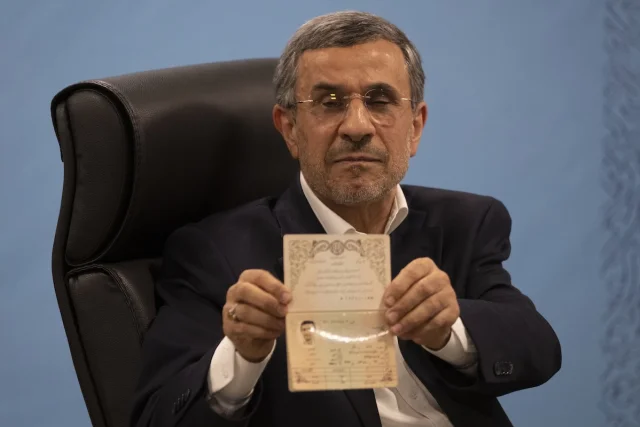
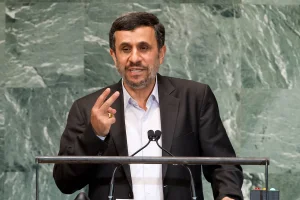
Israel’s Mossad spent several years recruiting former hardline Iranian President Mahmoud Ahmadinejad as both an intelligence asset, and as a potential future leader should regime change in the Islamic Republic become feasible, according to a sensational New York Times (NYT) report.
The plan to topple the regime and install Ahmadinejad, called “Operation Puss in Boots,” according to a similar report in Haaretz, included a project to arm and train Kurdish dissident forces in Iraq, as well as the activation of other minority groups within Iran.
Then-Mossad chief David Barnea reportedly pushed the plan to the political echelon, and even traveled to Budapest, Hungary, to meet Ahmadinejad in person, the New York Times reported, citing “former American officials.”
The plan for regime change included a large-scale Israeli Air Force attack in the Kurdish region of Iran, to facilitate entry for Kurdish forces from Iraq, the NYT reported in an earlier article about the plan to enact regime change through Ahmadinejad.
Haaretz claimed that as part of the preparations, thousands of Kurdish fighters were trained in operational scenarios, out of the belief that just as the Hayat Tahrir al-Sham (HTS) militia of Ahmed al-Sharaa (Abu Mohammad al-Jolani) was able to overthrow the Bashar al-Assad regime in Syria, the Kurds could accomplish the same in Iran.
This was done both because of the existing tensions between the Kurds and the Iranian regime, as well as the long history of contacts between the Mossad and the Kurds in Iraq. This plan to involve the Kurds was started even before the June 2025 Operation Rising Lion; however, it intensified following Israel’s significant weakening of Iran’s military capabilities during that operation.
In January 2026, the outbreak of massive protests in Iran presented the opportunity to advance the regime change plan. However, Israeli security officials reportedly expressed concern that the Kurdish forces were not ready.
Following the U.S.’ success with Venezuelan dictator Nicolás Maduro in December, President Donald Trump reportedly felt ready to launch a military operation in Iran, targeting the country’s nuclear and ballistic missile facilities, with the possibility of regime change, if the opportunity arose.
However, just days after the start of the military operation, the White House instructed Israel to cancel the entry of the Kurds. In Israel, the change was attributed to opposition from Vice President JD Vance and fear of angering Turkish President Recep Tayyip Erdogan.
With the canceling of that plan, the plan to install Ahmadinejad, who had been freed from house arrest by a targeted strike killing the guards watching his house, all but collapsed.
According to The New York Times, the plan to recruit Ahmadinejad was complex. But the choice of the former hardline president, known for fiery messages against both Israel and the U.S., is the most startling.
Ahmadinejad was viewed as a possible recruit due to his own transformation after leaving office.
He softened his positions, reduced his anti-Israel rhetoric, and began presenting himself as a more moderate figure. He gave interviews in which he criticized Iran’s security forces and corruption in the establishment, dealt with cultural issues, changed his style of dress, and began learning English.
A former associate said that Ahmadinejad acted out of a desire to return to a leadership position.
According to another associate, he even shared with people in his inner circle that he aspired to become Iran’s leader in the future with the help of foreign powers. The associate said that after being disqualified three times from running for president, he concluded that he could not return to power as long as the current regime remained in place.
He reportedly compared himself to former Russian President Boris Yeltsin, who initiated democratic reforms after the collapse of the Soviet Union and even reportedly said that if he returned to power, Iran would recognize Israel and normalize relations with it under the Abraham Accords.
Ahmadinejad had already aroused suspicions in Iran, following open letters he sent to President Trump in 2017, praising Trump and Saudi Crown Prince Mohammed Bin Salman. Israeli intelligence agencies monitoring the deepening rift between Ahmadinejad and Iran’s regime assessed that he could be recruited.
That recruitment began with an invitation to attend an environmental conference in Guatemala in 2023, a country with close ties to Israel. Then, in early 2024, a senior Hungarian government official approached the rector of the University of Ludovika in Budapest, Prof. Gergely Déli, with an unusual request: to invite Ahmadinejad to a climate conference.
According to the NYT, the conference served as cover for secret meetings between Ahmadinejad and Israeli intelligence officials, including Mossad Director David Barnea.
Two months before Operation Rising Lion, Ahmadinejad returned to Budapest, once again holding meetings with Israeli intelligence officials.
IRGC bodyguards, who also functioned as monitors due to suspicions about the former president, reported that he managed to evade security and disappear for lengthy meetings on at least two occasions. When confronted about his disappearances, Ahmadinejad reportedly replied that he had met with professors from the university.
The former president gave a rare lecture in English and presented the president of Ludovika University with a book by the Persian poet Ferdowsi.
The plan appeared to be going well until the opening of Operation Roaring Lion on Feb. 28, 2026.
According to Iranian sources who spoke with the NYT, following the initial attacks, Ahmadinejad expressed disappointment with the U.S. and Israeli military operations and the attempt to free him, and distanced himself from the Israeli plan. He reportedly fled the safe house to which the Mossad had taken him after freeing him from house arrest.
Ahmadinejad disappeared from public view following the strike, and was only seen again at the funeral of assassinated Supreme Leader Ayatollah Ali Khamenei in Tehran last week.
The NYT report reads like a spy novel, but some analysts have raised questions about its veracity. They have noted that no Israeli officials were quoted on record, nor did the NYT secure any statement from current or previous Mossad officials.
On Tuesday, a statement on Ahmadinejad's social media page denied that he was at the center of an Israeli operation aimed at recruiting him as an intelligence agent.
A video on Mehr News showed Dr. Ahmadinejad attending an official tribute ceremony for Ayatollah Khamenei in Tehran, along with Quds Force Commander Ismail Qaani. The NYT report claimed that Ahmadinejad was under house arrest.
Also, several analysts called attention to two of the authors of the article, Farnaz Fassihi and Ronen Bergman.
Fassihi often provides insight into regime-affiliated figures in Iran, and her stories are often shared by regime lobbyists in the West. She is reported to have close ties to former regime officials like former Foreign Minister Mohammad Javad Zarif and former President Hassan Rouhani.
Bergman is known in Israel as a critic of Prime Minister Benjamin Netanyahu, with many of his reports casting the leader in a negative light.
United Against a Nuclear Iran (UANI) Policy Director Jason Brodsky said the plan to appoint Ahmadinejad “stretches credulity,” while noting the story plays to Israeli political fighting ahead of the upcoming elections.
Iranian-Israeli lecturer Meir Javedanfar told i24 News that Ahmadinejad is not a popular figure in Iran’s political landscape.
“One of the very few things reformists and conservatives in Iran agree on is that they both hate former President Ahmadinejad,” he said.
Iranian accounts on social media refuted the claims that Ahmadinejad is under house arrest, noting his presence at a recent government meeting last week. Some wondered if the story itself did not represent another attempt by Israel and the U.S. to sow confusion and discord among the battered Iranian regime.
Some critics note that the article portrays Israel as convincing U.S. President Donald Trump to launch the attacks on Iran in February. However, Gen. (res.) Tamir Hayman, former chief of Israeli military intelligence, disputes that characterization.
In a May interview with the Public Broadcasting Service, Hayman said that Israel was the one surprised by Trump’s willingness to launch the strikes so soon. He said Israel was planning for an operation later in the year.
“Nothing was planned in January by the Israelis,” Hayman explained. “Trump, out of nowhere, surprised Israelis and said that he is going to strike Iran.”
“Trump kind of shuffled the cards when he suddenly surprised Israelis by initiating this,” he continued. “That led to the Israeli planning and the American motivation on the 28th of February. So that's the true story. That's the sequence of events that happened.”
At the end of the day, the articles in the New York Times and Haaretz raise questions about both the subject and the sources, and their publication right ahead of the fall election seasons in both Israel and the U.S. raises concerns of attempted political influence, as both outlets have a history of writing against Trump and Netanyahu.
Please take a moment to join believers worldwide praying for Israel right now. Add your light to the live prayer map—and show the world one more watchman praying for the peace of Jerusalem.

You might also like to read this: