Israel's gov't advances ‘legislative blitz’ of contentious laws before Knesset adjourns ahead of elections
Knesset to reach full term for first time in 50 years, voting to be held on schedule for first time in 40 years


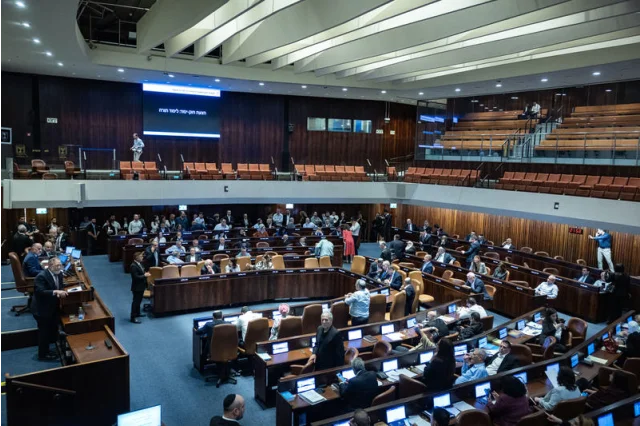
The coalition government is in its final week before its dissolution ahead of the summer break and will attempt to pass a “legislative blitz” of several controversial bills before the Knesset's term ends in two weeks.
Several of those bills are already in advanced stages of preparation for second and third readings in the Knesset plenum.
According to reports in Hebrew media, there will be no attempt at “table clearing” – a custom in which bills having broad agreement are passed in rapid succession to empty the legislative pipeline before the break.
Instead, in order to pass several controversial bills which were part of coalition agreements – and whose status would be unsure after the upcoming elections – the coalition will focus on passing the bills which will require coalition discipline.
Among these bills are the Communications Law, aimed at restructuring the nation's broadcasting oversight; a bill to weaken the Attorney General’s office, by allowing the government to reject AG legal opinions; a bill freezing arrests of ultra-Orthodox draft dodgers; and a new Basic Law designating Torah Study as a “foundational value,” nearly equivalent to military service.
Focus on these coalition-specific bills is expected to delay other legislative proposals until the Knesset reconvenes following the October elections.
Prime Minister Benjamin Netanyahu’s Likud party is reportedly eager to pass these laws before the recess to demonstrate it is a trustworthy coalition partner. The repeated delay of laws requested by the ultra-Orthodox coalition parties has led to a loss of trust in Netanyahu.
The spiritual leader of the Sephardic ultra-Orthodox Shas party, Rabbi Yitzhak Yosef, recently criticized Netanyahu, calling him “a liar,” according to reports in Hebrew media.
“Netanyahu deceived us with the Draft Law and other things,” Rabbi Yosef said. “You can't trust him; he's a liar.”
In leaked comments from his weekly message to his students, he said that Netanyahu would not “repent.”
"In a country, with our many sins, a secular country, we pray that everyone will repent. There are those who will repent, there are those who I don't believe will repent,” Rabbi Yosef said in his weekly sermon.
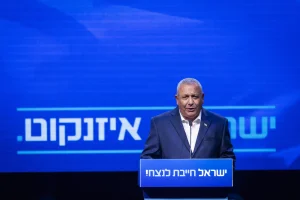
“What, will Bibi Netanyahu repent? There is no chance that he will repent. [Gadi] Eisenkot might repent,” Yosef continued, referring to former IDF Chief of Staff and prime minister hopeful, Gadi Eisenkot.
According to an Army Radio report, Rabbi Yosef also said that "Gadi Eisenkot is a good man, a warm Jew; he loves Torah students – his grandmother voted for Shas and wanted him to be a rabbi, it didn't happen, but he can be trusted."
Yosef said the Shas party "can go with him in the upcoming elections; we can support him so that he will be the next prime minister.”
He also expressed hope that the United Torah Judaism (UTJ) party would join in the event that Shas forms a coalition with Eisenkot’s party.
Jewish Power Knesset Member Amichay Eliyahu said the dissatisfaction between Shas leaders and Netanyahu could lead to some Shas voters supporting his own party.
“The Sephardic Haredi public is Zionist,” he told public broadcaster Kan News. “It was Zionist before Shas arrived and pulled it more toward the Litvak [Lithuanian, non-Zionist] side of the map.”
Eliyahu, who is also Israel's Heritage minister, said he believes the conflict could provide “an opportunity for Shas voters to come to Jewish Power.”
Last week, after repeated discussions with the leader of the Degel HaTorah party, Rabbi Dov Landau, the proposed “Basic Law: Torah Study” was modified to designate Torah Study as a “foundational value,” instead of equating it with military service. Rabbi Landau said that even the modified wording would serve as a legal basis to protect Haredi needs in future Knessets, including the exemption from military service.
The bill is expected to be voted on, and likely approved, during Monday’s Knesset session.
On Sunday evening, the Knesset Constitution, Law and Justice Committee approved a bill for second and third readings to dramatically weaken the powers of the attorney general in opposing the government.
The bill would allow the government to determine for itself whether to accept a legal opinion by the AG, declaring specific actions or decisions illegal. The bill also allows the government to determine its own representation in legal proceedings.
Meanwhile, on Sunday the Foreign Affairs and Defense Committee approved another controversial bill for second and third readings: the bill to grant temporary immunity to ultra-Orthodox draft dodgers. The bill would grant immunity to students who study between 40-45 hours per week in a yeshiva or kollel [Talmudic study program for married men].
Such arrests, while small in number, have led to massive protests by ultra-Orthodox men over the past months.
Finally, with the Knesset expected to complete its summer term on July 17, Knesset House Committee chairman MK Ofir Katz (Likud) announced that elections would be held on October 27, as originally scheduled. The announcement means that the current Knesset will complete its full term, the first in 50 years, and will not require a vote of dissolution.
The successful completion of its term also marks the first time in 40 years that elections will happen on schedule, instead of happening early due to the collapse of coalition agreements.
You might also like to read this: