Why are Israelis rallying behind a candidate with no clear platform?



Why is a politician with almost no defined political platform suddenly one of Israel's leading contenders for prime minister?
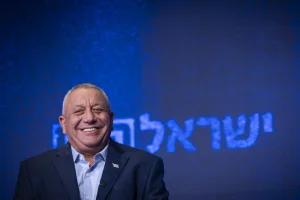
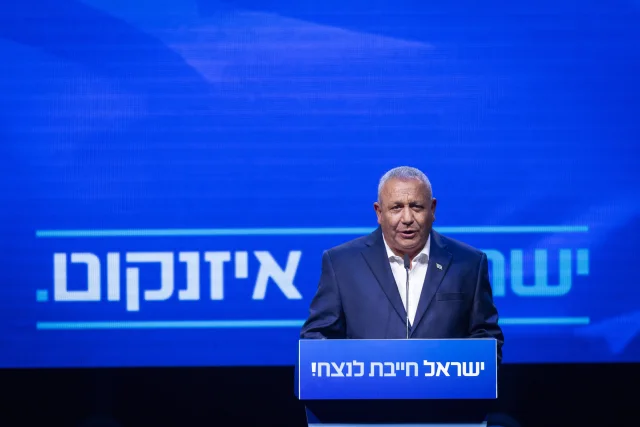
Israelis aren't flocking to Gadi Eisenkot and the Yashar party because they know what he stands for. They're flocking to him because they're exhausted by politics and are looking for someone they perceive as decent, competent, empathetic, and "normal," according to at least one political analyst.
Dr. Ilana Shpaizman, a senior lecturer in the Department of Political Studies at Bar-Ilan University, made the comments to ALL ISRAEL NEWS as last week's polls once again showed Eisenkot climbing, and in some cases running even with Prime Minister Benjamin Netanyahu and the Likud party.
A poll released last week by i24NEWS showed Eisenkot's Yashar party winning 21 seats, just behind Likud's 29. However, another poll released by Israel's Channel 12 showed both Yashar and Likud receiving 23 seats in the next Knesset.
"Eisenkot has a very positive image," Shpaizman said, explaining that it begins with the fact that he and his family have made enormous sacrifices for the country. He lost his son, Master Sgt. (res.) Gal Meir Eisenkot, and two nephews, Sgt. Maor Cohen Eisenkot and Capt. Yogev Pazy, during the war.
"He has made the most difficult sacrifice anyone can make for the State of Israel," she said.
Eisenkot also built a distinguished military career, most recently serving as the Israel Defense Forces' chief-of-staff. However, because he held the post from February 2015 to January 2019, he is far enough removed from the military leadership that oversaw the failures surrounding the October 7, 2023, Hamas massacre.
"You feel empathy toward Gadi," Shpaizman said, adding that he is not viewed as "an arrogant general." Instead, she said, people see him as someone who speaks at their level. That stands in sharp contrast to Netanyahu, whom she described as lacking empathy toward the hostages, bereaved families, and others affected by the war.
She pointed to a recent interview Netanyahu gave to Israel's Channel 14. When asked what had changed for him since the October 7 attack, he joked, "I lost some weight," a remark that she said many Israelis did not find amusing.
Eisenkot first entered politics immediately after the Hamas attack as part of the emergency unity government. He served with the National Unity party as a minister without portfolio until his resignation in June 2024. He left after concluding that Netanyahu had failed to establish a clear postwar strategy for Gaza. Eisenkot accused the prime minister of allowing political considerations to get in the way of achieving the war's goals.
Another aspect of Eisenkot's appeal is his personal background. He is Mizrachi and self-made. He did not come from Israel's traditional elite centered around Tel Aviv, but from the country's periphery. While residents of the North and South have traditionally voted for Likud, and it remains unclear whether that will change, Shpaizman said those looking to abandon Likud are more likely to gravitate toward Eisenkot than to another candidate, such as former Prime Minister Naftali Bennett, who is often viewed as part of Israel's elite from Ra'anana.
However, Shpaizman cautioned that while Israelis have a long history of electing former generals to the Knesset, military success does not necessarily translate into political success.
"Before October 7, there was a positive image of the IDF as one of the country's most trusted institutions, along with admiration for people who rose through its ranks, became respected generals, and participated in major battles and operations," Shpaizman said. "But most generals fail because politics is different from the army."
"The army is hierarchical, and these generals are used to people doing what they are told," she explained. "The fact that you were a general means nothing in politics. You are the same as any other member of Knesset. Many generals who enter politics, especially those who end up in the opposition or serve as regular members of Knesset, become dissatisfied and leave after one or two terms."
Former Israeli Ambassador to the United States Michael Oren expressed a similar view during a recent briefing attended by the author.
"What I haven't understood is this country's tendency, after years of turning to security figures to lead it, not to learn that it's usually not a good bet," Oren said.
He argued that Eisenkot lacks the political experience needed to step directly into the Prime Minister's Office.
"It's not going to turn out well," Oren said. "I say that without any prejudice toward him as a person or the great pain he has experienced as a bereaved father and uncle."
Oren added that Eisenkot has already made some "rookie mistakes," including signaling a willingness to negotiate with the Haredi (ultra-Orthodox) parties.
Still, Oren acknowledged why the public is drawn to him.
"His hands are clean. He seems honest. He seems to be a unifier," Oren said. "The country needs to be unified."
Shpaizman agreed.
"People are not looking for ideology," she said. "They are looking for integrity and someone who is going to manage the government and the country."
Netanyahu is on trial. Bennett alienated many of his Religious Zionist supporters when he formed a government with the (Arab) Ra'am Party in 2021. Eisenkot, on the other hand, has yet to promise something he did not deliver. He is not associated with corruption, and – at least so far – he has surrounded himself with people who have strong records in public service and civil society.
At the same time, Israelis still know very little about what he stands for. His platform remains short on details, whether on the economy, security, or other key issues. What draws people to him, Shpaizman said, is something much simpler: "He is a good person."
Whether that is enough to make him a successful prime minister is another question.
"He is not a good politician," Shpaizman admitted. "But people don't want a politician. They want a normal government. Not right, not left. Normal."
Please take a moment to join believers worldwide praying for Israel right now. Add your light to the live prayer map—and show the world one more watchman praying for the peace of Jerusalem.

You might also like to read this: