Israeli troops to remain in Lebanon security zone if Hezbollah refuses to withdraw, Amb Leiter affirms
Talks are set to continue in Rome this week




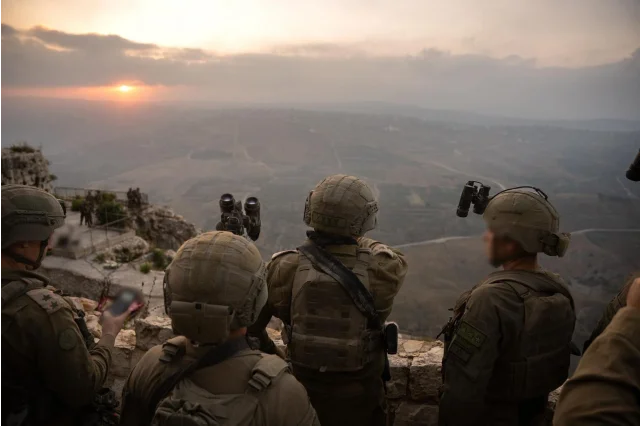
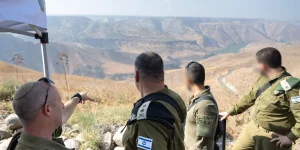
Israeli troops will continue to hold the security zone in southern Lebanon if Hezbollah doesn’t dismantle its presence there, Israel’s ambassador to the U.S., Yechiel Leiter, affirmed in an interview with CBS’s “Face the Nation” on Sunday.
Leiter stressed that the trilateral agreement with Lebanon and under U.S. mediation “completely” removed Iran and Hezbollah from the area. “They have no business in Lebanon,” Leiter said.
“Israel and Lebanon are on the same page. We want Hezbollah out for our security and for their sovereignty. We can withdraw the moment that Hezbollah is dismantled.”
Per the agreement, the Israeli army will begin by withdrawing from two “pilot zones” that are adjacent to the security zone, allowing the Lebanese Armed Forces to deploy there and take full control over the area, with the goal of eventually dismantling Hezbollah’s presence in the entirety of southern Lebanon.
A pleasure speaking to @margbrennan this morning, ahead of the next leg of talks with the Lebanese.
— Ambassador Yechiel (Michael) Leiter (@yechielleiter) July 12, 2026
We talked about the negotiations for a lasting peace without Iran and Hezbollah, Sen. Lindsey Graham’s vision for the Middle East, and odd ways to kickstart a presidential… pic.twitter.com/mkEpnNCCOX
The negotiations between Israel and Lebanon are set to continue in Rome, Italy, this week, though Lebanese media reported that Beirut has been unhappy with the pace of the Israeli withdrawal.
Leiter stressed that there is no delay, and the current withdrawal plans for two pilot zones are true “pilots.”
“If Hezbollah is not dismantled, then we have to stay in our security zone because we're not going to go back to a situation where our citizens are going to be threatened by an Iranian proxy firing missiles and building tunnels so they can attack, like Hamas did October 7.”
Watch: Prime Minister Netanyahu lays out the framework agreement with Lebanon using a map.
— גיא עזריאל Guy Azriel (@GuyAz) June 27, 2026
Red zones: Areas included in the pilot program from which IDF forces would withdraw after Hezbollah infrastructure is dismantled and the areas are verified as demilitarized.
Yellow line:… pic.twitter.com/uJmtNftPIr
“We're working together with CENTCOM and the Lebanese Armed Forces (LAF) to create the conditions so that we can actually move into a situation where the pilot zones are receptive to LAF. If they're not going to be receptive, if Hezbollah is going to stay there, we haven't accomplished anything, and that's why they're called pilot zones,” Leiter explained.
On Sunday, AFP cited a Lebanese official confirming that the talks in Rome would continue according to plan, after a U.S. delegation had visited Lebanon last week to discuss the withdrawal mechanism.
An official Lebanese source told the Lebanese newspaper Nidaa Al-Watan that the government currently doesn’t see any “alternative” to continuing the negotiations, despite strong opposition from Hezbollah and allied groups in the country.
Hassan Fadlallah, a parliament member on behalf of Hezbollah, affirmed this sentiment in a message ostensibly aimed at Prime Minister Benjamin Netanyahu, but effectively constituting another explicit threat against the Beirut government.
“You reached an agreement with those who do not have control over even a single centimeter of Lebanese land, and with those who do not have the right to make decisions,” said Fadlallah.
“The state of hostility toward Israel will continue, and whoever shakes the hand of the Israeli enemy is a partner in its crimes.”
Meanwhile, Lebanese outlets have reported that the government is hoping for U.S. pressure on both Hezbollah and Israel to advance the withdrawal, seeing its own possibilities to influence the two sides as slim.
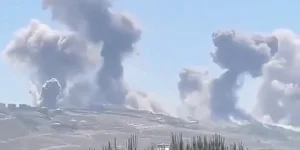
The IDF says it struck Hezbollah operatives who were identified transporting weapons inside Israel's south Lebanon buffer zone earlier today.
— Emanuel (Mannie) Fabian (@manniefabian) July 11, 2026
Troops of the 91st "Galilee" Regional Division spotted several Hezbollah operatives entering the IDF's security zone in a vehicle and… pic.twitter.com/p6R1tAsJKe
In this context, the Hezbollah-affiliated newspaper Al-Akhbar reported that President Joseph Aoun was concerned about moving the talks to Rome, away from direct U.S. pressure, and is also leaning on American pressure to get his own army to carry out orders.
Numerous reports have indicated that top LAF officers have expressed concerns, or directly opposed, the deployment in Hezbollah-controlled areas, and want to avoid any confrontation with the group.
The newspaper reported that CENTCOM representatives met directly with LAF brass to assess their troops’ readiness to deploy in the pilot zones. On the other hand, Israel wants to push the LAF to deploy in areas where IDF troops have not yet reached in order to dismantle Hezbollah’s remaining infrastructure there, the newspaper said.
From the Israeli side, a withdrawal could begin as early as this week, Kan News reported over the weekend. Meanwhile, the U.S. has been pressuring Jerusalem to freeze IDF operations considered “sensitive” in southern Lebanon.
You might also like to read this: