EU-backed donor initiative commits $1 billion to Gaza reconstruction
EU, Israel agree on steps for implementation of waste and water management projects




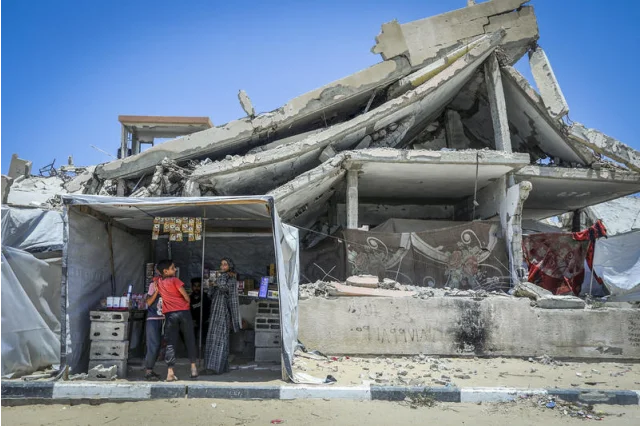
European donor nations pledged $US 1 billion in aid for the Gaza Strip on Monday as the European Union said reconstruction efforts depend on improved humanitarian access and the eventual disarmament of Hamas.
"We will present the initial package today of almost 900 million euros, or 1 billion dollars," European Commissioner for the Mediterranean, Dubravka Suica, said ahead of a donor summit in Brussels. "We now need the conditions on the ground that will allow the support to reach the people in Gaza."
The funding will support Gaza's early recovery, including restoring critical water and sanitation infrastructure and clearing debris left by nearly three years of war. The European Union is the world's largest single donor to the Palestinian Authority and Gaza.
Following a recent visit to Israel, Suica said the EU had "reached agreement with the Israeli authorities on next steps for the implementation of two major projects in the areas of waste and water management in Gaza."
Representatives of the American-backed Board of Peace and Palestinian Authority Prime Minister Mohammad Mustafa reportedly attended the meeting with European Union officials.
Brussels said the funding was secured in cooperation with 10 EU member states, Switzerland and the European Investment Bank.
"The governments of Belgium, Denmark, Finland, France, Germany, Italy, the Netherlands, Norway, Spain, Sweden, and Switzerland, together with the European Commission and the European Investment Bank, are participating."
Canada and Australia are also expected to join the multinational Gaza initiative.
Suica said donors "want to start with so-called early recovery, and it is very important to show that we are willing to do it."
The European commissioner also linked Gaza's long-term recovery to Hamas laying down its weapons.
"But to do that, we need disarmament of Hamas in order to start proper recovery," Suica assessed.
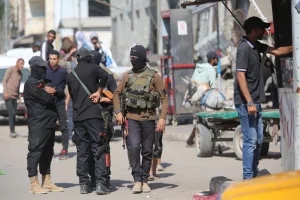
Meanwhile, U.N. Deputy Special Coordinator for the Middle East Peace Process, Ramiz Alakbarov, said he "strongly" condemned Hamas for undermining humanitarian operations in Gaza. He said the terrorist group's conduct has "endangered humanitarian personnel, intimidated workers delivering life-saving food assistance and disrupted life-saving humanitarian operations."
Under the U.S.-brokered Gaza ceasefire reached in October 2025, Hamas is required to disarm before the Israeli military withdraws from the Gaza Strip. However, the terrorist group has so far refused to do so.
In March, the Board of Peace, together with mediators Qatar and Egypt, proposed a phased disarmament plan under which Hamas would surrender its heavy weapons over a 90-day period while temporarily retaining some lighter arms.
Hamas rejected the proposal in April and has instead sought to consolidate its control over Gaza while international attention has been focused on the conflict with Iran.
Speaking to the BBC, a senior Hamas official accused Board of Peace High Representative for Gaza Nickolay Mladenov of being biased in Israel's favor.
"We are waiting for Mladenov to provide a clear timetable for Israel to fulfill the remaining obligations of Phase I," the Hamas official told the BBC.
Hamas has also vowed to retain its weapons for "resistance" and "self-defense" against Israel.
You might also like to read this: