US strikes Iran for 3rd consecutive night after Trump reinstates Hormuz blockade
After IRGC retaliates against US facilities in Gulf states, Trumps says seeking reimbursement for protection





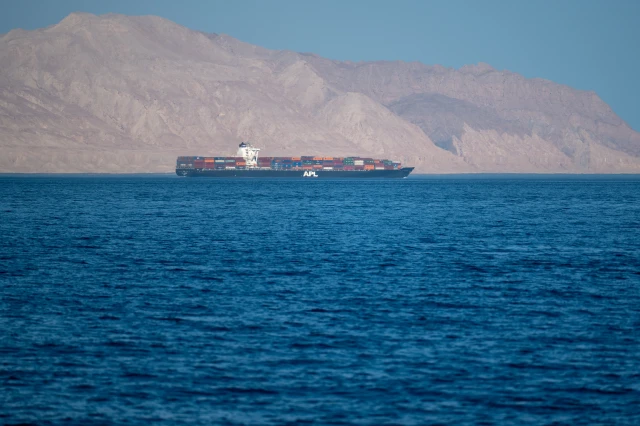
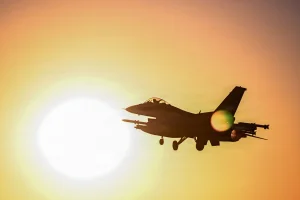
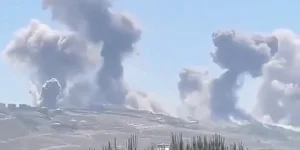
The U.S. military completed five hours of strikes against multiple military targets in Iran overnight, the third consecutive night of attacks, as the Strait of Hormuz remains a crucial focal point in the conflict.
U.S. President Donald Trump had sent stocks tumbling and oil prices skyrocketing after announcing the reinstatement of the naval blockade on Iran, and a tax of 20% on all cargo traversing the Hormuz Strait due to the U.S.'s new role as "guardian" of the waterway.
The strikes followed soon after, and focused on “military targets across Iran including Bushehr, Chah Bahar, Jask, Konarak, Abu Musa, and Bandar Abbas to further degrade Iran's ability to attack commercial shipping,” U.S. Central Command (CENTCOM) said in a statement. The command said targets included Iranian coastal defense systems, missile and drone sites, and maritime capabilities.
“These strikes will continue imposing a heavy cost on Iranian forces and degrade their ability to attack innocent civilians and commercial shipping in the Strait of Hormuz,” CENTCOM said in a post to 𝕏.
At 4:45 p.m. ET today, U.S. Central Command began launching the third consecutive night of strikes against Iran, at the Commander in Chief's direction. These strikes will continue imposing a heavy cost on Iranian forces and degrade their ability to attack innocent civilians and…
— U.S. Central Command (@CENTCOM) July 13, 2026
“More than 50,000 U.S. service members are currently deployed across the Middle East. American forces remain vigilant, lethal, and ready.”
The strikes came ahead of the reimposition of a U.S. naval blockade of Iranian shipping in the Strait of Hormuz, following Iranian attacks on vessels traversing the waterway outside of the Iranian-approved route, along with continued Iranian insistence on having sovereignty over the international waterway.
The Islamic Revolutionary Guard Corps claimed responsibility for deadly missile attacks on two United Arab Emirates oil tankers passing through the strait early Tuesday. According to the UAE defense ministry, the two tankers were targeted by Iranian cruise missiles while passing through Omani waters. One person was killed, and eight others were wounded in the attacks.
The IRGC said the two UAE supertankers, which “were deceived by America, turned off their navigation systems, ignored repeated warnings from the Strait of Hormuz Maritime Security Control Center, endangered shipping in the area, and chose to traverse the mined path, were struck and put out of commission.”
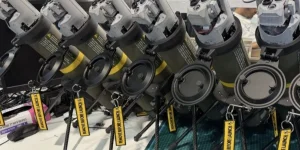
Yesterday, using multiple one-way attack surface drones, CENTCOM forces successfully struck a submarine and ship maintenance facility in Iran. Three Corsair unmanned surface vessels hit the port at Bandar Abbas Naval Base, marking the first time American forces have employed sea… pic.twitter.com/bOM2kmgRxz
— U.S. Central Command (@CENTCOM) July 13, 2026
It warned against any attempts to sail through the Omani route through the strait, saying such attempts “will result in nothing but regret.”
The IRGC also claimed to have targeted and destroyed a Patriot radar system, the U.S. Navy's Fifth Fleet air control radar, and a C-RAM early warning radar system at the naval facility in Bahrain, the Islamic Republic News Agency (IRNA) reported.
The Jordanian military claimed to have intercepted four Iranian missiles targeting U.S. facilities in the country.
Meanwhile, Israel’s Channel 12 News cited senior U.S. officials as saying that if there are negotiations with Iran, they will only be conducted under fire. The officials further said the chances of successful negotiations are slim, as the IRGC are determined to maintain control of Hormuz.
The U.S. blockade will resume on Tuesday evening, CENTCOM stated.
“At the Commander in Chief's direction, U.S. Central Command (CENTCOM) forces will resume blockading maritime traffic entering and exiting Iranian ports on July 14 at 4 p.m. ET,” the military command said in a post to 𝕏.
As in the previous blockade, instituted in April, CENTCOM said the closure would only affect vessels transiting to or from Iranian facilities.
U.S. President Donald Trump announced the overnight strikes before they were launched, indicating additional strikes could happen on Tuesday evening.
“We’re going to hit them very hard tonight and we’re going to hit them hard tomorrow — and there’s not a damn thing they can do about it,” Trump said in an interview with conservative talk show host Hugh Hewitt. “They have nothing. They have nothing going other than they have big mouths.”
He also indicated that the U.S. could target Iran’s Pickaxe Mountain facility, which is believed to be a nuclear weapons-related facility.
“Pickaxe is a possible target for a nice big fat shot right near the front door,” Trump told Hewitt in the interview.
The site was not targeted by the U.S. in the June 2025 Operation Midnight Hammer strike, but has recently seen increased construction activity, with indications the regime has been preparing the site against the possibility of a raid by special operations forces.
Additionally, President Trump indicated that he would like to see Gulf states reimburse the U.S. for its military expenses in helping protect them from Iranian attacks.
“I want to be reimbursed because we’re protecting a very rich portion of the world,” Trump told reporters at the Oval Office. “We’re spending money, and so what we’ve done is we are going to be reimbursed for protection.”
The comments follow his previous announcement that the U.S. would seek payment for protecting Hormuz.
“The U.S.A. will be, from this point forward, known as ‘THE GUARDIAN OF THE HORMUZ STRAIT,’ but as such, and as a matter of FAIRNESS, will be reimbursed, at the rate of 20% on all cargo shipped, for any and all costs necessary to do the job of providing safety and security to this very volatile section of the World,” Trump had posted to his Truth Social account earlier on Monday.
The CENTCOM announcement of the reimposition of the blockade made no reference to any payments, and administration officials, including Secretary of State Marco Rubio, have said that no nation should charge tolls for use of the strait.
You might also like to read this: