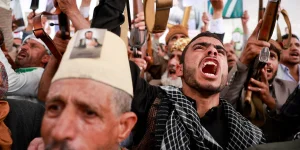
Joel Rosenberg warns Iran is trying to create 'global instability' with Strait of Hormuz crisis, 'politically assassinate President Trump'
Tehran motivated by ‘apocalyptic eschatology,’ desire to ‘survive & humiliate’




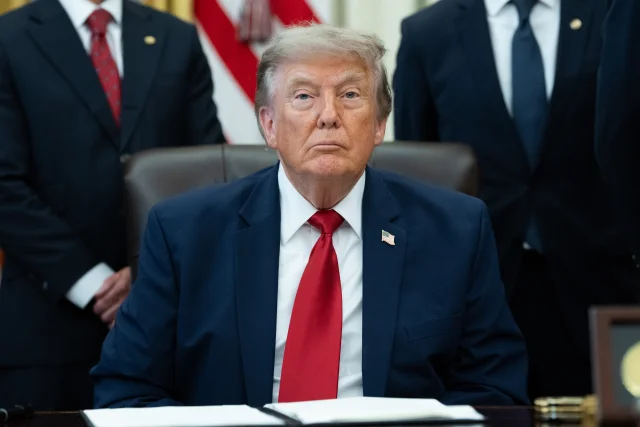
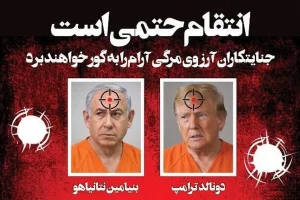
ALL ISRAEL NEWS Editor-in-Chief Joel Rosenberg warned that the Iranian regime is trying to politically assassinate U.S. President Donald Trump ahead of the fall election cycle in the United States.
“Iran believes that it can politically assassinate President Trump by creating the conditions by which Republicans will lose in the fall,” Rosenberg said during an interview with Mario Nawfal on Monday morning.
Rosenberg said the Iranian regime recognizes its potential to use the conflict surrounding the Strait of Hormuz to create “global instability” and economic difficulties for President Trump in order to shift his policy.
“What's left of the Iranian regime, what they're trying to do is politically assassinate President Trump,” Rosenberg explained. “What they're trying to do is create a situation where Trump has to escalate militarily. This would drive up the price of oil, therefore drive up the price of gas in the United States, create global instability, drive down the markets – certainly in the United States – but in Europe and Asia, and elsewhere.”
This pressure would “create the very situation that President Trump was trying to avoid” when he declared the ceasefire and signed the Memorandum of Understanding, Rosenberg continued.
Rosenberg also said he believes the regime in Tehran is seeking to create a situation in which the international community is forced to recognize Iran's control over the strategically vital Strait of Hormuz.
This assessment was echoed by host Nawfal, who said, "The Iranians want to control the Strait of Hormuz and eventually charge a fee. The Americans don't want that to happen. And what we're seeing right now is each side trying to get the other side to concede."
Rosenberg agreed with Nawfal, saying that Trump’s eagerness to negotiate over Hormuz was “a mistake,” based on a misreading of the regime.
"Trump was trying to be generous. He was trying to be magnanimous," Rosenberg said, arguing that the U.S. administration believed that "once you use military force, this is a group that's bad but rational, and that they will realize it's in their self-interest to back up and take a deal."
“I don't believe that's the case,” Rosenberg said. “I think that President Trump and Vice President Vance are mistaken on this.”
Instead, Rosenberg said Trump has emboldened the Islamic Republic and has convinced them that he’s going to “back down.”
Rather than characterizing the Iranian regime as “rational,” Rosenberg said the regime is “evil,” “revolutionary,” and “apocalyptic.”
“They believe that creating the conditions of chaos and carnage is eventually going to bring their so-called savior, the Mahdi or the 12th imam,” he explained. Rosenberg argued that the regime's worldview stems from "a theological position, certainly, a political and a geopolitical worldview, but it comes really from a deeply theological view," rooted in its "end-times theology."
Noting his own research and writings on that subject, Rosenberg shared how he first connected with the late Senator Lindsey Graham over the subject of how the eschatology of the Iranian leadership “was affecting and driving their foreign policy and their military policy.”
The current Islamic Revolutionary Guard Corps (IRGC)-led regime continues to follow the teachings of the late Supreme Leader Khameini, Rosenberg asserted.
Following the death of Khamenei, the regime “went back to their core…went back to what Khamenei taught them and how he led them,” Rosenberg commented. “And that is ‘Death to America!; not deal with America.”
Noting that Iran is operating from a militarily weakened position, Rosenberg assessed that the regime is trying to “survive and humiliate.”
Besides attempting to “politically assassinate Donald Trump and ruin his election chances in the fall,” Rosenberg sees the same strategy at work against Israeli Prime Minister Benjamin Netanyahu.
“Why hasn't Iran, which is attacking everybody in the region right now, almost everybody, not attacked Israel yet?” Rosenberg asked. “I would say that it's because they want to politically assassinate Benjamin Netanyahu, and they fear that if they attack Israel right now, this will help embolden and strengthen Netanyahu.”
Polling in Israel over the past couple of years has shown a significant boost for Netanyahu and his Likud party following each major military operation against regional threats.
Ultimately, Rosenberg said he believes Trump could turn Iran’s strategy against it by acting with significant force now, before the Israeli elections this fall.
“Trump needs to use more force now in the early part of July so he doesn't have to use it in August and September,” Rosenberg assessed, saying it could reshape the landscape for the U.S.
“A shattered enemy is a different enemy than an emboldened but weak enemy,” he noted.
You might also like to read this: