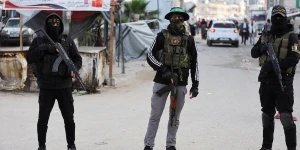
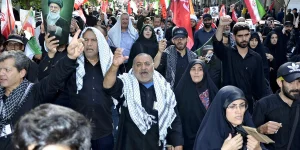
Hamas refuses to disarm, sees Iran & Lebanon conflicts as opportunity to consolidate hold on Gaza
Palestinian terror group rejects Board of Peace disarmament plan, accuses Israel of ceasefire violations







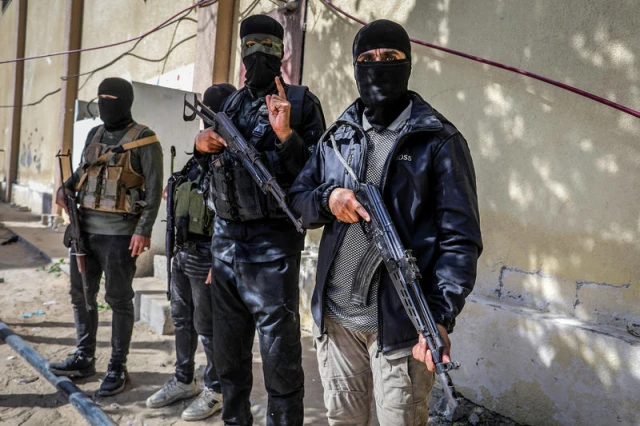
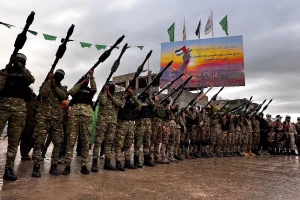
Hamas has rejected a disarmament proposal put forward by the Board of Peace’s High Representative for Gaza, Nickolay Mladenov, Palestinian sources reported.
The rejection came in parallel with the expiration of the deadline for the group to accept the plan on Tuesday, further delaying implementation of the second phase of the October 2025 Gaza ceasefire, which has been on hold due to the terror group’s unwillingness to disarm.
The plan put forward by the Board of Peace earlier this year would have seen the disarmament of Hamas and other terror factions implemented over an eight-month period, involving several phases.
That plan would have reportedly also seen Israel increase the amount of humanitarian supplies and building materials into Gaza, and the gradual transfer of administration to the National Committee for the Administration of Gaza (NCAG). It also apparently directly linked the entry of rebuilding supplies and the start of reconstruction to the demilitarization of the Gaza Strip.
Hamas has repeatedly refused to disarm, and despite the ceasefire, the IDF has struck several Palestinian terrorists attempting to cross the Yellow Line into the Israeli-controlled side. In February, Mladenov noted that these ceasefire violations were threatening the peace process.
🎯DISMANTLED: 4 underground tunnel routes in Gaza, east of the Yellow Line.
— Israel Defense Forces (@IDF) April 14, 2026
The total length of the tunnels were ~800 meters. Within the underground tunnel routes, the troops located living quarters, equipment for prolonged stays, mines, and materials used by Hamas to prepare… pic.twitter.com/l0NTeBjae3
Meanwhile, a senior Hamas official told the BBC that Hamas would not participate in any negotiations regarding the second phase of the Gaza peace plan until Israel fulfills its obligations under the first phase.
"We are waiting for Mladenov to provide a clear timetable for Israel to fulfill the remaining obligations of Phase I," the official told the BBC. The official also accused Mladenov of having a pro-Israel bias.
Hamas has accused Israel of restricting aid into Gaza, a claim which the IDF denies, and of restricting the exit of Palestinians through the Rafah border crossing into Egypt. However, the exit of Palestinians through the Rafah crossing is also subject to approval by the Egyptian government, which has so far only allowed a few cases, mostly involving Palestinians transiting to other countries for medical treatment or possessing valid passports for other countries.
Hamas also insinuated that Israel is preventing the NCAG from entering Gaza. Reports have said the group has delayed entering due to the security situation, without clarifying what the security problem is.
In a statement released earlier this week, Hamas and Palestinian Islamic Jihad accused Israel of failing “to implement the first phase of the Sharm el-Sheikh Agreement.”
Israel has said it will not hold any discussions on implementing the second phase without a commitment by the terror organizations to disarm.
U.S. special envoy Steve Witkoff had previously announced the start of the second phase of the agreement in January; however, there has been no change in the status quo on the ground.
In the meantime, with U.S. and Israeli focus turned primarily to Iran and Hezbollah in Lebanon, Israeli security officials have warned that Hamas is taking advantage of the situation to reestablish and secure its hold over the population of Gaza: raising taxes, recruiting new fighters, and seizing control of many of the goods entering Gaza.
According to a report in the Maariv newspaper, many of the new recruits are teenagers, a phenomenon also seen in the last few months of the Gaza war, as the IDF killed thousands of veteran Hamas fighters.
At the same time, Walla News reported that several senior Hamas leaders in Qatar have left the Gulf state for Turkey or other countries, after being warned to depart.
Prime Minister Netanyahu was reported to have told the security cabinet that Israel will likely have to disarm Hamas militarily.
“Trump was unable to assemble a coalition to open the Strait of Hormuz, so he also understands that building a coalition to disarm Hamas is even less realistic – we will have to do it,” Netanyahu was reported to have told the ministers.
Maariv reported that the military has already begun drawing up new offensive plans for the Gaza Strip, as the Israeli leadership estimates that Hamas will not agree to disarm and will not willingly hand over power to the NCAG.
You might also like to read this: