‘We're in an existential war with America’: Iranian leaders vow to retaliate as US expands strikes
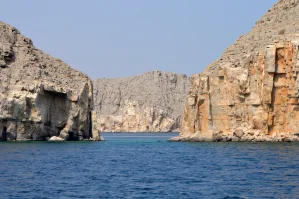
Strait of Hormuz remains focal point of conflict between Iran and US





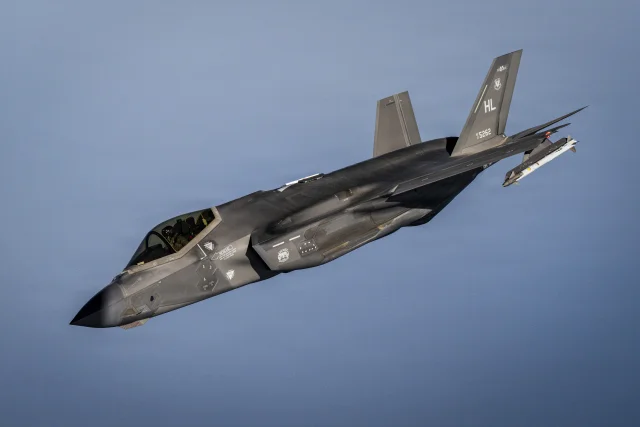
The U.S. military launched two more waves of attacks on Iran's coastal defenses and missile sites on Wednesday after reimposing a naval blockade on Iranian traffic through the Strait of Hormuz.
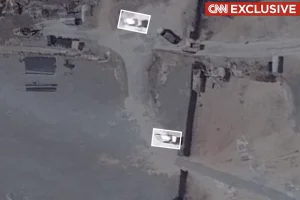
According to U.S. Central Command (CENTCOM), its forces targeted “Iranian command centers, air defense sites, missile and drone capabilities, and coastal surveillance facilities to further degrade Iran's ability to threaten innocent mariners crewing commercial vessels transiting the Strait of Hormuz.”
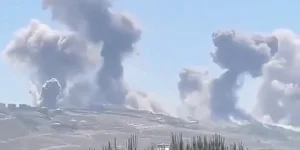
Iranian media reported explosions in Tehran, Bandar Abbas, Sirik, and Qeshm Island following the strikes. The strikes on Tehran mark the first such activity since the most recent round began last week.
🇺🇸❌🇮🇷 — CENTCOM has published footage of the strikes against Iran.
— Viral Video News (@viralvideonews3) July 16, 2026
Footage is included of U.S. Navy F/A-18E Super Hornet fighter jets taking off from the Nimitz-class aircraft carrier USS Abraham Lincoln, and BGM-109 Tomahawk cruise missiles launching from Arleigh Burke-class… pic.twitter.com/hwhO30xQ7l
According to Iranian state TV, a separate U.S. strike targeted a barracks for Iran’s 388th Mechanized Infantry Brigade, which operates tanks and armored vehicles, in Sistan and Baluchestan province. The report said at least 13 missiles struck the barracks, killing seven and wounding several others.
CENTCOM also announced it disabled an empty oil tanker attempting to sail toward an Iranian port, which ignored repeated warnings to stop.
“U.S. Central Command (CENTCOM) forces observed Curacao-flagged M/T Belma transiting international waters toward Kharg Island,” the command center said in a statement. “The commercial vessel ignored multiple warnings as it attempted to violate the U.S. blockade. A U.S. aircraft disabled the vessel after firing hellfire missiles into the ship’s smokestack. The ship is no longer transiting to Iran.”
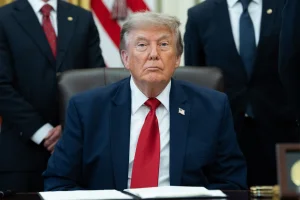
U.S. President Donald Trump claimed shortly after the strikes that Iranian leaders contacted his administration claiming they want to resume negotiations.
Asked by a Fox News correspondent if his administration might “wipe out” the Islamic Revolutionary Guard Corps (IRGC) “like you did ISIS,” Trump responded, “Yeah, it does. We received a call just as I was coming here, and they want to meet.”
🔥🚨 JUST NOW — President Trump reveals he might just WIPE OUT the IRGC like he did ISIS in his first term.
— The Patriot Oasis™ (@ThePatriotOasis) July 15, 2026
Q: "You came to the conclusion that you cannot reason with the IRGC. Does that mean you might WIPE THEM OUT like you did ISIS?"
TRUMP: "YEAH! IT DOES! We received a… pic.twitter.com/IC19TPgRwf
President Trump has repeatedly claimed the Iranian regime is interested in pursuing negotiations after U.S. strikes, without direct corroboration.
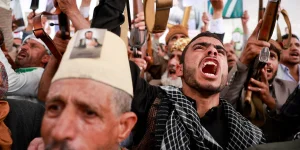
Following the U.S. strikes, the IRGC retaliated by targeting U.S. military sites in neighboring countries, declaring it is in an "existential war" with America.
Air raid sirens were reported in Kuwait and Bahrain, while the Jordanian military said it intercepted eight Iranian missiles. The IRGC said it targeted the U.S. al-Azraq Air Base in Jordan and U.S. military assets at the Ali al-Salem Air Base in Kuwait.
“The early warning radar of the C-RAM system at Ali Al Salem Air Base in Kuwait, as well as the gathering place of the criminal soldiers of the terrorist U.S. Army, became the target of combined attacks,” the IRGC said in a statement carried on Tasnim News.
An Iranian army spokesman later told Tasnim, “We have destroyed all American bases in the region.”
The spokesman for the Central Khatam al-Anbiya Headquarters also stated the Strait of Hormuz would remain closed until the U.S. recognizes Iranian sovereignty over the waterway.
Iranian state media said the country’s air defense systems downed a U.S. Air Force MQ-9A Reaper drone over the city of Andimeshk, in the Khuzestan Province. There was no confirmation of the loss by CENTCOM.
The renewed strikes came after President Donald Trump convened a meeting with senior national security officials in the White House Situation Room Wednesday evening.
Reports in U.S. media say that Trump is considering expanding the strikes in an effort to force Iran to soften its positions in negotiations, as the issue of the Strait of Hormuz has become the focal point of conflict.
Iranian Parliament Speaker and lead negotiator Mohammad-Bagher Ghalibaf said Wednesday evening that the Memorandum of Understanding does not bind the Islamic Republic while strikes are taking place.
“A memorandum of understanding only makes sense if its provisions are valid and being implemented,” Ghalibaf was quoted as saying on the regime’s Islamic Revolutionary News Agency (IRNA). “If Iran is not to benefit from the memorandum of understanding, we have no reason to adhere to such an agreement.”
“We are in an essential and existential war with America,” Ghalibaf continued, saying Iran has “full freedom of action to counter enemy aggression.”
In a statement to Telegram, Ghalibaf said Iran’s national security depends on its control over Hormuz, reiterating statements of other regime officials.
Iranian Foreign Ministry spokesperson Esmaeil Baghaei reiterated Ghalibaf’s stance regarding negotiations, saying, “We have no plans for negotiations at the moment and are focused on defense.”
Traffic through the waterway has continued to decline amid renewed hostilities between the two sides. Only seven vessels crossed through the strait with their transponders active on Wednesday, according to tracking site Kpler, compared to 13 the previous day.
Alongside the expansion of military strikes, the U.S. Treasury Department imposed sanctions on a weapons procurement network aiding the IRGC. The Treasury’s Office of Foreign Assets Control (OFAC) identified seven individuals and organizations involved in attempts to purchase and transfer weapons to the IRGC, levying sanctions against them.
“Treasury will continue to target and disrupt the illicit procurement networks that fund Iran’s weapons programs and war machine,” Secretary of the Treasury Scott Bessent said in a statement.
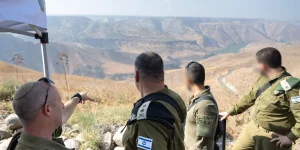
Meanwhile, as Israel continues to monitor the Iranian situation, Defense Minister Israel Katz spoke with U.S. Secretary of War Pete Hegseth, Katz’s office said Thursday morning.
Secretary Hegseth updated Katz “on the American military’s activities in Iran, and the two agreed to continue cooperation between the countries in the face of any possible developments,” the statement said.
Minister Katz also pushed back against claims that the U.S. is acting on Israel’s interests.
“We have never asked the United States to act on our behalf along our borders. We are committed to defending the citizens of Israel against every threat, and that is what we intend to do,” Katz said in the statement.
You might also like to read this: